
- Health Conditions A-Z
- Health & Wellness
- Nutrition
- Fitness
- Health News
- Ayurveda
- Videos
- Medicine A-Z
- Parenting
Connection Between Migration And Pollution: People Are Leaving City To Be Away From Delhi's Toxic Air
Credits: Canva
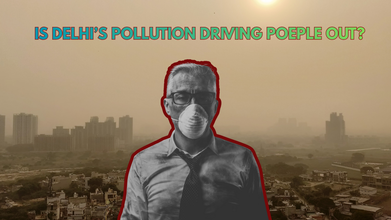
Delhi woke up again to a thick layer of smog, with Delhi's AQI hovering over 300 on the Air Quality Index on Thursday morning under "very poor" category. After a long nine-day wait, city's AQI had slipped under "poor" category on Tuesday, but it is again back on the "very poor" category, while on Wednesday, there were strong winds that dispersed the pollutants. Yet the condition of the air quality remains bad.
As a result of this many people are leaving the city, or have at least considered leaving the city.
"I Felt Breathless And Constantly Fatigued"
Nikita Singh, 31, who runs a remote PR boutique agency was living in Delhi on and off for two years because it was two years back when she struggled to breathe during Delhi winters. "The pollution levels were so extreme that I felt breathless and constantly fatigued. That was the first time I seriously questioned whether I could continue living here long-term," she says.
For the first two years, she kept "oscillating". "I would stay in Delhi for work during peak months, then leave when pollution became unbearable, especially from November to January. Every return felt heavier. I had my eyes burning, headaches, chest tightness and a general feeling of 'I cannot do this forever'."
She has now permanent moved away from Delhi to Jodhpur, in Rajasthan, where she works remotely. However, it has not been easy on her. "Emotionally, it was tough because Delhi had become familiar, and my life and work circle were mostly based there," she says. However, thanks to her fully remote work and that fact that she had decided to prioritize her health, she was able to make the move.
She says that Jodhpur offers the cleaner air which she "never felt in Delhi". Her decision to move also came with her family uprooting from Delhi. "My family and I shifted together. AQI was a major trigger. We realized we could not keep exposing ourselves to those levels of pollution year after year," she reveals.
Migration And Pollution: More Delhiites Are Considering To Move Out Of The City
She is not alone, Vikash Makkar, a freelance linguist specialist and a journalist, who had been living in Delhi from the last 12 years, moved back to his hometown in Jamshedpur. "Since October with an unplanned journey, I moved to my hometown and have been living there. It is quite relaxed here as compared to Delhi's ongoing pollution crisis that I had faced," he shares.
29-year-old Riya Baibhawi also uprooted from the city. She had been living in Delhi from last 5 years. She is currently living in Ludhiana, Punjab, and her decision to leave city is also affected by the pollution. Though, it was not easy for her. "It was very tough because it was very difficult to find career opportunities with competitive salaries outside Delhi-NCR. It also required a cut down of my social life, which adversely affected my mental health," she says. She shares that one of her friends, who had been living in Noida for the last 20 years had also moved out as pollution exacerbated her asthma.
Another family, who have been living in Delhi's Karol Bagh for more than two decades now are considering moving out of Delhi. "They are looking for properties outside Delhi where air is cleaner," shares their 26-year-old daughter who now lives in her marital home in Noida.
As per a survey by a consumer insights platform Smytten PulseAI, about 34.6% of the residents surveyed in Delhi NCR have considered to move out of the city due to worsening air. A 2023 study published in the International Journal of Environmental Research and Public Health shows that if the level of PM2.5 increases by 10µg/m3, migrants coming into the city will be reduced by 21.2%. While migration in the city has been ongoing, pollution does show some strains of people moving out of the city.
As per the Air Quality Life Index released by the Energy Policy Institute at the University of Chicago (EPIC), the fine particulate matter or PM2.5 in air will shorten an average Indian's life expectancy by 5.3 years, and in Delhi, it could shorten a person's life span by 11.9 years. However, the Union government has said in the parliament that there is "no conclusive national data to establish a direct correlation between deaths or diseases occurring exclusively due to air pollution". This statement comes at a time when doctors themselves noted a surge in cases due to pollution and have urged people to leave the cities.
Bemotrizinol: FDA Proposes New Sunscreen Ingredient—Here’s Why It Matters

Credits: Canva
America is aiming to align with global trends in sun protection. On December 11, the Food and Drug Administration proposed allowing the use of bemotrizinol in sunscreens — an ingredient that has been widely used in other countries for years.
Bemotrizinol provides stable, long-lasting defence against both types of UV rays that can harm the skin. According to the FDA announcement, it is gentle enough to be safe for young children and could be on shelves in time for next summer.
"The agency has historically moved too slowly in this area, leaving Americans with fewer options than consumers abroad. We’re continuing to modernize the regulation of sunscreen and other over-the-counter drug products,” FDA Commissioner Marty Makary said in a press statement. “Americans deserve timely access to the best safe, effective, and consumer-friendly over-the-counter products available.”
What is Bemotrizinol?
Bemotrizinol, also called BEMT, is a chemical that absorbs both UVB and UVA rays. If those terms sound familiar, it’s likely because you’ve seen them on nearly every sunscreen bottle. The sun emits ultraviolet (UV) radiation, which is exactly what sunscreen is designed to block.
UVB and UVA describe different kinds of rays, according to the University of Texas MD Anderson Cancer Center. For our skin, the difference isn’t huge. UVA causes tanning and burns faster than UVB, while UVB can be partially blocked by barriers like windows or clouds.
About 95% of UV reaching the ground is UVA, with UVB making up the remaining 5%, according to the Anderson Cancer Center. Sunscreens work in two ways: creating a physical barrier with minerals or using chemicals that absorb rays before they reach the skin. BEMT falls into the latter category.
Why Is BEMT Good For Use In Sunscreen?
BEMT ticks many boxes for an effective sunscreen ingredient. It is broad-spectrum, shielding against both UVA and UVB, and achieves higher SPF protection in smaller amounts than some other popular chemicals, according to Certified Laboratories and the FDA via USA Today. It is also photostable, meaning it breaks down more slowly when exposed to sunlight, and being oil-soluble makes it easy to mix into creams.
The ingredient is minimally absorbed into the body through the skin and rarely causes irritation, which is why the FDA considers it safe for children as young as six months old.
When Will BEMT Come To Sunscreen In The US?
Following the proposal, the FDA has opened a 45-day public comment period. Once the agency reviews feedback and confirms safety, it will issue a final order to allow the ingredient. Over-the-counter approvals are generally faster than the one-to-two years typical for prescription drugs. The FDA told Today that BEMT sunscreens could be available by summer or fall of 2026.
What Caused FDA Delays in Sunscreen Approvals?
Recent holdups at the U.S. Food and Drug Administration in clearing new sunscreen ingredients have largely stemmed from long-standing regulatory slowdowns, which left American shoppers with fewer choices than those offered in many other countries.
The agency’s plan to permit the use of bemotrizinol, a filter already common abroad, marks a step toward updating its approach to sunscreen oversight and giving people access to more advanced formulas. Updates from the agency note that bemotrizinol delivers steady, broad-spectrum defense against UVA and UVB rays and is mild enough for children, bringing U.S. standards closer to what is widely available worldwide.
As Super Flu Cases Rise, Doctors Explain Whether Ibuprofen Or Paracetamol Works Better For Symptoms
Credits: Canva
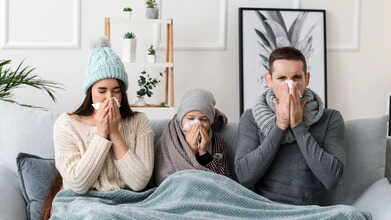
As a strong wave of “superflu” and other seasonal infections moves through the country, large numbers of people have fallen ill this winter. The rise has been serious enough for some NHS officials to advise anyone with symptoms to wear a mask. Newly released data shows how quickly the situation has worsened, with flu admissions jumping by 55 percent in a single week.
This sharp climb has pushed the NHS into what leaders describe as a “worst case scenario” for December. As per The Independent, over the past week, hospitals saw an average of 2,660 daily admissions for flu, the highest figure ever recorded at this point in the year. With so many people under the weather, many are trying to work out which pain reliever offers better comfort. An expert previously spoke to the Mirror on this exact point.
Superflu Cases Rise In UK
Figures released today highlight the severity of the situation, with flu hospitalisations having surged by more than half (55%) in just one week. This massive increase has officially plunged the NHS into a "worst case scenario" situation for the month of December. Last week, an average of 2,660 patients per day were admitted to hospital beds with flu, marking the highest number ever recorded for this time of year.
Superflu Cases: What To Take Paracetamol Or Ibuprofen?
With so many people falling poorly, it can be helpful to know which medicine is best to take. Thankfully an expert previously spoke to the Mirror about ibuprofen and paracetamol. Abbas Kanani, the superintendent pharmacist at Chemist Click, said: "Paracetamol is probably more effective at bringing down temperature, so it's almost like a double-whammy, you get rid of your headache and bring your temperature down. "But if you feel that you have more body aches, that's your main symptom, then ibuprofen is probably slightly better as it's an anti-inflammatory."
However, he cautioned users to be mindful of potential allergies to ibuprofen, which belongs to a specific class of drugs.
He also revealed that many people are unaware that they can actually take both medicines together when feeling particularly unwell. "If you feel that one isn't enough you can take ibuprofen as well as paracetamol, you can take them together. A lot of people don't know that it's not one or the other, you can put them together as they work in different ways."
While these two medications can alleviate aches, pains and fevers, as well as mild cold and flu symptoms, Abbas notes that they won't be particularly effective for those struggling with coughs and nasal congestion.
To address these specific symptoms, you'd need to utilise cold and flu products instead.
Choosing Medicine Based on Your Symptoms
Many people assume one medicine works better for all flu complaints, but the expert’s guidance shows that the right choice depends on what you’re feeling. Fever and headache respond more readily to paracetamol, while body aches and inflammation may ease faster with ibuprofen. For coughs or blocked sinuses, cold-and-flu formulas are needed because standard pain relievers do not target those issues.
Top 10 Weird But Medically Valid STI Questions People Asked On Reddit In 2025

Credits: Canva
Public forums often turn into places where people share worries they hesitate to bring up with a doctor. Reddit, especially, saw a surge of unusual yet genuinely important questions about sexually transmitted infections this year in 2025. A large number of these posts came from young adults who felt unsure about new symptoms, confused about how infections spread or overwhelmed by the flood of sexual-health content circulating online.
The ten questions below may seem odd at first glance, but each one raises a medically sensible point. Together, they show how gaps in sexual-health awareness still shape the way people talk about intimacy and illness on the internet.
What Is An STI?
STI refers to a Sexually Transmitted Infection. It is an infection passed through sexual activity such as oral, vaginal or anal contact, and in some cases through non-sexual routes such as blood exposure or mother-to-child transmission.
These infections can be caused by bacteria, viruses or parasites. Some lead to clear symptoms while others remain silent, but untreated cases can result in serious health problems. When an STI begins to cause notable medical issues, it is often described as a Sexually Transmitted Disease (STD).
Top 10 Weird But Medically Valid STI Questions People Asked On Reddit
“Is it possible to get an STI if both people are virgins?”
One user who had only engaged in oral and anal sex with another virgin noticed marks on their legs and wondered if infections could be “passed down by parents.” The spots disappeared on their own, likely due to shaving irritation, yet the question reveals a common misconception. STIs cannot be inherited genetically. They require actual transmission through sexual contact, blood or childbirth.
“Can kissing, a blowjob or rimming spread an STI?”
This question came from someone who had watched too many alarming clips about PrEP and safe sex on social media. They became so uneasy that they avoided going on dates until they understood the risks. Some infections can spread through oral sex and deep kissing, though the degree of risk varies. Their fear felt intense, but the doubt itself was completely reasonable.
“Has anyone in Sri Lanka even had an STI?”
A user in a regional subreddit asked whether STIs even “exist here” because no one talked about them openly. The framing sounded odd, but it reflected the silence that still surrounds sexual health in many places. STIs appear everywhere, though in some communities the subject is rarely discussed.
“What is the real STI risk from a glory hole?”
One of the year’s most unusual but earnest threads came from someone trying to understand whether anonymous sexual setups increase risk. They asked about skin-to-skin contact, bodily fluids and the impact of poor visibility. Though the question seemed strange, experts often point out that uncertainty about partners and surroundings can raise the chance of exposure.
“For people who use glory holes, aren’t you worried about getting an STI?”
Another thread took a more confrontational tone, suggesting that anyone who uses a glory hole “either already has an STD or doesn’t care.” Replies pushed back, saying that anonymity has many motives and that what truly matters is the use of protection and clarity about risk, not assumptions about a person’s character.
“Would I break up with a new partner if they gave me an STI?”
This question was framed like a moral dilemma, but the situation involved real medical timing. A woman had contracted an STI from a partner who had tested too early for the infection to show up on his results. One commenter suggested that the timing hinted at sexual activity very close to the start of their relationship. The discussion blended relationship boundaries with the science of incubation periods.
“I have every symptom under the sun. Is this an STI?”
A worried user described swollen tonsils, tiredness, muscle twitching, stomach cramps, cracking joints, night sweats and more. None of this lined up with any single STI, yet their panic was sincere. The thread showed how anxiety can turn normal bodily sensations into something that feels catastrophic.
“Could I have an STD from giving oral once?”
A person who had their first sexual experience by giving oral sex to an AFAB partner developed painful cracks on their genitals a few days later, even though there was no genital contact. They feared they had caught an infection. While genital cracks from oral contact alone are unlikely, some infections can move through oral-genital routes. Their confusion made sense even if the symptoms did not match the exposure.
“Are these rashes from sex or something else entirely?”
Several users described bumps, redness and irritation, convinced they must have an STI. Many replies explained that chafing, sweat, allergic reactions or grooming habits can look similar to infection symptoms.
“My symptoms came weeks later. Could it still be an STI?”
Some posters were puzzled when new bodily changes appeared long after a sexual encounter. They mentioned stomach issues, headaches or tiredness. While certain infections do have incubation windows, many unrelated issues can appear around the same time, which can lead people to make the wrong connection.
These questions may sound strange, but nearly all came from people trying to understand their bodies and risks. They also show how much sexual-health education remains incomplete. Proper testing, routine medical visits and clear conversations with professionals are still far more dependable than guessing through anonymous internet threads.
- Follow Us :


© 2024 Bennett, Coleman & Company Limited