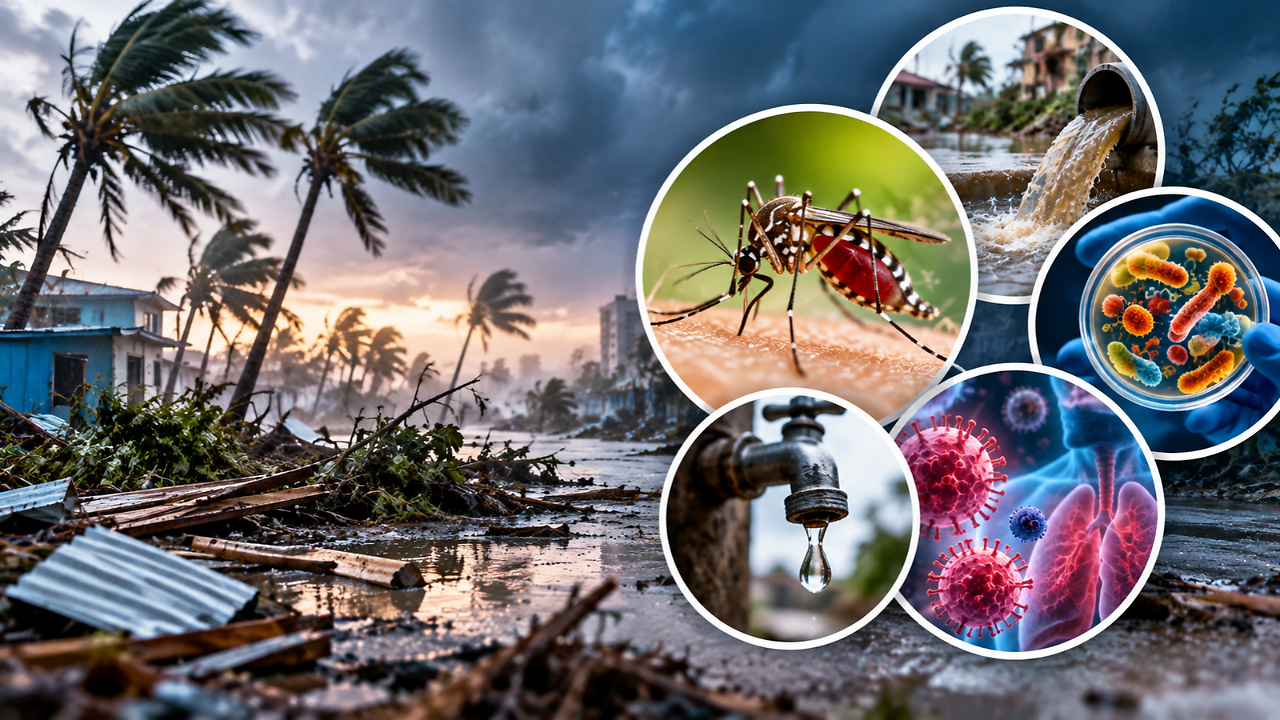
The Indian Meteorological Department has put the coastal states of Andhra Pradesh and Odisha on high alert as Cyclone Arnab is due to make a landfall on Wednesday forenoon. The department said that a “very severe” cyclonic storm, named Ornab (Arnab), is forming over the Bay of Bengal, nearly 260 km southeast of the port city of Visakhapatnam, the most populous city in Andhra Pradesh.Nearly 12 million people live on the cyclone’s projected route, which runs inland and north across India, according to Andhra Pradesh’s disaster management authority. Out of around 400,000, nearly 50,000 people in vulnerable areas have been evacuated to state-run shelters since Monday, according to Reuters. According to The Hindu, around 48,000 people are being mobilised to safer areas in Odisha. Health Risks After The Storm Cyclonic storms do not just end when the winds blow away or floodwater recedes. Floodwater may contain human and animal waste, chemicals and decaying organic matter. This could contaminate drinking water.Contaminated drinking water, damaged sewage systems and stagnant pools can create conditions for waterborne infections and mosquito-borne diseases in the days and weeks that follow.Exposure may increase the risk of gastrointestinal infections, while contact with contaminated water can also transmit infections like leptospirosis. Additionally, water collected in puddles and blocked drains can turn into breeding sites for mosquitoes.Dr Divya K S, infectious disease specialist at Apollo Hospitals, Seshadripuram, Bengaluru, told HealthandMe that the health risks that can emerge after Cyclone Arnab, the warning signs to watch for and the precautions people should take.Risk Of Water-Borne InfectionsOne of the biggest post cyclone threats is contamination of drinking water sources. Floodwaters can cross into potable water networks and mix with sewage, allowing disease germs to enter water used for drinking, cooking and washing.Dr Divya warns of the risk posed by acute enteric pathogens, which can cause gastrointestinal illnesses. “Widespread contamination of municipal water and sewage water can cause an increase in pathogens causing gastroenteritis like Cholera, enteric fever etc.,” she says.She added, “Floodwater is an active biohazard matrix containing human/animal waste, chemicals, and decaying organic matter.”According to the expert, exposure to these pathogens could lead to different infections: Acute Diarrheal Pathogens: Vibrio cholerae, enterotoxigenic E. coli (ETEC), Salmonella enterica, Shigella spp., Campylobacter, and enteric viruses (Rotavirus, Norovirus) causing acute watery diarrhea and inflammatory dysentery. Leptospirosis: Leptospira shed in rodent urine can penetrate abrasions or mucous membranes.Contaminated water and food can transmit infections like cholera, enteric fever and other infections like dysentery. Enteric viruses, including norovirus and rotavirus, can also cause diarrhoea.Symptoms may include diarrhoea, vomiting, abdominal cramps and fever. Severe diarrhoea can lead to dehydration, which is particularly dangerous for young children, older adults and people with underlying health conditions. People should seek medical attention if they develop bloody diarrhoea, vomiting, severe abdominal pain, high fever, confusion, or other signs of severe dehydration.Also read: Scrub Typhus Claims 15 Lives In Rajasthan: What To Know About Its Symptoms, Transmission, Treatment & PreventionRisk Of Vector-Borne InfectionsAs floodwaters recede, water may collect in puddles, blocked drains and other neglected spaces. These sites can cause mosquito breeding, increasing the risk of diseases like dengue, chikungunya and malaria.Dr Divya says, “Vector populations surge sharply within 1 to 2 weeks post-cyclone. As floodwaters recede, micro-environments like puddles, discarded containers form ideal sites for mosquito breeding.”After a cyclone, it is therefore important to remove breeding sites by clearing out stagnant water. Residents should empty discard containers that collect water, clear blocked drains, and avoid water accumulation around their homes.Also read: Climate Change And Gut Health: How Heat, Drought And Unsafe Water Raise Risks, Global Experts Warn Who Is The Most Vulnerable After A Storm?Some people face a higher risk of severe complications because of their age, health conditions or difficulty accessing medical care. Dr Divya identifies the following groups as particularly vulnerable:Immunocompromised people: Those with advanced HIV, cancer patients receiving chemotherapy, transplant recipients and people taking immunosuppressive medicines.Children and older adults: Both groups may be more vulnerable to dehydration and severe illness.Pregnant women: Infections and disruptions in maternity care can pose additional risks.People with chronic conditions: Those with diabetes, chronic kidney disease or cardiovascular disease may need uninterrupted access to treatment.During evacuation, people must carry emergency medicines. Insulin and other temperature-controlled medicines need appropriate storage, while people receiving dialysis, chemotherapy or care related to transplant may need urgent arrangements if services are disrupted.Pregnant women should continue to access antenatal care and seek urgent help for warning signs like bleeding, severe abdominal pain or reduced fetal movement later in pregnancy. How To Protect Yourself After The Storm?Safe drinking water, hand hygiene and food safety are essential after a cyclone, especially when sanitation infrastructure has been damaged.Dr Divya recommends boiling water to make it safer to drink. “Boiling water can ensure disinfection of the water borne infections,” she says.The doctor also emphasises hand hygiene and safe food practices. “Rigorous hand hygiene using soap and water prior to food consumption and post-defecation,” she recommends.Food should be thoroughly cooked and served hot. Avoid raw produce that cannot be washed, food exposed to flies and meals whose handling or storage conditions are unsafe.