
- Health Conditions A-Z
- Health & Wellness
- Nutrition
- Fitness
- Health News
- Ayurveda
- Videos
- Medicine A-Z
- Parenting
Did You Know? You're Wired To Monotask, Not Multitask

Credits: Canva
The world we are living in is constantly forcing us to do more than one thing simultaneously and we have made multitasking the new normal. Thanks to COVID-19 pandemic, we are now used to manage chores while attending a work meeting. But, is this really normal?
On a day to day basis, we process a lot of information, including what is happening at work, the news, social media and of course personal lives. While this is a common phenomenon, it can leave us confused with all the information overloaded and can lead to brain fog, impaired memory, and burnout.
As per a survey by the Movachen Agency, where 2,000 people participated, half of them continued to work even during their vacation. This has further led to the increased blurred lines between work and rest.
What is the alternative?
Monotasking. It means doing one thing at once, as the word 'mono' literally translates to 'one'. While it sounds simple, it could become a struggle for those who are used to multi-tasking, especially since it has left many of us with fractured attention.
Multitask as a term and phenomenon came into existence from 1960s, when computers could perform multiple tasks at once. Ever since, with technology advancements, multitasking became common.
Why are you wired to monotask?
A 2023 study, titled, Biological stress responses to multitasking and work interruptions: A randomized controlled trial, was the first comprehensive investigation into humans' biological stress as a response to multitasking and work interruptions.
The findings show that we can adapt to stress of doing multiple things but only to a point. Eventually, it does lead to a lot of harm, and stress thus becomes chronic.
So, how can monotask help you?
Monotask can alleviate some of that stress on your brain, and it is a muscle that you could also rebuild. It can also help to:
- Reduce stress
- Reduce to-do list
- Improve personal relationship
- Improve quality of work
How can you monotask?
We’re all born with a natural talent for monotasking. If you just watch a child completely absorbed in stacking blocks or drawing, it is a perfect example of monotasking. They’re fully present, focused on one thing at a time.
As adults, though, we tend to lose that skill in the rush of multitasking. But the good news? You can rebuild your monotasking “muscle.” Start small, with simple everyday tasks, and you’ll find it easier to focus on bigger, more demanding ones later.
In his book The Twelve Monotasks, Thatcher Wine explains that focus is something we can train, through daily activities like walking, reading, eating, listening, even sleeping. These are opportunities to practice giving your full attention to just one thing.
Yes, this probably means putting your phone down. But it’s worth it. Try using a timer, short blocks of focused time followed by breaks, to help you ease in.
Here are a few easy ways to practice monotasking:
- Take a 10–20 minute walk: Leave your headphones, camera, and even your dog behind. No podcast, no playlist. Just walk. Feel your body move, breathe deeply, and tune in to the sounds around you. It might feel weird or boring at first, that’s part of the process.
- Eat without distractions: Step away from screens and take a real break for your meal. Savor each bite. Notice the textures, flavors, and how the food makes you feel. Eat mindfully.
- Look at one thing, deeply: Watch a sunset or the clouds drifting by. Study a tree, a flower, or a painting. The goal is to really see it, notice the colors, the movement, the details you’d usually miss.
Even activities like coloring, doing puzzles, washing dishes, or folding laundry can become great monotasking exercises when you give them your full attention.
Start where you are, go slow, and remember: doing one thing at a time isn’t a step back, it’s a step toward being more present and less scattered.
How To Cure Hangover Headache At Home?

Credits: Canva
Hangover headaches are miserable. Most people know that drinking too much alcohol can leave you with a long list of next-day problems, and a headache is one of the most common. You will find no shortage of so-called hangover headache “fixes” online, in home remedies, and even on store shelves. The problem is that very few of them are backed by solid scientific evidence. The surest way to prevent a hangover headache is to watch how much alcohol you drink at one time. That said, there are a few simple, home-based steps that may lower your risk of waking up with a headache, and some practical ways to manage the pain if it has already set in.
What Is A Hangover?
A hangover refers to the uncomfortable physical and mental effects you experience after drinking too much alcohol the night before. According to the Cleveland Clinic, hangovers are extremely common among people who overdrink. One study found that nearly 75% of people who consumed excessive alcohol reported hangover symptoms the following day. The same research suggested that about 25% to 30% of drinkers may not experience hangovers at all.
How Much Alcohol Does It Take To Get A Hangover?
Drinking more than one alcoholic beverage per hour can lead to a hangover. Your body generally needs about an hour to break down and process a single drink. As explained by the Cleveland Clinic, one drink is roughly equal to:
- One 12-ounce can of regular or light beer (5% alcohol).
- Half a pint, or about 8 to 9 ounces, of malt liquor or many craft beers (7% alcohol).
- One 5-ounce glass of table wine (12% alcohol).
- One shot, or 1.5 ounces, of liquor (40% alcohol).
How To Cure Hangover Headache At Home?
Many products and home remedies claim they can cure a hangover, but most are not supported by science, and some may even do harm. For instance, having more alcohol the next morning does not fix a hangover. It simply adds more toxins to your system.
Instead, consider these self-care measures for hangover relief:
- Eat simple foods with complex carbohydrates, such as toast or crackers. These can help raise low blood sugar levels and ease nausea.
- Drink plenty of fluids. Water, electrolyte drinks like Gatorade® or Pedialyte®, broth, and other non-alcoholic beverages can help counter dehydration. A good sign you are rehydrated is when your urine becomes clear.
- Get adequate sleep to help your body recover from fatigue.
- Use antacids to calm stomach discomfort.
Consider aspirin or other nonsteroidal anti-inflammatory drugs (NSAIDs) such as ibuprofen or naproxen to relieve aches and pains. NSAIDs are generally the most effective medications for hangover-related pain, but they should be used cautiously because they can irritate your stomach. Avoid acetaminophen (Tylenol), as combining it with alcohol can damage your liver.
Give it time. Hangover symptoms usually improve within eight to 24 hours. During this period, your body works to eliminate alcohol toxins, restore hydration, repair tissues, and return normal body functions to baseline.
Adenovirus vs Cold vs Flu: How To Tell The Difference As This Mystery Illness Spreads
Credits: Canva
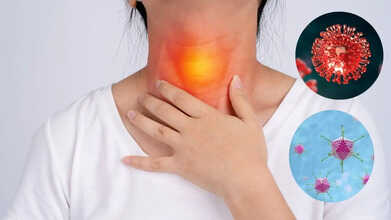
Although many people are only now becoming aware of it, adenovirus is being widely described as a “mystery illness spreading worldwide,” and that description feels accurate when you consider how many people are reporting symptoms at the moment. Adenovirus can cause fever, a runny nose, sore throat, and stomach discomfort, which makes it difficult to distinguish from a regular cold or the so-called “super flu” that is currently circulating. If you are feeling unwell, or concerned about catching an infection just before the holiday season, Dr Deborah Lee from Dr Fox Online Pharmacy explains how to tell adenovirus apart from the common cold and from the H3N2 flu strain.
What Is Adenovirus?
Adenovirus refers to a large group of viruses that can lead to infections ranging from mild to more severe. These viruses can affect the respiratory tract, eyes, digestive system, and urinary tract, often causing symptoms that look very similar to a cold or flu.
Adenoviruses are hardy, spread mainly through respiratory droplets, and can infect people throughout the year. Children and individuals with weaker immune systems may experience more serious illness, but most people recover with rest and fluids, according to the Cleveland Clinic.
Adenovirus vs Cold: How Does Adenovirus Differ From Common Cold?
Adenovirus is one of several viruses that can trigger cold-like symptoms. It helps to think of a cold as a set of symptoms rather than a single illness, with adenovirus being just one possible cause. “Adenovirus is just one virus that can cause the common cold,” says Dr Lee. She adds that many other viruses can also be responsible, including respiratory syncytial virus (RSV), rhinoviruses, parainfluenza viruses, and coronaviruses.
Identifying the exact virus behind your cold symptoms is very difficult. “It is pretty much impossible for you or a doctor to know which virus is causing your cold symptoms,” Dr Lee explains.
Adenovirus vs Flu: How Does Adenovirus Differ From The Flu?
“The flu can be extremely unpleasant, whereas adenovirus is usually mild,” Dr Lee says when comparing the two. She explains that flu symptoms often appear suddenly, sometimes within hours, and are usually marked by a high fever and severe discomfort.
According to Dr Lee, flu symptoms can include:
- A high temperature between 38°C and 40°C
- Joint pain and muscle aches
- Headache
- Sore throat
- Blocked or stuffy nose
- Dry cough
- Extreme fatigue
In contrast, adenovirus symptoms, when they appear at all, tend to develop slowly over several days, Dr Lee notes.
Other important differences between adenovirus and flu include:
- Adenovirus infections can occur at any time of year, while flu is more common during winter
- Adenovirus frequently causes pink eye, whereas influenza may lead to red or irritated eyes but less commonly
- Adenovirus often causes digestive symptoms such as vomiting and diarrhoea, while flu can cause these but does so less often
- Adenovirus is generally less likely to cause serious complications than influenza
Adenovirus: How To Tell If You Have Adenovirus Or Cold Or Flu?
Although adenovirus and common cold symptoms often overlap, the intensity of “super flu” symptoms usually stands out. Even so, Dr Lee explains, “The only way to really know the cause of your symptoms is to have a swab taken by a medical practitioner. This may be from the nose, throat, eye, urine, or stool.”
In most cases, testing is unnecessary and unlikely to be offered. “Because the vast majority of these viral infections are mild and self-limiting, this is rarely done,” says Dr Lee. “Treatment for any cold is symptomatic only.” She adds that extra caution is needed for babies and young children, older adults, pregnant women, and people with weakened immune systems.
New Flu Symptoms Raise Alarm As ‘Aggressive’ Strain Spreads Rapidly: Where Is It Spreading The Most In US

Credits: Canva
A newly identified flu strain that spreads easily and causes more severe illness is driving infections this season. The strain, a mutated form of influenza A H3N2 known as subclade K, has been linked to a growing number of cases worldwide, including across the United States.
According to the World Health Organization, the K variant represents “a notable evolution in influenza A (H3N2) viruses,” prompting concerns among experts about how well this season’s flu vaccine may work against it.
Health specialists say the K variant is associated with stronger flu symptoms such as fever, chills, headaches, exhaustion, cough, sore throat, and a runny nose. A CDC report found that of the 216 influenza A(H3N2) samples collected since September 28, nearly 90 percent were identified as subclade K. As this strain continues to circulate, here is a closer look at the symptoms being reported and the areas where flu activity is currently highest.
New Flu Symptoms
Doctors say the symptoms caused by the mutated H3N2 strain closely resemble those of typical seasonal influenza A. Common symptoms include:
- Fever
- Chills
- Body aches
- Headache
- Severe fatigue
- Nasal congestion or a runny nose
- Cough
Flu symptoms often come on abruptly, Hopkins explains, describing it as a sudden, overwhelming feeling of being unwell.
The CDC notes that flu symptoms can overlap with those of COVID-19 and other respiratory viruses, making testing important. Three-in-one rapid home tests that check for influenza A, influenza B, and COVID-19 are now available, and experts advise keeping them on hand when possible. If you test positive for the flu, antiviral medications may help shorten the illness and lessen symptom severity, Hopkins adds.
Flu Shots: Where Is Subclade K Spreading In The US?
Below are the states and regions reporting the highest levels of medical visits related to flu-like illness, which may not reflect confirmed flu cases. The data reflects CDC reporting for the week ending December 25.
Very High (Level 1)
- New York City
Very High (Level 2)
- New York State
Very High (Level 3)
- New Jersey
- Rhode Island
- Louisiana
- Colorado
High (Level 1)
- Massachusetts
- Connecticut
- Michigan
- Idaho
- South Carolina
High (Level 2)
- New Mexico
High (Level 3)
- Washington, D.C.
- Maryland
- North Carolina
- Georgia
The CDC estimates that the flu has already caused at least 4.6 million illnesses, 49,000 hospitalizations, and 1,900 deaths so far this season. Health officials continue to recommend the flu vaccine as the most effective way to reduce the risk of serious illness.
Super Flu Symptoms: How to Protect Yourself From the Flu
During peak respiratory virus season, experts advise taking basic precautions to lower your risk and protect others:
- Keep vaccinations up to date.
- Get tested if symptoms appear.
- If you test positive, stay home until you are fever-free for 24 hours without medication and your symptoms are improving. If you do not have a fever, remain home for five days after symptoms begin.
- Avoid close contact with people who are sick.
- Wear a mask in crowded indoor settings.
- Wash your hands often.
- Cover your mouth and nose when coughing or sneezing.
- Follow Us :


© 2024 Bennett, Coleman & Company Limited