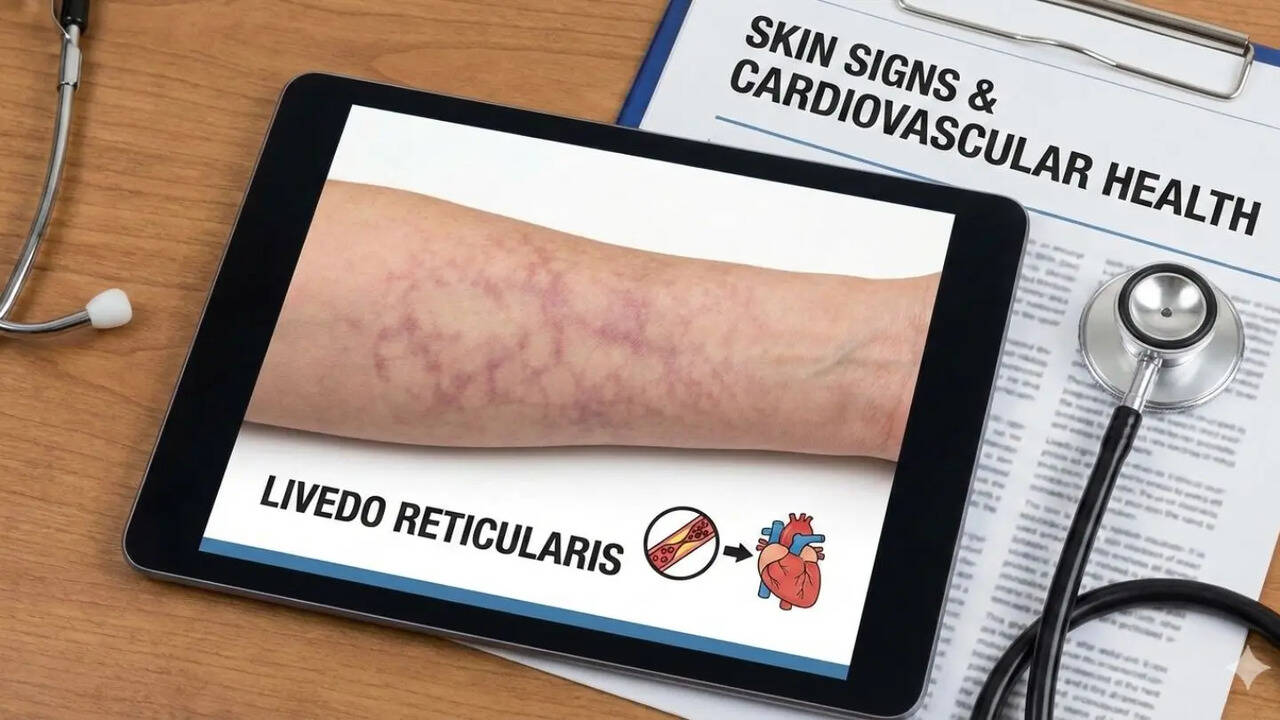
A lace-like pattern appearing on the skin may sometimes point to blocked arteries. Health experts warn that this netted discoloration can, in certain cases, be linked to damage in tissues and organs.Heart and circulatory diseases remain the leading cause of death worldwide, claiming close to 18 million lives every year. This group includes serious conditions such as stroke, coronary artery disease, and heart failure.An Unusual Skin Pattern That Could Signal Artery BlockageIn the UK, cardiovascular disease is responsible for around one quarter of all deaths. Because of its scale and severity, recognising warning signs early can save lives.Most people are familiar with common symptoms like chest pain. What is less widely known is that heart-related problems do not always announce themselves clearly. Some signs are subtle and can appear in unexpected places, including the skin.What Is Livedo Reticularis?The American Academy of Dermatology highlights one particular skin pattern that may be linked to heart and blood vessel problems. A blue or purple, net-like discoloration on the skin can sometimes indicate reduced blood flow or a blocked artery.This condition is known as livedo reticularis. It is believed to occur when small blood vessels near the skin tighten suddenly or when circulation close to the skin becomes uneven.When the Pattern Is Usually HarmlessIn many cases, livedo reticularis is not a cause for concern. Cold temperatures are a common trigger, and the pattern often fades once the skin warms up. Certain medications can also produce this effect without posing a serious health risk.According to the dermatology body, some people notice the pattern when they feel cold, only for it to disappear as their skin warms. When medication is responsible, it is generally considered harmless.When It May Point to a Serious ConditionIn some situations, the same skin pattern can be linked to a condition known as cholesterol embolisation syndrome. This happens when tiny arteries become blocked by cholesterol particles.Such blockages can interfere with blood supply and lead to damage in tissues and organs. For this reason, experts stress the importance of medical evaluation to rule out any underlying or undiagnosed disease.When to See a DoctorThe Mayo Clinic advises seeking medical advice if the mottled skin does not fade with warmth or if it appears alongside other worrying symptoms. You should also consult a doctor if painful lumps or sores develop in the affected area, if you already have a condition that affects blood flow to your limbs, or if you have a connective tissue disorder and notice new skin changes.Doctors also caution that a similar-looking condition, called livedo racemosa, is more often linked to serious underlying illnesses.Other Warning Signs of Heart DiseaseSkin changes are only one possible clue. Other symptoms linked to heart disease include chest discomfort, pain or weakness in the arms or legs, shortness of breath, irregular heartbeats, dizziness, unusual tiredness, and swelling in the limbs.If any of these symptoms feel concerning or persistent, it is important to speak to your GP for further advice.