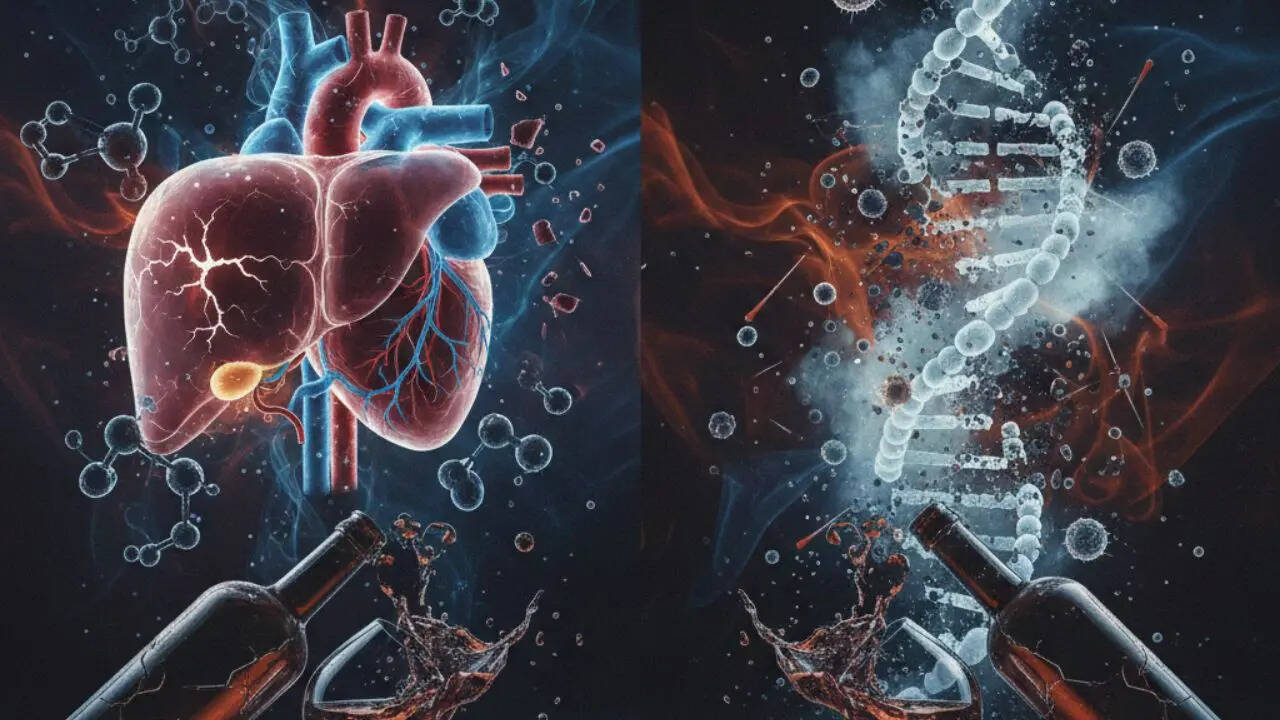
Alcohol is often seen as harmful mainly for the liver or heart, but its impact goes much deeper—reaching down to our DNA. Even moderate drinking can silently cause changes at a cellular level, raising long-term health risks that may not be immediately visible. According to Dr. Amit Miglani, Director & HOD – Gastroenterology, Asian Hospital, the breakdown of alcohol in the body produces a toxic chemical called acetaldehyde, which can directly damage DNA inside our cells.Alcohol Can Damage Your DNA, Not Just Your Liver And HeartThis damage disrupts the body’s natural repair mechanisms, allowing mutations to accumulate over time. Such mutations are linked to several cancers, including cancers of the mouth, throat, liver, breast, and colon. The insidious nature of this damage means that even when you feel healthy, harmful changes may be occurring beneath the surface.How Alcohol Interferes With DNA RepairDNA damage can be complex to understand, but its consequences are serious, explains Dr. Arun Kumar Giri, Director – Surgical Oncology, Aakash Healthcare. Normally, the body constantly repairs minor DNA errors. However, alcohol disrupts this repair process, leaving cells vulnerable to mutation and abnormal growth.Dr. Giri adds that some people have genetic variations that make them break down alcohol more slowly. For these individuals, alcohol stays in the body longer, increasing the likelihood of DNA damage. Over years of repeated exposure, this can lead to uncontrolled cell growth and eventually cancer.No Completely Safe Level of Alcohol For DNA HealthOne of the most important points, Dr. Giri emphasizes, is that there is no entirely safe level of alcohol when it comes to DNA. The risk increases with both the frequency and quantity of drinking. Even occasional binge drinking can be harmful, meaning that how often you drink can be as important—or even more so—than how much you drink at one time.This perspective shifts the discussion from asking “How much alcohol is too much?” to “How often am I exposing my cells to alcohol-induced damage?” Protecting DNA health requires regular monitoring and mindful drinking habits, even for those who feel healthy today.Alcohol: Long-Term Health ImplicationsAlcohol-induced DNA damage is not just a short-term concern. Over time, the accumulation of mutations can significantly increase cancer risk and other serious diseases. Regular health check-ups, a balanced lifestyle, and moderation, or complete avoidance of alcohol are crucial steps for safeguarding your genetic health and overall well-being.Dr. Amit Miglani highlights that “It’s not just about the organs you can feel being affected today; it’s about protecting your long-term health, especially your DNA, for the future.”Dr. Arun Kumar Giri advises, “Understanding the cellular impact of alcohol helps people make informed choices about their drinking habits. Even small changes can significantly reduce the risk of long-term damage.”