
- Health Conditions A-Z
- Health & Wellness
- Nutrition
- Fitness
- Health News
- Ayurveda
- Videos
- Medicine A-Z
- Parenting
Edmonton Sees A Sudden Rise In Amputation Due To Frostbites, Here's What To Know

Credits: iStock
Edmonton is seeing a sudden rise in amputation cases. Inside a clinic in the downtown of the city's homeless shelter, Trevor Logan, reports Global News, winces in pain, as a nurse cleans the blistered middle finger of his right hand. The finger is swollen twice its size. In fact, Logan says that he cannot even look at his hand while the nurse moves whatever is left of his index finger to make room for bandaging.
This is all caused by frostbite, and is not the only case. Beth Klingenberg, manager of health services at Hope Mission in Edmonton, tells Global News that the shelter had to hire more nurses in the recent years because of amputation. In 2023 alone, there were 81 amputation and most procedures involved Edmonton's homeless population. The number jumped to 120 in 2024.
"Year over year, we are just getting worse and worse," she says. "And a lot of times it is the same people losing new limbs as the years progress and life becomes harder."
“I remember we had one client who was quite young, and didn’t understand the full gravity of the loss of his fingers,” Klingenberg says.
The cases have gone up so much so that the Canadian Frostbite Care Network now calls Edmonton Canada's frostbite capital. “Edmonton is reporting higher numbers of frostbite cases in general than we are aware of anywhere else in the country,” said Caitlin Champion, a surgeon at Ontario’s West Parry Sound Health Centre, and a founding member of the network.
What Is Frostbite?
As per Cleveland Clinic, Frostbite is an injury where skin and underlying tissues freeze due to prolonged exposure to freezing temperatures, damaging cells and reducing blood flow, commonly affecting fingers, toes, nose, and ears, leading to numbness, paleness, swelling, blistering, and potentially permanent tissue loss if severe. It's a serious condition requiring prompt warming and medical attention, with symptoms ranging from mild (frostnip) to deep tissue damage.
You can get frostbite when the temperature is below 0 degree Celsius or 32 degrees Fahrenheit. This can happen due to prolonged cold exposure:
- During the winter
- In windy weather conditions
- At high altitudes
- If you do not have shelter from the cold weather
Frostbite could also do permanent damage and irreversible tissue damage or necrosis.
It also affects people who are younger than 18 or of anyone over 65. It does not mean that people outside this age bracket won't be affected.
Stages Of Frostbite
- Cold, sore and painful (frostnip).
- Pins and needles (surface frostbite).
- Numbness (deep frostbite).
Common Symptoms Of Frostbite
Frostnip (early warning stage):
Frostnip is the mildest and earliest stage of frostbite. The affected skin may appear red, purple, or paler than your natural skin tone. It often feels cold, tingly, slightly painful, or numb. At this stage, skin damage is temporary. If you notice these signs, move indoors right away and gently warm the area using warm, not hot, water. As circulation returns, small red bumps called chilblains may appear. Even with mild symptoms, it is wise to see a healthcare provider to rule out lasting damage.
Superficial frostbite (surface-level frostbite):
This second stage is more serious and needs medical attention. Although the skin may feel warm, the water inside it begins to freeze into ice crystals. This can cause a sharp pins-and-needles sensation, along with stinging, swelling, or burning. After rewarming, the skin may become painful, develop blotchy red, purple, or blue patches, and resemble a severe bruise or sunburn. Peeling is common, and fluid-filled blisters may form within a day.
Severe frostbite (deep frostbite):
In the most serious stage, the deeper layers of skin and underlying tissue freeze completely. The area becomes numb, and movement may be difficult or impossible. Immediate medical care is critical. Large blisters usually appear within one to two days, and the skin may turn black as cells die. A hard, black crust can form and may fall off on its own. If not, a healthcare provider may need to remove it surgically.
Face Masks Are 'Inadequate', Says WHO, Must Be Swapped For Respirators
Credits: iStock
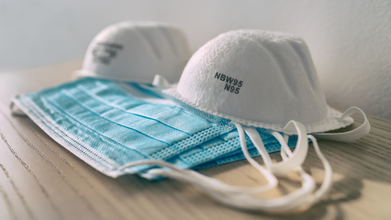
Face masks are not adequate when it comes to protection against flu-like illnesses, including COVID, said the World Health Organization (WHO) guidelines. As the number of flu cases rise in the US and the UK, this WHO guideline, may be of use. The guidelines noted that the surgical masks worn by doctors and nurses, when they are face to face with a patients are no longer providing the protection, and must be replaced with respirators.
The guidelines noted in a letter to the WHO chief Dr Tedros Adhanom Ghebreyesus, noted there is “no rational justification remaining for prioritizing or using” the surgical masks that are ubiquitous in hospitals and clinics globally, given their “inadequate protection against airborne pathogens”. “There is even less justification for allowing healthcare workers to wear no face covering at all,” the letter read.
When COVID was at its peak, an estimated of 129 billion disposable face masks were being used around the world every month. These were used by the healthcare workers as well as general public. These surgical masks were most widely available and recommended by most health authorities during that time. However, respirators were then designed to filter tiny particles. Then came the masks FFP2/3 standards in the UK or the N95 in the US. Evidence also supported that many countries are switching to these masks and that they are more effective. This resulted in fewer infections in patients and health professionals, as well as reducing the rate of sickness, and burnout of the healthcare professionals.
What Is The Key Difference Between Respirator and Surgical Mask?
Face masks are loose in fitting and are designed for one-way protection. It protects others from coughs and sneezes. WHO recommends a three-layer mask when people cannot socially distance. However, not all face masks have a safety rating.
The respirators on the other hand has a tight fitting, which creates a facial seal and filters both inflow and outflow of air. It tightly covers the nose and the mouth. It also removes 94% of all particles that are 0.3 microns in diameter or larger. It is also designed to protect the wear up to the safety rating of the mask.
COVID - Airborne or Not?
The WHO has faced criticism for its delayed acknowledgment of Covid-19’s airborne transmission. The letter urges the agency to reassess its earlier position and clearly communicate to the public that the virus spreads through airborne respiratory particles.
Professor Trisha Greenhalgh of the University of Oxford, a signatory to the letter whose research is widely cited in it, said that infection occurs only when germs enter the body. She explained that respirators, which seal tightly against the face, force air to pass through high-grade filters that block airborne pathogens. In contrast, she noted, medical masks fit loosely and allow significant air leakage.
Supporters of the letter include members of the World Health Network, leading US epidemiologist Eric Feigl-Ding, and Guardian columnist George Monbiot.
Responding to the letter, a WHO spokesperson said it would undergo “careful review.” The spokesperson added that the organization consults experts across diverse health and economic settings when developing guidance on personal protective equipment for healthcare workers, and that its Infection Prevention and Control guidelines for epidemic- and pandemic-prone respiratory infections are currently under review in light of the latest scientific evidence.
NHS Issues New Flu Jab Alert, Warns “The Worst Is Far From Over'
Credits: Canva
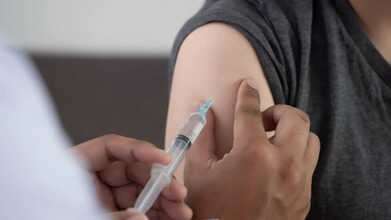
New health data has prompted the NHS to once again encourage certain groups to get their flu vaccination. Recent figures from NHS England show that cases of winter viruses are climbing again.
For example, as per Mirror, hospital admissions due to flu have risen by 9% over the past two weeks, after the previous fortnight had suggested a decline in cases. At the same time, daily numbers of patients admitted with norovirus and Covid have increased compared with the previous week.
Despite these rising cases, the NHS confirmed that it has administered over 18.6 million flu vaccines this winter, an increase of more than half a million compared with the same period last year. With the surge in winter viruses putting extra strain on hospitals and ambulance services, the NHS emphasised that thousands of flu vaccination appointments are still available.
NHS Issues New Flu Jab Alert
Posting on X, the NHS said: "Flu can be serious, especially for older people and those at higher risk. Millions have already been vaccinated this season, and there are still thousands of appointments available.
"If you're eligible, it’s not too late to get yours." Many people, particularly those in vulnerable groups, may qualify for a free flu vaccine.
Who Is Eligible For The Free Flu Jab?
According to NHS guidance, there are six main categories of people eligible for a free flu jab. You might qualify if you need additional protection or if someone in your household does.
This includes people who:
- Are pregnant
- Have certain long-term health conditions
- Live in a care home
- Are aged 65 or over, or will turn 65 by March 31, 2026
- Are the main carer for an older or disabled person, or receive a carer's allowance
- Live with someone with a weakened immune system (for example, someone undergoing chemotherapy)
NHS national medical director Professor Meghana Pandit said: "It’s clear that the worst is far from over for the NHS this winter. Hospitals have seen another rise in admissions from flu and other respiratory viruses last week. The cold weather is also contributing to an increase in vulnerable patients visiting A&E with respiratory issues and more injuries from slips and falls due to icy conditions, so it remains an extremely busy period."
How To Get The Flu Vaccine For Free?
If you qualify for a free flu jab, there are several ways to access it. As per Mirror, you can call your GP surgery directly to book an appointment, or arrange one at a pharmacy either online or through the NHS app, as long as you are 18 or older.
Some pharmacies also offer the NHS vaccine at no cost and accept walk-ins without prior booking. This service isn’t available at every pharmacy, but you can locate the nearest pharmacy offering the complimentary vaccine here.
Do You Have Persistent Itching? It Could Be Linked To These 4 Cancers
Credits: Canva
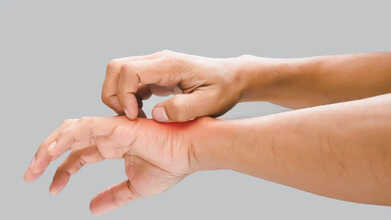
Itchy skin is something most of us deal with occasionally, and in many cases, it is harmless. Everyday triggers such as rough clothing, insect bites, or dry winter air can all leave the skin irritated. Itching is also commonly linked to skin conditions like eczema or psoriasis.
That said, an oncologist has pointed out that persistent itching can, in some cases, be linked to certain cancers. In a TikTok video, Dr Amit Garg, a cancer specialist based in California, explained that itching can appear as a symptom in four specific types of cancer. While itching alone is not usually a cause for concern, it may become more meaningful when it occurs alongside other symptoms that should be checked by a GP.
1. Hodgkin Lymphoma
Hodgkin lymphoma is a relatively rare cancer that affects lymphocytes, the white blood cells that help the body fight infection. Dr Garg explained that this cancer can cause “severe, widespread itching,” which often becomes worse at night. The NHS also lists itchy skin as a possible symptom, along with:
- A painless lump or swelling, usually in the neck, armpit, or groin, which is the most common sign
- Pain in the glands of the neck, armpit, or groin after drinking alcohol
- A high temperature
- Night sweats
- Shortness of breath
- Sudden, unexplained weight loss
The NHS advises seeing a GP if you notice any of these symptoms. Although they are common and do not always point to Hodgkin lymphoma, it is important to rule it out. Early diagnosis improves the chances of successful treatment, so symptoms should not be ignored.
2. Polycythemia Vera
Polycythemia vera is a rare, slow-developing blood cancer. According to the NHS, it is most often caused by a change in the JAK2 gene, which leads the bone marrow to produce too many red blood cells. An increased concentration of red blood cells is known as erythrocytosis, although having this condition does not automatically mean cancer.
One symptom of erythrocytosis can be itchy skin, particularly after bathing or showering. You should speak to a GP if symptoms persist. Other signs may include:
- Headaches
- Blurred vision
- Reddened skin, especially on the face, hands, and feet
- Tiredness
- High blood pressure
- Dizziness
- Discomfort in the abdomen
- Confusion
- Bleeding issues such as nosebleeds or bruising
- Gout, which can cause joint pain, stiffness, and swelling
3. Gallbladder And Pancreatic Cancer
Gallbladder cancer and pancreatic cancer often share similar symptoms. These can include a reduced appetite, unintentional weight loss, fever, nausea, and changes in bowel habits such as diarrhoea or constipation.
Dr Garg explained that both cancers can cause “intense itching,” which happens when bile salts build up under the skin. The NHS also lists itching as a symptom for both conditions, noting it may occur alongside darker urine, paler stools, and jaundice, which can cause yellowing of the skin or the whites of the eyes.
One key difference between the two cancers is the type of pain experienced. Gallbladder cancer may cause a dull ache on the right side of the abdomen, while pancreatic cancer more commonly causes pain in the upper abdomen and back, which can worsen after eating or when lying down.
In both cases, you should see a GP if symptoms last longer than two weeks or if you have lost weight without trying. You should call 111 if vomiting lasts more than two days, diarrhoea continues for more than seven days, or if your skin turns yellow.
4. Cutaneous T-cell Lymphoma
Cutaneous T-cell lymphoma is a form of skin lymphoma and a rare type of non-Hodgkin lymphoma. It begins in the T cells of the skin and often appears as flat, red patches that may be itchy.
In its early stages, these patches can resemble common skin conditions such as eczema or psoriasis. Seeing a GP is important if symptoms develop, as they can assess whether it is a common skin issue or something more serious.
Cancer Research UK states that around 150 people in the UK are diagnosed with cutaneous T-cell lymphoma each year, making it a rare cancer. As with many cancers, early diagnosis can play a key role in improving treatment outcomes.
- Follow Us :


© 2024 Bennett, Coleman & Company Limited