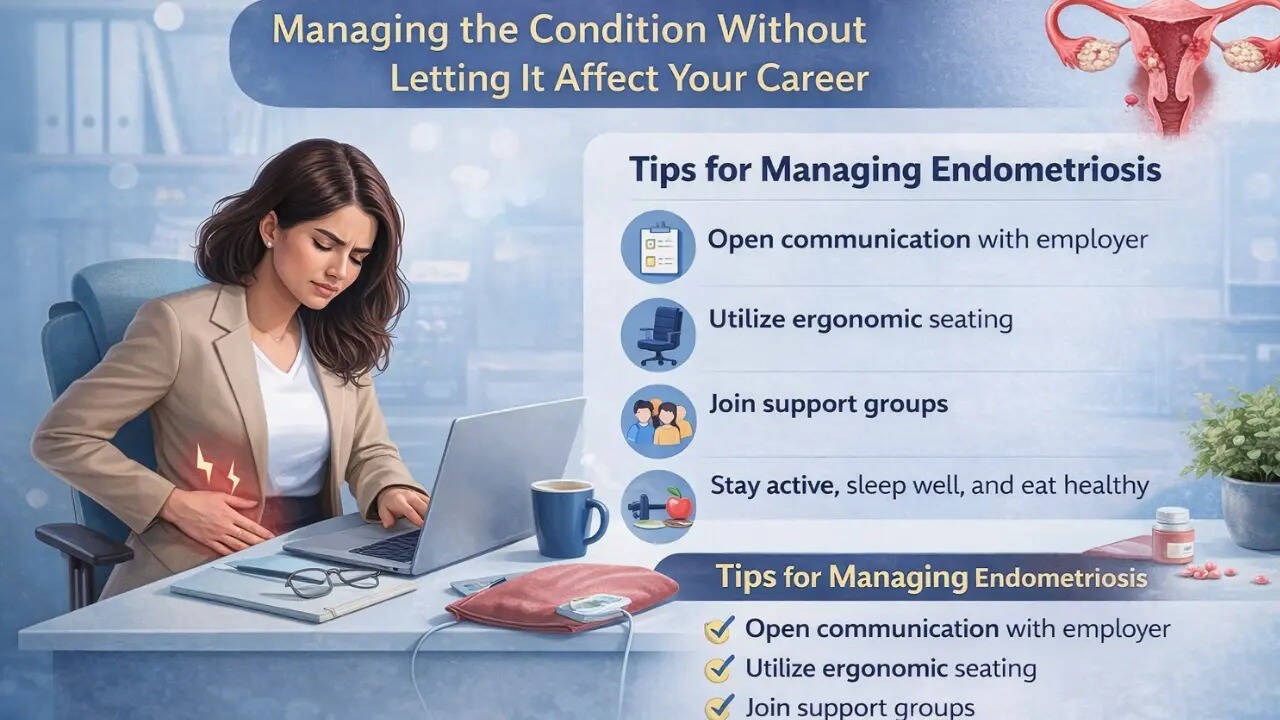
Are you a working professional? Have you been diagnosed with endometriosis? Worried about how this condition can impact your career? Well, don’t panic! We give you vital tips to manage the symptoms of endometriosis without compromising your professional aspirations. Dr. Kanika Gera Thakral, Consultant – Obstetrics & Gynaecology, Motherhood Hospitals, Greater Noida, spoke about the effects of endometriosis on working women and what women can do to not let the pain take a toll on their work life. What is endometriosis?Endometriosis happens when tissue similar to the lining of the uterus grows outside the uterus. These tissues commonly develop on the ovaries, fallopian tubes, or the pelvic lining. Endometriosis affects many women and can impact their daily lives, including their ability to work comfortably. Many women continue their professional responsibilities despite experiencing severe discomfort, fatigue, and pain. Raising awareness about the condition and encouraging supportive workplaces can help women manage both their health and career more effectively. Since it is a progressive disorder, timely intervention remains key to managing it. In many cases, women live with symptoms for several years before receiving the correct diagnosis, which can delay treatment and affect their quality of life.Read more: The Right Approach To Manage EndometriosisThe workplace challengeMany working women who are diagnosed with endometriosis tend to experience symptoms such as pelvic pain, cramps, fatigue, nausea, and heavy menstrual cycles. These symptoms can make it difficult to maintain productivity at work, especially during flare-ups. Hence, women will be unable to concentrate on work or finish the tasks. Some may miss deadlines and meetings due to the painful symptoms. Women will have to skip going to work when the symptoms are intense and will have to rest at home. So, women living with endometriosis may face interruptions in their career growth and reduced working hours. But don’t worry, it is possible to manage this condition and give your best at work.Long working hours, prolonged sitting, workplace stress, irregular meals, and lack of adequate rest can sometimes worsen symptoms of endometriosis. Apart from physical discomfort, the condition can also affect emotional well-being. Living with chronic pain may lead to stress, anxiety, or frustration, which can indirectly impact workplace confidence and productivity. Strategies for managing work and endometriosisIt is necessary for women with endometriosis to go for regular check-ups and follow-ups with the doctor. Women can continue to pursue their professional goals by adopting practical strategies to manage the condition. Open communication with employers when it comes to flexible schedules can help overcome stress and anxiety. Women should have access to remote working to avoid unnecessary travel due to pain. The work-from-home option can be given to the women when needed by them. Planning demanding tasks during times of higher energy and maintaining a balanced daily routine can also improve productivity at work. Women should make sure to keep essential medications, a heating pad, or comfort aids at their desk to be able to relieve sudden discomfort. Likewise, using ergonomic seating or maintaining good posture while working may reduce pelvic and even back discomfort. Women should also connect to support groups that help to provide emotional reassurance and useful coping strategies that include yoga and meditation.Lifestyle habits also play an important role. Regular physical activity, adequate sleep, stress-management techniques such as yoga or meditation, and following an anti-inflammatory diet rich in fruits, vegetables, whole grains, and healthy fats may help reduce flare-ups.Read more: Women With Endometriosis Are Earning Less, Reveals StudyTreating endometriosisTreatment is particularly based on the severity of symptoms. Women will be advised lifestyle modifications such as regular exercise, stress management, and an anti-inflammatory diet. Non-steroidal anti-inflammatory drugs may help reduce discomfort. Hormonal therapies may also be used to control symptoms. Some women will be advised to undergo laparoscopy to remove endometriotic cysts. Minimally invasive surgery can help remove lesions and restore pelvic anatomy, which may also improve fertility in some cases. In advanced cases, surgery can be recommended to women. With timely care and supportive workplaces, women can pursue their ambitions without letting endometriosis interfere with their careers.