
- Health Conditions A-Z
- Health & Wellness
- Nutrition
- Fitness
- Health News
- Ayurveda
- Videos
- Medicine A-Z
- Parenting
Flu Cases On The Surge, ER Doctor Shares 5 Must-know Things About The Illness

Credits: iStock
Flu cases are on the rise and as of the January 3, 2026 data by the Centers for Disease Control and Prevention, more than 120,000 cases have been detected in clinical laboratories, apart from those detected in home tests. About 40,000 influenza cases were admitted to the hospital in the prior week and 17 influenza-related deaths reported in children, this season. Physicians across the US are constantly telling everyone, especially the vulnerable population to keep an eye on the symptoms. They have time and again also urged people to get vaccinated against the flu. The country is also seeing an overload of flu cases, with many calling it the 'worst flu season' ever.
The 2025-2026 flu season's main culprit is the influenza A (H3N2) subclade K, or the superflu. This variant is a mutated strain of H3N2 virus and has a history of being most contagious, staying longer on surface, which is why it is driving the most numbers of hospitalization this season.
Jesse Pines, Chief of Clinical Innovation for US Acute Care Solutions and a practising physician for over 20 years of experiences writes for Forbes the 5 must-know things about the flu.
5 Must-Know Things About Flu, From An ER Doctor
Identify the Symptoms
It is important to know what symptoms you have to know about the illness. This flu starts with high fever, cough, fatigue, muscle aches, sore throat and a headache. However, not everyone can have the similar symptoms. Children could experience gastrointestinal symptoms, which include nausea, vomiting and diarrhea. Older adults may have atypical symptoms, which may include not feeling hungry, dizziness, or weakness.
Read: Face Masks Are 'Inadequate', Says WHO, Must Be Swapped For Respirators
Vaccine Is A Must
While the flu vaccine for this season was made at least 7 to 8 months before, like usually it happens, which means the subclade K strain may not be this vaccine's target. However, data shows that despite this mismatch, it has a 72 to 75% effective rate in preventing emergency department visits and hospital admissions in children and adolescents, and 32 to 39% effectiveness in adults.
What To Do If You Have Flu Symptoms
The first response should be to contact your healthcare provider for prescription. Pines note that "Oseltamivir (Tamiflu) and baloxavir (Xofluza) are primary options". These are used to reduce the symptom duration, and prevent any further complications like pneumonia. It is most effective if started with in the 48 hours of symptoms.
Should You Seek Higher-Level Medical Care With Flu?
While many people recover at home, if you see your symptoms are not showing any signs of reduction beyond 4 to 5 days, you may need a higher levels of medical care for your flu. This could also be applied if your symptoms worsen suddenly after a few days.
How to Manage Post Flu Weakness?
While everyone is talking about flu and its treatment, not much attention is paid on what to do afterwards. Even after the treatment, one might feel the weakness during their recovery period. This has a scientific name, known as 'post-viral' syndrome, which means a lingering cough and fatigue for 2 to 3 weeks after the illness. This is the time when you gradually return to normal activities, but ensure to maintain adequate hydration, sufficient calorie and protein intake in your diet and adequate sleep.
NHS Warns Of Side Effects Linked To Common Heart Medication Propranolol

Credits: Canva
The NHS has issued an alert for anyone taking a widely used heart medication. People are being advised to watch for serious warning signs, including yellowing of the skin or “nosebleeds lasting more than 10 minutes.”
What Is Propranolol?
Propranolol is a beta blocker that slows the heart rate and relaxes blood vessels, helping lower blood pressure and reduce the heart’s oxygen demand. It is also prescribed to ease symptoms of anxiety, such as trembling or excessive sweating, and can help prevent migraines. The medication is prescription-only but is commonly prescribed throughout the UK.
According to the Mirror, the British Heart Foundation reports that more than 50 million beta blocker prescriptions are issued in the UK each year, including for propranolol. Patients usually take it once a day, in either a standard or slow-release form.
While propranolol is generally safe, it does carry possible side effects. The NHS advises contacting 111 immediately if serious symptoms affecting the blood or kidneys appear.
The NHS notes: “Like all medicines, propranolol can cause side effects in some people, but many experience none or only minor effects. Side effects often ease as your body adjusts to the medication.”
Propranolol Side Effects
Common side effects include headaches, fatigue, weakness, cold fingers or toes, nausea, and stomach discomfort. While most people over 12 can safely take propranolol, the NHS recommends consulting a doctor first if you have a history of low blood pressure, heart failure, depression, or diabetes.
More serious reactions can occur, including yellowing of the eyes or skin, pale stools, or dark urine. The NHS also warns of nosebleeds lasting longer than 10 minutes, unexplained bruising, or increased tendency to bruise easily.
Anyone experiencing these warning signs should contact a doctor or call 111 immediately. The NHS also cautions against stopping propranolol abruptly without medical guidance, as this could trigger severe heart problems, including chest pain or even a heart attack.
Who Should Be Extra Cautious With Propranolol
While propranolol is widely prescribed and generally safe for most adults, certain people need to monitor themselves more closely or consult their doctor before use. Those with low blood pressure, heart failure, slow heart rates, diabetes, respiratory conditions like asthma, or a history of depression may face higher risks of side effects. Pregnant or breastfeeding women should also speak to a healthcare professional before taking the medication.
The NHS emphasizes that even minor symptoms—like unusual fatigue, dizziness, or cold hands and feet—should not be ignored, especially if they worsen over time. Monitoring for these effects early can prevent more serious complications.
Disclaimer: This article is for informational purposes only and is not a substitute for professional medical advice, diagnosis, or treatment. Always consult a qualified healthcare provider before starting, stopping, or changing any medication. If you experience any side effects or unusual symptoms while taking propranolol or any other prescription medicine, seek medical attention immediately.
Death Cap Mushroom Poisoning Claims California Resident’s Life: Symptoms And Risks Explained

Credits: Canva
A California man died last weekend after eating so-called death cap mushrooms, marking the third fatality linked to the toxic fungi in the state since November.
Health officials say California is seeing an unusually high number of mushroom poisonings this season. Between November 18 and January 4, at least 35 cases were reported statewide. In a typical year, the number is usually fewer than five.
“This year’s figures are far beyond what we normally see,” said Sheri Cardo, a communications specialist with the California Department of Public Health.
California Resident Dies After Eating Death Cap Mushrooms
At least three people have now lost their lives in California due to death cap mushroom poisoning since November. Media reports indicate a sharp rise in cases tied to foraged wild mushrooms, with more than 35 poisonings recorded over the past three months.
“The numbers we’re dealing with this year are comparatively off the charts,” Cardo told NBC News.
The most recent death occurred in Sonoma County and was the first fatal wild mushroom poisoning reported there this season, according to county health officials.
Dr. Michael Stacey, interim health officer for Sonoma County, urged residents to avoid eating wild mushrooms unless they are purchased from reliable grocery stores or licensed sellers. He warned that death cap mushrooms can look strikingly similar to safe, edible varieties.
What Is Death Cap Mushroom Poisoning?
Death cap mushrooms, scientifically known as Amanita phalloides, are among the most poisonous mushrooms in the world. They commonly grow beneath oak trees and can be found in parks, gardens, and wooded areas.
Experts say these mushrooms are often mistaken for edible types because of their appearance. Typical features include:
- A smooth cap that may appear whitish, pale yellow, light brown, or green
- White gills underneath the cap
- A white spore print
- A cup-like structure called a volva at the base of the stem
- A ring, known as an annulus, around the stem
Death Cap Mushroom Symptoms
Symptoms usually begin between six and 24 hours after ingestion. Early signs often include stomach pain, nausea, vomiting, and diarrhoea.
In many cases, symptoms ease or disappear after one or two days, which can create a false sense of recovery. By that point, however, the toxins may have already caused severe damage to the liver.
According to experts, the poison responsible, known as amatoxin, can seriously harm the liver, kidneys, and digestive system. Without prompt treatment, the damage can be fatal.
U.S. Poison Centers receive an average of about 52 calls each year related to amatoxin exposure, said Hallen-Adams, though not every case is officially reported.
Is the Risk Easing?
The danger may now be starting to decline in parts of California. Mike McCurdy, president of the Mycological Society of San Francisco, said he has noticed far fewer death cap mushrooms during recent foraging trips.
Earlier this winter, McCurdy said he spotted hundreds of death caps during a two- to three-hour walk in Sonoma County. On a recent outing near Lafayette, California, he found just one. “I think we’re getting close to the end,” he said.
Do You Wear Contact Lenses? This Rare Eye Parasite Can Permanently Damage Your Vision
Credits: Canva
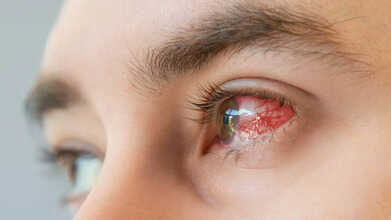
Nearly four years ago, Teresa Sanchez was in Mexico for a medical procedure when her right eye began to feel unusually dry and irritated. At first, it seemed minor. She assumed her contact lens might be torn or that the switch from daily lenses to monthly ones was causing dryness. She even wondered if her body was fighting off an infection, as per CNN.
What she did not realize at the time was that a microscopic organism was slowly attacking her cornea. Over the next three months, the parasite caused irreversible damage to her vision and triggered searing pain that spread across her head.
“I couldn’t even keep the blinds open in my room,” said Sanchez, now 33 and living in Las Vegas. “Light would cause unbearable pain. That’s when I knew something was seriously wrong.”
By then, she had already seen multiple optometrists and had been misdiagnosed. Frustrated and desperate for answers, Sanchez began researching her symptoms on her own.
What Is Acanthamoeba Keratitis?
Online searches led Sanchez to a condition she had never heard of: acanthamoeba keratitis. An eye specialist later confirmed it. Keratitis refers to inflammation of the cornea, the clear, dome-shaped layer at the front of the eye that plays a central role in focusing vision. Acanthamoeba is a microscopic, single-celled organism that cannot be seen without a microscope.
According to Dr. Jacob Lorenzo-Morales, a professor of parasitology at the University of La Laguna in Spain, acanthamoeba is commonly found in soil and water. It does not require a host to survive, which makes it especially resilient.
Once the organism comes into contact with the eye, it can attach itself to the cornea. Dr. Paul Barney, an optometric physician and director at the Pacific Cataract and Laser Institute in Alaska, explained that even tiny breaks in the corneal surface can allow the parasite to burrow deeper into the eye.
Why Contact Lens Wearers Face Higher Risk?
Acanthamoeba keratitis is considered rare. Based on data from 20 countries, including the UK, India, the US, Canada and Brazil, there are more than 23,000 cases worldwide each year. Yet a striking pattern stands out. Between 85% and 95% of people who develop the infection wear contact lenses.
Contact lenses can cause microscopic abrasions on the cornea, creating an entry point for the parasite. The organism can also cling to the lens itself or become trapped between the lens and the eye, making it easier to penetrate the corneal tissue.
“If it’s not diagnosed early and treated aggressively, the outcome can be devastating,” Barney said. “The parasite feeds on the cornea, triggering inflammation and tissue damage that can lead to permanent vision loss.”
In some cases, vision can be partially restored with treatment. Others require a corneal transplant.
A Parasite Built To Survive
Treating acanthamoeba keratitis is especially difficult because the organism has strong defense mechanisms. It can sense threats and respond by forming a cyst, allowing it to lie dormant for months or even years.
This resilience means treatment often stretches over long periods and involves intense discomfort. Because the eye is extremely sensitive, patients must work closely with specialists and strictly follow treatment instructions.
Why The Condition Is Often Missed?
Early diagnosis is one of the biggest challenges Because acanthamoeba keratitis is uncommon, many optometrists may not recognize it right away. As a result, many contact lens users only learn about the condition after they develop it or come across viral videos discussing it online.
Many patients have expressed surprise that they were never clearly warned about the risks of wearing contacts while showering or swimming.
The Contact Lens Society of America emphasized that contact lenses are medical devices and require strict hygiene. This includes avoiding water exposure during swimming, showering or sleeping. The organization also stressed the importance of patients asking questions and carefully reviewing care instructions.
Acanthamoeba Keratitis: Symptoms That Mimic Other Eye Infections
In addition to severe pain and light sensitivity, acanthamoeba keratitis can cause redness, blurred vision, dryness, excessive tearing and the sensation that something is stuck in the eye.
Because these symptoms overlap with other conditions, misdiagnosis is common. Barney said the infection is frequently mistaken for herpes simplex keratitis, a major cause of infection-related blindness. In its earliest stages, it can even resemble pink eye.
That was the case for Sanchez. Her first optometrist diagnosed pink eye. The prescribed drops blurred her vision. A second optometrist suspected a bacterial infection, and while antibiotic drops offered brief relief, she soon lost vision in the affected eye.
Acanthamoeba Keratitis: How To Reduce Your Risk?
Experts stress that contact lens hygiene is critical. Always clean and store lenses using approved contact lens solution, never water. The solution in your lens case should be replaced daily. Wash and dry your hands thoroughly before handling lenses.
Sleeping in contact lenses should be avoided, as it increases dryness, irritation and the risk of corneal damage. Daily disposable lenses may lower infection risk compared to monthly lenses.
For water-based activities, glasses or prescription goggles are safer options. Some people may also consider vision correction surgery after discussing risks and suitability with a doctor.
- Follow Us :


© 2024 Bennett, Coleman & Company Limited