
- Health Conditions A-Z
- Health & Wellness
- Nutrition
- Fitness
- Health News
- Ayurveda
- Videos
- Medicine A-Z
- Parenting
Flu Symptoms 2025: NHS Warns People With Certain Conditions Face Higher Risk
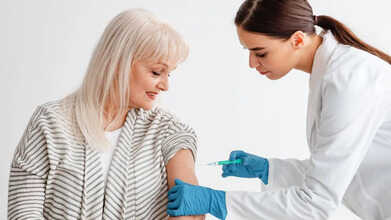
Credits: Canva
People living with long-term health conditions are among those being urged by the NHS to take a key step as concerns around flu continue to grow. Hospital admissions linked to influenza reached 3,140 by the end of last week, marking the highest level ever recorded for this point in the season and an 18% rise compared to the previous seven days.
NHS Urges People With Long-Term Conditions To Take Action Amid Flu Concerns
Sharing an update on X this afternoon, the NHS said: “Flu can be serious for those at high risk, including children, older adults and people with long-term conditions. 18 million people have had the free NHS flu vaccine, and it’s not too late to get protected. Book via your GP, pharmacy or the NHS App.”
Flu Vaccine Eligibility: Why Flu Vaccination Matters
Flu vaccines are designed to protect against influenza, which can be dangerous and, in some cases, life-threatening for certain groups. Each autumn or early winter, the NHS rolls out these vaccinations for people who are more likely to develop serious complications if they catch the virus.
Flu Vaccine Eligibility: Who Was Eligible From September 1?
Based on guidance from the UK Health Security Agency (UKHSA), six main groups became eligible for the flu vaccine from September 1 this year, with another six groups added from October 1.
From September 1, eligibility included:
- Pregnant women
- All children aged two or three years old on August 31, 2025
- Children with specific long-term health conditions, aged six months to under 18 years
- Primary school children, from reception through Year 6
- Secondary school children, from Year 7 to Year 11
- All children in clinical risk groups aged six months to under 18 years
Flu Vaccine Eligibility: Who became eligible from October 1, 2025?
From October 1, 2025, the following groups were also eligible:
- Everyone aged 65 and over
- Adults aged 18 to 65 with long-term health conditions
- Care home residents
- Carers receiving Carer’s Allowance, or those caring for an elderly or disabled person
- People living with someone who is immunocompromised
- Frontline health and social care workers
How And Where To Get Vaccinated?
The NHS App can be used to check vaccination eligibility. Flu jabs are available through GP practices, selected pharmacies, maternity services, and care homes.
The NHS also notes that health and social care workers may be offered the vaccine at their place of work. Flu vaccinations can be given at the same time as other jabs, including COVID-19 and shingles vaccines.
Commenting on the recent rise in cases, NHS National Medical Director Professor Meghana Pandit said yesterday: “While some parts of the country will be breathing a sigh of relief with flu cases not rising as quickly as feared, we are nowhere near out of the woods yet.
“Combined with the impact of strikes, a stream of winter viruses means many hospitals will be on high alert in the days ahead. But it remains vital that people continue to come forward for NHS care as normal.
“If you need urgent help, dial 999 in an emergency, or use NHS 111 for other care needs. And if you are eligible, please come forward for a jab, it’s not too late.”
Government Appeals To The Public
Health and Social Care Secretary Wes Streeting also addressed the situation, saying: “Flu continues to put significant strain on the NHS, with record numbers of patients in hospital, and frontline services remaining under enormous pressure. I’m appealing to the public to protect yourself and your loved ones by getting your flu jab.
“I want to thank NHS staff who are going above and beyond at the toughest time of year. Thanks to their hard work and careful planning, ambulance handovers are around eight minutes quicker than this time last year.”
Why Autism In Women Is Often Overlooked And Misdiagnosed
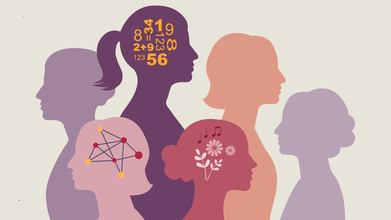
Credit: iStock
Autism in women is not often entirely recognized because this disorder does not always have to correspond to the “classic” picture characteristic of males.
The diagnosis is based on a male criterion with such behavior as obvious withdrawal from a group, overtly displayed repetitive behaviour, and limited interests. There can be mild social deficit or internalized anger and frustration that can pass unnoticed in clinical practice.
The Art of Masking
One of the most significant reasons behind underdiagnosis is masking (also called camouflaging). Masking is one of the most significant reasons for underdiagnosis. This is helpful in masking but also covers or conceals essential symptoms.
Masking causes mental exhaustion, anxiety, and burnout, but it does not address the underlying autism and leaves it undiagnosed.
Stereotypes And Gender Bias
There is a strong societal stereotype that autism is a “male condition”. This bias is felt by parents, teachers, as well as health care professionals.
Sex bias is evident in that boys get referred for evaluation early. Girls are often tagged “shy,” “sensitive,” and “introverted.”
Their struggles are normalized instead of being explored for any issues. Gender bias is a significant contributor to delayed or wrong diagnosis.
Different Interests, Less Suspicion
A restricted interest is another hallmark of autism, but in women, it tends to be more socially acceptable. Their interests conform to the norms of society; they do not predispose clinical suspicion as opposed to more masculine interests like mechanical systems or numbers.
Overlap With Other Conditions
Autism in women being misdiagnosed as other psychiatric disorders is due to symptom comorbidity. Some of the common misdiagnoses are:
- anxiety disorders,
- major depressive disorder,
- borderline personality disorder,
- eating disorders.
In many cases, these are secondary to autism as a result of years of living with undiagnosed autism.
Social Expectations And Conditioning
From an early age, girls are often conditioned to be socially attentive, empathetic, and compliant. This societal conditioning pushes autistic girls to adapt and hide their difficulties.
These may include forcing themselves into socializing. Fitting in is deemed more important than comfort. They end up creating coping mechanisms that mask their difficulties.
While this may benefit outward functioning, it postpones the recognition of underlying neurodevelopmental differences.
The Consequences of Late Diagnosis
Delayed diagnosis or missed diagnosis has the following effects:
- Chronic mental illness
- Low self-esteem
- Confusion about identity
- Inadequate support services
Endometriosis Taught Me To Always Listen To My Body, Says Model Padma Lakshmi

Credit: Padma Lakshm/ Instagram
The World Health Organization estimates that 10 percent (190 million) of reproductive-age women worldwide suffer from endometriosis.
The chronic and complex menstrual disease that affects many women is characterized by severe pain during menstruation, heavy menstrual bleeding, chronic pelvic pain (pain that does not go away when the menstrual cycle ends), infertility, and abdominal bloating and nausea.
The incurable condition poses a significant challenge to women as it affects their personal and professional lives, relationships, and fertility, among others, due to persistent pain and fatigue.
The diagnosis also gets delayed, as endometriosis is often confused with PCOS, or Polycystic Ovary Syndrome, due to some overlapping symptoms like irregular menstrual periods. The symptoms may continue to persist or recur after treatment is initiated.
In a powerful statement resonating with millions worldwide, Indian American author and television host Padma Lakshmi has shared her experience with the condition.
Opening about her personal battle with endometriosis, the 55-year-old, Co-founder of Endometriosis Foundation of America, said that the condition made her understand how strong she is and called for greater awareness and self-advocacy among women.
"Endometriosis has taught me that I should always listen to my body. Pain is your body's way of telling you something is wrong,” said Lakshmi, in a media post on social media platform Instagram.
"Through my struggles with endometriosis, I've learned that, actually, I have a very high threshold for pain, that I may be stronger than I know, but that I shouldn't always need to be,” PopSugar quoted her as saying.
Lakshmi noted that it is now her life's mission "to advocate for my own health, and also to advocate for all women with endometriosis."
What Is Endometriosis?
Endometriosis happens when tissue similar to the lining of the uterus grows outside the uterus. These tissues commonly develop on the ovaries, fallopian tubes, or the pelvic lining.
Endometriosis affects many women and can impact their daily lives, including their ability to work comfortably. Many women continue their professional responsibilities despite experiencing severe discomfort, fatigue, and pain.
Raising awareness about the condition and encouraging supportive workplaces can help women manage both their health and career more effectively.
Since it is a progressive disorder, timely intervention remains key to managing it. In many cases, women live with symptoms for several years before receiving the correct diagnosis, which can delay treatment and affect their quality of life.
Treating Endometriosis
Treatment is particularly based on the severity of symptoms. Women will be advised lifestyle modifications such as regular exercise, stress management, and an anti-inflammatory diet. Non-steroidal anti-inflammatory drugs may help reduce discomfort.
Hormonal therapies may also be used to control symptoms. Some women will be advised to undergo laparoscopy to remove endometriotic cysts.
Minimally invasive surgery can help remove lesions and restore pelvic anatomy, which may also improve fertility in some cases. In advanced cases, surgery can be recommended to women.
Shared Lipsticks, Makeup Items May Spread Herpes: Here’s How To Stay Safe
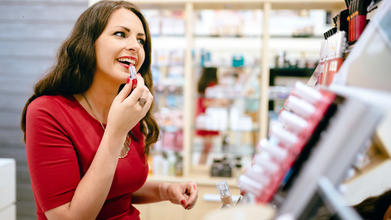
Credit: iStock
In a shocking incident, a woman contracted the herpes virus after using shared lipstick samples at a cosmetic store, raising concerns about makeup hygiene.
The incident highlights the risks involved in trying products that come into direct contact with the skin and are shared with a lot of people.
Also Read: World Autism Awareness Day 2026: Can Cell Therapy Be The Future Of Autism Treatment?
What Is Herpes?
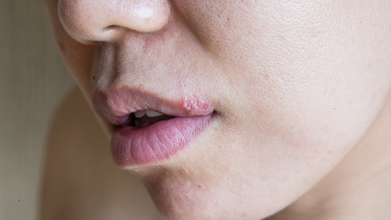
The herpes simplex virus (HSV) is very common, and the infection is lifelong. But the symptoms can come and go over different periods of life. Many people never get any symptoms linked to their infection.
The common virus, carried by up to 50 to 80 percent of adults, can cause painful blisters or ulcers. It primarily spreads by skin-to-skin contact. It is treatable but not curable.
There are two types of herpes simplex virus: HSV-1 and HSV-2.
HSV- 1 is the most common and usually spreads by oral contact. It causes infections in or around the mouth (such as oral herpes or cold sores), as well as genital herpes.
Common oral herpes symptoms include
- blisters (cold sores)
- open sores (ulcers) in or around the mouth or lips.
HSV-2 generally spreads by sexual contact and causes genital herpes.
Its symptoms include painful
- bumps,
- blisters,
- open sores (ulcers) around the genitals or anus.
How Makeup Testers Can Spread Infection
Experts warned that makeup testers can become a breeding ground for germs. The repeated use of the open samples can spur their growth and can then spread by “double-dipping” — reusing an applicator after touching the skin. This can transfer viruses and bacteria between users.
“You can absolutely get a herpes infection from a makeup tester," Dr. Whitney Bowe, a dermatologist in New York City, told TODAY. "The more ‘double dipping’ that occurs, the higher the chance of spreading viruses or bacteria at a makeup counter.”
A 2010 study by researchers from Rowan University in New Jersey found that cosmetic samples harbored strep, E.coli, and staph.
For two years, the team examined makeup testers at makeup counters, specialty stores, and drug stores. They found that Saturday is the busiest day of the week, and 100 percent of the samples carried some sort of germ.
How To Stay Safe?
To reduce the risk of infection, experts recommend:
- Much like the toothbrush, personal cosmetics and cosmetic brushes must not be shared.
- Wash and dry your brushes regularly to avoid bacterial growth.
- Avoid applying testers directly to your lips or skin
- Use disposable applicators
- Test products on your hand rather than your face
- Avoid using testers if you have cuts, chapped lips, or active infections.
- Follow Us :


© 2024 Bennett, Coleman & Company Limited