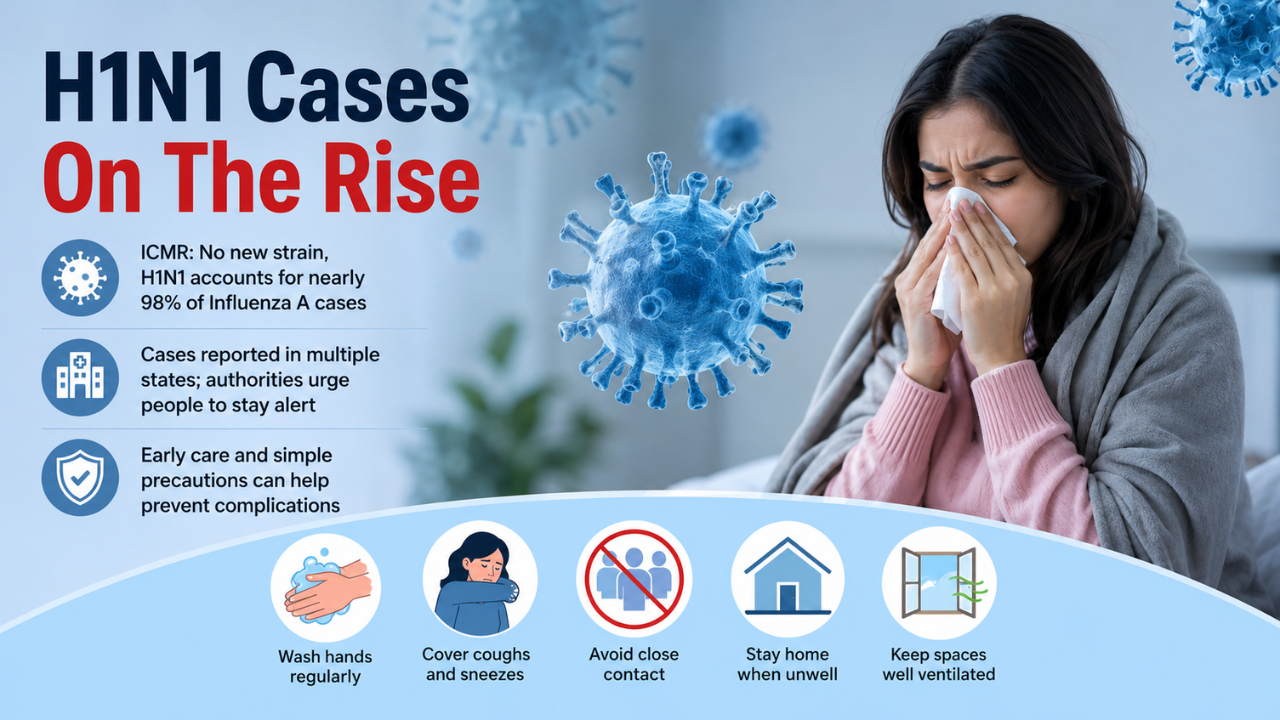
H1N1 cases are rising across several Indian states, with infections, hospitalisations and deaths being reported. However, the Indian Council of Medical Research (ICMR) has said the increase is not unusual and that no new strain is driving the current rise.The ICMR has clarified that the circulating Influenza A (H1N1) pdm09 viruses have been present in India since 2025 and that no new strain has been identified.ICMR Director General Dr Rajiv Bahl has said H1N1 accounts for nearly 98% of Influenza A cases currently detected in India, while H3N2 accounts for around 2-3% of cases.Health authorities have urged people not to panic but to remain alert, particularly if symptoms become severe or persist.States Reporting H1N1 and Influenza CasesDelhiDelhi has reported 138 new H1N1 cases in the last 24 hours, taking the cumulative number of H1N1 cases this year to 2,446, the Delhi government said on Wednesday.The total number of Influenza A cases has reached 3,177 as the city continues to see a rise in seasonal influenza infections.MaharashtraMaharashtra is witnessing a significant surge in Influenza A (H1N1) cases, with the 2026 tally already surpassing the total recorded throughout the previous year.As of August 21, the state had reported 1,109 H1N1 cases, compared with 942 cases in all of 2025.Mumbai and Pune remain the primary centres of reported infections, together accounting for around 65% of the state's total cases.UttarakhandUttarakhand has reported 49 confirmed H1N1 cases and five deaths as of late August 2026, prompting a heightened health alert.The state has also reported 103 dengue cases, including 49 confirmed cases from Dehradun.KarnatakaKarnataka has recorded 4,212 laboratory-confirmed influenza cases, including H1N1 cases, across 32 districts since January, with the majority of active cases concentrated in Bengaluru.That compares with 4,583 cases in 2025 and 3,903 cases in 2024.KeralaKerala has reported 7,421 influenza cases and 88 deaths this year, with most fatalities reported among people over 50.These figures refer to influenza overall and should not be treated as H1N1-specific cases or deaths.What Does H1N1 Usually Feel Like?According to the Ministry of Health and Family Welfare, fever and systemic symptoms generally last around three days, although they can persist longer. Cough and weakness may continue even after the fever settles.Dr GC Khilnani, Chairman, PSRI Institute of Pulmonary, Critical Care & Sleep Medicine, PSRI Hospital, New Delhi, told HealthandMe that common symptoms include body aches, sore throat, headache and fever, which can sometimes be high-grade.Nausea, vomiting and occasional chest pain may also occur. The illness can be relatively short-lived and may last around three to five days in many cases.H1N1 Red Flags You Shouldn't MissCertain symptoms should not be managed casually at home. These include:Fever accompanied by breathlessnessChest painIncreasing weaknessConfusionBluish lips or nailsA noticeable fall in oxygen levelsThese symptoms may indicate more serious respiratory involvement and require prompt medical assessment.Who Needs to Be Particularly Cautious?Although influenza can affect people of any age, certain groups are more likely to develop severe illness. These include young children, older adults, pregnant women and people with asthma or other chronic lung conditions, heart disease, diabetes or kidney disorders.People with weakened immune systems are also at greater risk of complications. This includes cancer patients, particularly those receiving chemotherapy or other treatments that suppress immunity.“An oncology patient may not always develop a dramatic set of symptoms at the beginning. Chemotherapy can affect blood counts and reduce the body's ability to mount an effective response to infection. That is why a new fever or respiratory symptom during treatment deserves earlier attention than it might in an otherwise healthy person,” says Dr Ankur Nandan Varshney, Sr. Medical Oncologist, Medanta Hospital, Noida, told HealthandMe.Which Tests Are Actually Needed?Not everyone with a cough and fever needs an H1N1 test. Testing is generally guided by symptoms, severity, risk factors and the clinical situation.If the doctor suspects influenza and confirmation is needed, testing is usually done using a respiratory sample collected through a nasal or nasopharyngeal swab. Molecular methods such as RT-PCR can identify the influenza virus and help confirm the diagnosis.“For a cancer patient, I would not look at the H1N1 report in isolation. A CBC with differential, particularly the neutrophil count, can be clinically important during chemotherapy. Depending on symptoms, oxygen saturation and examination findings, the doctor may also recommend a chest X-ray or CT scan to look for pneumonia or other lung complications,” explains Dr Varshney.Don't Wait for Symptoms to Become SeverePeople who are more susceptible to complications should seek medical advice early rather than relying on repeated home tests or taking medicines without guidance.While many seasonal influenza infections improve on their own, individuals with weakened immunity or other underlying risk factors need closer monitoring and should contact their doctor promptly if symptoms appear or start getting worse.“Especially in patients undergoing cancer treatment, the aim should be to identify deterioration early rather than wait until breathing becomes difficult,” said Dr Varshney.How Can You Prevent H1N1 Infection?Simple precautions can help reduce the spread of seasonal influenza:Wash your hands regularly with soap and water.Cover your mouth and nose when coughing or sneezing.Avoid close contact with people who are sick.Stay home when experiencing flu-like symptoms.Improve ventilation in shared indoor spaces.Avoid touching your eyes, nose and mouth with unwashed hands.