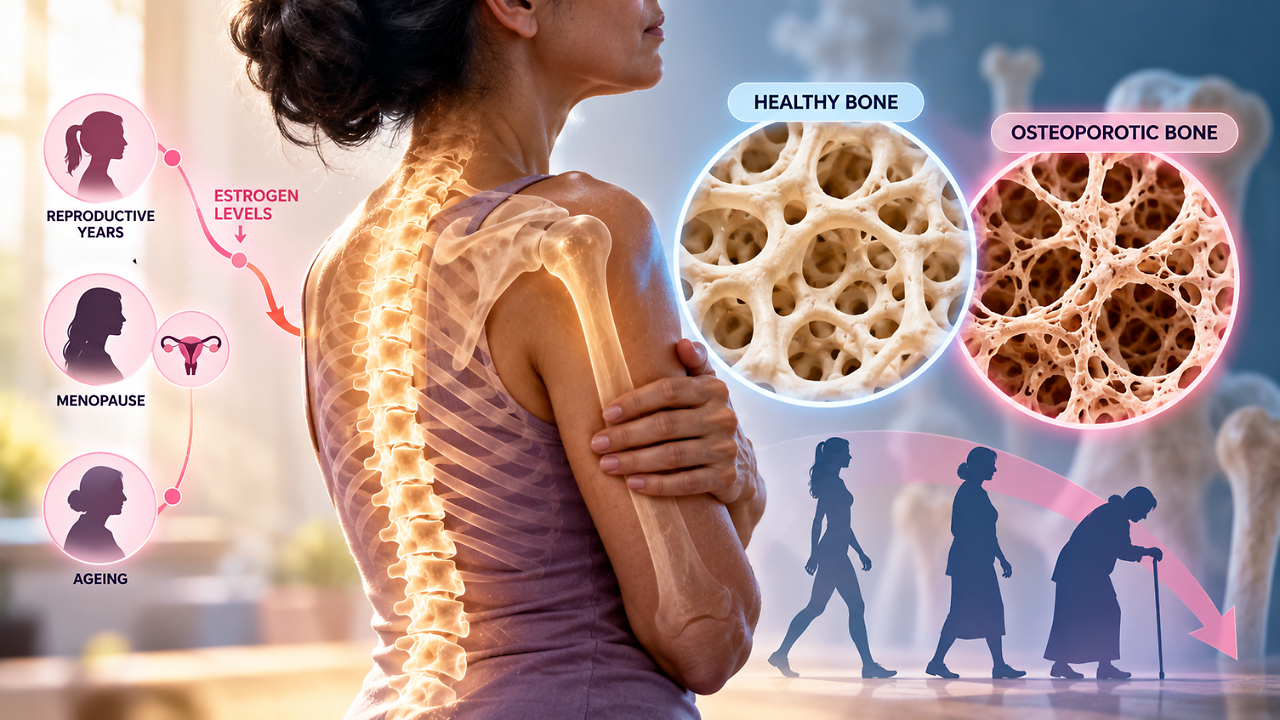
Osteoporosis is often called a silent disease, and with good reason. Bones weaken slowly and usually without any warning, until a small fall or an ordinary movement leads to a fracture. Men can develop it too, but women are at considerably higher risk, especially around and after menopause. To see why, we need to look beyond age alone and consider how hormones, bone structure and lifestyle interact. Why Menopause Accelerates Bone LossBone is not a fixed frame. It is living tissue that is constantly being remodelled, with old bone broken down and new bone laid down in its place. In early adulthood, the two processes keep pace with each other. With age, that balance shifts. Women also tend to reach a lower peak bone mass than men, so they start out with a smaller reserve of strength.Oestrogen is one of the most important factors, because it helps protect bone density. It keeps the cells that break down bone in check. When oestrogen levels fall sharply at menopause, bone loss speeds up, and it is often fastest in the first few years afterwards. Bones become more porous and more likely to fracture. Younger women are not immune either: premature menopause, or a long disruption of hormonal function, can also affect bone health.Also read: Arthritis Day: Stanford Researchers Explore Possibility To Treat Osteoarthritis Without Knee Replacement Surgery Lifestyle And Nutritional Factors That Weaken BonesHormones are only part of the story, though. Low calcium and vitamin D, too little protein, a sedentary routine, smoking and heavy drinking all weaken bone further. Some medical conditions, and long-term use of medicines such as glucocorticoids, raise the risk as well. In India, gaps in nutrition and limited awareness of bone-density testing often make early detection harder.What worries me most is that osteoporosis frequently goes undiagnosed until a fracture happens. Breaks of the hip, spine or wrist can bring lasting pain, reduced mobility and a loss of independence. A spinal fracture can even pass unnoticed, showing up only as gradual loss of height, a stooped posture or recurring back pain.How Women Can Protect Their Bone Health Prevention needs to start well before significant bone loss sets in. Enough calcium and vitamin D, adequate protein, regular weight-bearing and strengthening exercise, and staying away from tobacco all help protect bone. Women approaching menopause, particularly those with other risk factors, should talk to a doctor about their own risk. Depending on age, medical history and fracture risk, a bone mineral density test may be advised. Osteoporosis should never be accepted as an unavoidable part of being a woman or growing older. Bone health is a lifelong investment, not something to think about only after a fracture. Spotting the risks early and acting on them can help women keep their mobility, independence and quality of life as the years go by.