
- Health Conditions A-Z
- Health & Wellness
- Nutrition
- Fitness
- Health News
- Ayurveda
- Videos
- Medicine A-Z
- Parenting
Have You Ever Experiences Brain Fog? Know What Causes It

Credits: Canva
Have you ever experienced brain fog? This happens when you are talking about something and suddenly your mind becomes blank and you lose your chain of thought. While this is not a medical condition, rather a symptom of other underlying diffuse, it is a form of cognitive dysfunction.
There are various kinds of cognitive dysfunction, including memory problems, lack of mental clarity, poor concentration, and difficulty focusing.
Some people may also describe brain fog as mental fatigue, which can affect with their work, school, or day-to-day tasks. The good news is that it does not have to be permanent.
What Causes It?
There are several factors that can cause brain fog, most of this includes exertion of the brain. However, there are some common triggers:
Continuous stress: Chronic stress can lead to a high blood pressure, which can weaken the immune system. This could even lead to anxiety or depression. It can further exhaust the brain, making it more difficult to think, focus, or reason clearly.
Not Taking Enough Rest: Poor sleep also disrupts brain function. This is why it is prescribed for adults to aim for 8 to 9 hours of sleep every night. Sleep deprivation can cause poor concentration and a cloudy mind.
Hormonal Changes: Hormonal fluctuations, for instance, increased progesterone and estrogen during pregnancy or reduced estrogen levels during menopause can also impact memory and cognitive function. In fact there have been research, published in the National Library of Medicine that highlights cognitive degradation during pregnancy. The study mentions: "During pregnancy and the postpartum periods, a considerable number of women experience some degree of cognitive change that has come to be colloquially called “pregnancy brain.” The symptoms most frequently reported by women during these reproductive periods are forgetfulness and memory disturbances."
Diet and Nutritional Deficiencies: A lack of essential nutrients like vitamin B12 can impair cognitive abilities. Additionally, food allergies or sensitivities, such as to aspartame, peanuts, or dairy, may trigger brain fog.
Medications: Certain medications, including some sleep and pain treatments, can cause brain fog as a side effect. Chemotherapy is another example, often leading to "chemo brain."
Medical Conditions: Conditions linked to inflammation, fatigue, or blood glucose imbalances can contribute to brain fog.
- Examples include:
- Chronic fatigue syndrome (CFS)
- Fibromyalgia
- Autoimmune diseases like lupus and multiple sclerosis
- Anemia, diabetes, or hypothyroidism
- Viral infections like COVID-19
How to diagnose brain fog?
There isn’t a single test to diagnose brain fog. A doctor will typically:
- Conduct a physical exam
- Review mental health, diet, and activity levels
- Analyze current medications or supplements
Additional testing may include blood work to identify nutrient deficiencies, irregular glucose levels, or organ function issues. Imaging tests like MRIs or CT scans may be used in some cases.
Is there any treatment available?
You may be given iron supplements to boost red blood cells to carry oxygen to your brain. In such case, you could have anemia. Autoimmune diseases too impact brain clarity, thus medicines to reduce inflammation or suppress immune activities may be prescribed.
The Difference Between Ozempic And Mounjaro And Which Weight Loss Drug Is More Effective
Credits: Canva
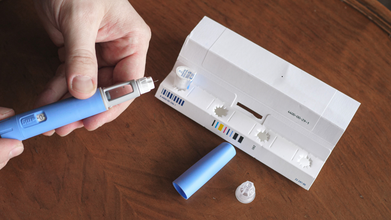
Dr Ambrish Mithal, endocrinologist in a podcast with Ranveer Allahbadia, highlighted the difference between the popular weight loss drug Ozempic and Mounjaro. Dr Mithal said that a person can lose around 10 kgs in four to six months. When Allahbadia asked Dr Mithal if there is any difference. To this, Dr Mithal said that while Ozempic is a GLP-1 drug, Mounjaro is a combination of GLP-1 and GIP. In simpler language, if one has to compare the two for only weight loss, Mounjaro can outweigh Ozempic by roughly 10 per cent.
What Is The Difference Between Ozempic and Mounjaro?
While both drugs are approved by FDA and requires prescription, and doses increases over time to a maintenance dose, experiences shortages, not FDA-approved for weight loss.
Although several studies suggest that Mounjaro may lead to greater weight loss than Ozempic, it is not currently approved by the U.S. Food and Drug Administration specifically for weight loss. That said, doctors may prescribe both Mounjaro and Ozempic off-label to support weight management in certain patients.
A real-world comparative effectiveness study by Truveta Research examined the active ingredients in both drugs among overweight and obese adults. The findings showed that tirzepatide, the active ingredient in Mounjaro, resulted in greater weight loss within one year of treatment. Individuals taking tirzepatide were more likely to achieve meaningful body weight reduction at three, six, and 12 months compared to those on semaglutide.
According to Eli Lilly, participants in Mounjaro clinical trials lost between 12 and 25 pounds. The trials reported an average weight loss of 21.1 percent after 12 weeks and a total mean weight loss of 26.6 percent over 84 weeks.
In contrast, clinical trials conducted by Novo Nordisk found that Ozempic users lost between 9.3 and 14.1 pounds. On average, participants lost about 15 percent of their body weight after 68 weeks of treatment.
Is Mounjaro More Effective Than Ozempic?
The answer depends on individual health goals and medical needs. Mounjaro is widely recognised for its strong impact on lowering A1C levels and promoting weight loss. Ozempic, meanwhile, not only helps control blood sugar but is also approved to reduce cardiovascular risk in people with Type 2 diabetes.
Head-to-head research suggests that Mounjaro may offer greater reductions in both blood sugar and body weight. In the SURPASS-2 trial, tirzepatide outperformed semaglutide in lowering A1C levels. The 5 mg, 10 mg, and 15 mg doses of tirzepatide reduced A1C by 2.01, 2.24, and 2.30 percentage points respectively, compared to a 1.86-point reduction with the 1 mg dose of semaglutide.
Read: WHO Issues First Guidance On Obesity Drugs — GLP-1 Drugs Get the Green Light
How Do Mounjaro and Ozempic Side Effects Compare?
Both medications share similar side effects, most commonly gastrointestinal issues such as nausea and vomiting. However, some data suggest that side effects with Mounjaro may be slightly more frequent or severe.
The SURPASS-2 trial found that the most common side effects were generally comparable between tirzepatide and semaglutide. However, tirzepatide was associated with a slightly higher rate of serious adverse events.
Mounjaro’s prescribing information includes a warning about severe gastrointestinal disease, a caution not listed in Ozempic’s label. Clinical trials also showed that more patients discontinued Mounjaro due to gastrointestinal side effects. For both drugs, higher doses were linked to an increased likelihood of side effects.
Ultimately, how a person responds to either medication can vary. Each drug works differently in the body, and individual tolerance, medical history, and treatment goals all play a role in determining which option may be more suitable.
Difference Between GLP-1 Drug and GIP Drug
GLP-1 Drugs
GLP-1 drugs mimic the action of the natural hormone GLP-1 to regulate blood sugar and promote weight loss. They work by increasing insulin release in a glucose-dependent manner, decreasing the liver's production of glucagon, and slowing down the emptying of the stomach, which helps lower blood sugar levels after a meal. They also act on the brain to suppress appetite and increase feelings of fullness, leading to reduced calorie intake.
In people with type 2 diabetes, notes Harvard Health, the body's cells are resistant to the effects of insulin and body does not produce enough insulin, or both. This is when GLP-1 agonists stimulate pancreas to release insulin and suppress the release of another hormone called glucagon.
These drugs also act in the brain to reduce hunger and act on the stomach to delay emptying, so you feel full for a longer time. These effects can lead to weight loss, which can be an important part of managing diabetes.
GIP Drugs
As per the American Diabetes Association's published study, Gastric inhibitory peptide (GIP) is best known for its role as an incretin hormone in control of blood glucose concentrations.
GIP is produced from a larger 153–amino acid precursor protein encoded by the GIP gene. In the bloodstream, it circulates as an active 42–amino acid peptide. It is synthesised by K cells located in the lining of the duodenum and jejunum in the small intestine.
Like other endocrine hormones, GIP is released into the bloodstream and travels to target organs through circulation. Its receptors are seven-transmembrane G protein–coupled receptors (GPCRs) found primarily on the beta cells of the pancreas.
Fact Check: Common Myths Around HPV Vaccine And How It Will Prevent Cervical Cancer
Credit: Canva
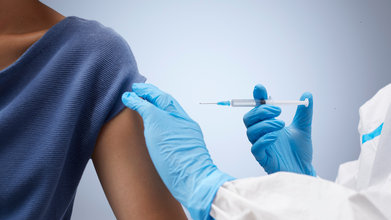
In a major push towards eliminating cervical cancer from India, Prime Minister Narendra Modi today launched the nationwide Human Papillomavirus (HPV) vaccination program for girls aged 14 years.
The new vaccination drive comes as cervical cancer remains the second most common cancer among women in India, with nearly 80,000 new cases and over 42,000 deaths reported annually. As per data from the ICMR-National Cancer Registry Program (NCRP), an estimated 78,499 new cases and 42,392 deaths were reported in 2024.
Calling it a "decisive step”, the government noted that it is aimed at “strengthening the vision of ‘swasth nari’ (healthy women) while being rooted in scientific evidence, strict regulatory oversight and global best practices”.
“India's vaccination drive reflects safety, responsibility, and long-term commitment to women’s health,” it added.
The national program will use Gardasil, a quadrivalent HPV vaccine that protects against HPV types 16 and 18, which cause cervical cancer, as well as types 6 and 11.
However, social media has been rife with concerns around the safety of the vaccine, its impact on women’s reproductive health, among others.
HPV Vaccine: The Myths And Facts
Myth: HPV vaccines can cause severe side effects and even death.
Fact: The HPV vaccines come with a “confirmed strong safety record”.
“Extensive global monitoring shows a strong safety profile supported by scientific reviews. Independent evaluations have found no causal link between vaccination and chronic harm, strengthening confidence in its continued use worldwide,” the government said.
The vaccine has been licensed in India since 2008, and the new rollout follows recommendations by the World Health Organization (WHO) and approvals from the National Technical Advisory Group on Immunization (NTAGI).
“HPV vaccines have been given to hundreds of millions globally. Extensive post-marketing surveillance shows an excellent safety profile, with no causal link to serious adverse outcomes. The evidence is robust, transparent, and reassuring,” Dr. CS Pramesh, Director of the Tata Memorial Hospital, Mumbai, shared in a post on the social media platform X.
Myth: The HPV vaccine has never been used in India
Fact: The vaccine has been in use in India. It has been administered for years since 2008 with successful implementation in states like Punjab, Sikkim, and Tamil Nadu.
Myth: HPV vaccination does not prevent cervical cancer
Fact: The HPV vaccine has been proven to prevent cervical cancer
Studies show a 65 percent drop in cervical cancer cases among US women between 2012 and 2019 and an 88-89 percent reduction in precancerous lesions among Scottish women over a decade.
Countries with early HPV vaccine adoption have also shown large declines in HPV infection, high-grade cervical lesions, and cervical cancer incidence.
"Even when considering the rarest side effects, HPV vaccines are overwhelmingly safe. The protection they offer against cervical cancer far outweighs the minimal risks. Parents are encouraged to vaccinate their daughters on time," said Dr. Neena Malhotra, Professor and Head of Department, Department of Obstetrics and Gynecology, AIIMS New Delhi on X.
Myths: Are Multiple Doses Needed?
Fact: A single dose of the quadrivalent HPV vaccine is effective. It provides strong protection against HPV infection. It helps prevent cervical cancer.
“Strong global and Indian scientific evidence confirms that a single dose provides robust and durable protection when administered to girls in the recommended age group," the government said.
Rare Diseases Day: How AI Is Transforming Early Diagnosis

Credit: Canva
For all major diseases, early detection is key to improving treatment outcomes. However, when it comes to rare diseases, it is unpredictable, making it more challenging to diagnose. In such a scenario, Artificial Intelligence (AI) is playing a major role -- from early diagnosis to treatment, said health experts on Rare Disease Day.
Rare Disease Day is annually observed on February 28 to raise awareness about the lesser-known conditions and the underlying challenges for people suffering from them.
While many of the rare disorders are genetic, they often also surface without any prior family history. In some cases, they are diagnosed in infancy, while in others the manifestation is years late.
The advanced AI technology is, however, now enabling clinicians to better understand the patients’ genetic profiles and patterns that were not clearer earlier. The technology is also paving the way for earlier and more accurate diagnoses, bringing hope to thousands of patients worldwide.
“AI is revolutionizing the fight against rare diseases by speeding up diagnosis, research, and development of treatments. Rare diseases often take years to diagnose because of the lack of data, overlapping symptoms, and unclear diagnosis,” Dr. Vinit Banga, Director, Neurology, Fortis Escorts Hospital, Faridabad, told HealthandMe.
“AI algorithms can process medical records, genetic information, and images to identify patterns that may escape human detection, allowing for earlier and more accurate diagnoses,” he added.
AI Simplifying Rare Disease Diagnoses, Drug development
In a February paper published in the journal Nature, researchers from the Shanghai Jiao Tong University in China presented an AI system called DeepRare -- a multi-agent system for rare disease differential diagnosis decision support, powered by large language models, integrating more than 40 specialized tools.
Using the specialized tools and knowledge sources, the agentic AI system generates ranked diagnostic hypotheses for rare diseases. Each of the tools was also accompanied by reasoning that links the conclusions to verifiable medical evidence.
Similarly, Harvard University-based researchers in a paper also published in the Nature journal in 2025 described an AI tool called PopEVE, which can identify genetic variants most likely to cause severe disease or death.
The model was able to identify more than 100 novel alterations responsible for undiagnosed, rare genetic diseases.
"AI is cutting short the diagnostic odyssey from years to weeks. Large-scale genomic projects help create a vital reference architecture for India and the global community,” Dr. Sudheendra Rao N R, MBBS, PhD, Scientific Advisor, Organization for Rare Diseases India, told HealthandMe.
By integrating deep phenotyping with AI, clinicians can decipher unknown genetic variants and accelerate the development of both repurposed and next-generation precision-therapies, the expert added.
AI can also help researchers identify new drug targets for the treatment of rare conditions.
Dr. Banga said that AI is also instrumental in accelerating drug development by processing enormous amounts of biomedical data to discover new targets for drugs and repurpose existing ones. Importantly, AI is cutting down on time and expenses.
“Machine learning algorithms enable the prediction of patient responses to particular treatments, making it possible to develop personalized treatment strategies,” the expert said.
Further, AI-enabled infrastructure is helping to achieve geographic neutrality, delivering the same caliber of healthcare screening to rural villages and Tier-3 cities as to Tier-1 hubs, ensuring a high-quality healthcare gateway that is no longer defined by where the patient lives.
Moreover, AI-based platforms bring together researchers from across the globe, making it easier to share data.
What Is A Rare Disease
The World Health Organization (WHO) defines a rare disease as an often debilitating, chronic, or degenerative condition affecting 1 or fewer per 1,000 population.
Rare diseases do not have epidemiological data, are at high risk of misdiagnosis, and often also lack effective treatments.
According to the WHO ICD-11 (International Classification of Diseases), there are over 5,500 rare diseases. It also assigns unique identifiers (URIs) to them for better tracking.
There are estimated to be over 7,000 distinct rare diseases affecting more than 300 million people globally.
- Follow Us :


© 2024 Bennett, Coleman & Company Limited