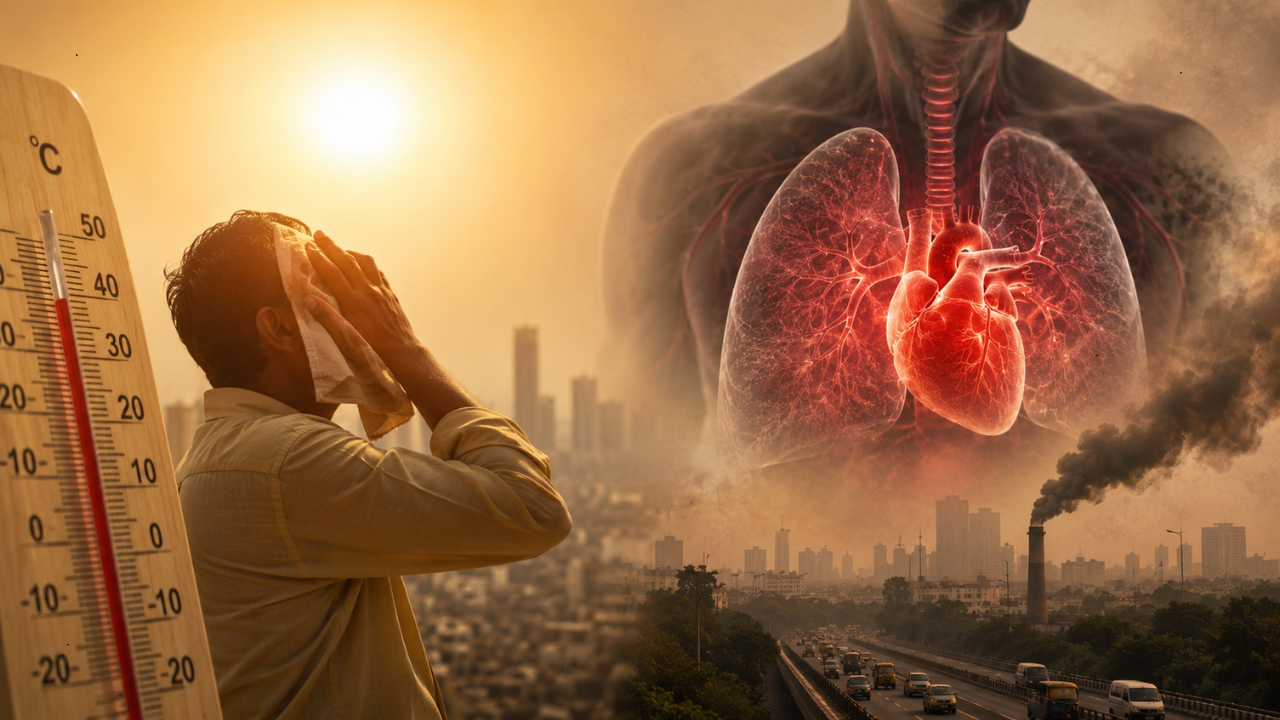
Extremes of heatwaves and ozone pollution are intensifying, increasing heart- and lung disease-related deaths in India, according to a new study.Heatwaves are associated with heat stress, dehydration, heat exhaustion, heatstroke, and cardiovascular strain, while ground-level ozone is a harmful air pollutant linked to heart and lung diseases and increased mortality.Researchers from the Indian Institute of Technology (IIT), Kharagpur, found that surface ozone levels reach 85–110 micrograms per cubic meter (μg/m³) in northern India during heatwaves—far exceeding the World Health Organization (WHO) guideline of 70 μg/m³.The study found that heatwaves significantly intensify exposure to toxic ground-level ozone, a harmful air pollutant linked to heart and lung diseases and increased mortality.“In 2024 alone, ozone exposure during heatwaves was associated with 15,615 deaths from ischemic heart disease and another 10,898 deaths from chronic obstructive pulmonary disease (COPD),” said researchers Parambat Sangeetha of Kerala University of Fisheries and Ocean Studies and Jayanarayanan Kuttippurath of IIT Kharagpur in the paper.Overall, ozone exposure during heatwave conditions was associated with more than 26,500 deaths in 2024, according to the study published in npj Clean Air. Before heatwave conditions, ozone exposure was linked to 490 deaths from ischemic heart disease and 342 deaths from COPD.Why Ozone Levels Rise During HeatwavesSurface ozone is not released directly into the atmosphere. Instead, it forms when sunlight triggers chemical reactions among existing pollutants—a process that accelerates during periods of extreme heat.“Ozone is very harmful, while NO₂ (nitrogen dioxide) and HCHO (formaldehyde) directly damage the respiratory system,” the authors said.How the Study Was ConductedFor the study, researchers combined two decades of temperature records from the India Meteorological Department (IMD) with satellite observations and global weather datasets to track ozone levels and the gases responsible for its formation.Heatwaves between 2004 and 2024 were identified using standard temperature thresholds. The team identified 188 heatwave events over the two-decade period, with the most severe years—2010, 2016, 2019, and 2024—occurring after strong El Niño episodes.The Western Himalayas recorded the sharpest long-term increase in ozone levels, exceeding WHO guidelines by 115 percent in 2024.The researchers concluded that “coupled heat–ozone extremes are intensifying, requiring urgent integrated climate–air quality policy action.”Regions Most AffectedSevere heatwave conditions predominantly affect:JammuRajasthanGujaratMadhya PradeshPunjabHaryanaChandigarhUttar PradeshDelhiHimachal PradeshVidarbhaMaharashtraThe heatwave belt often expands further into:UttarakhandOdishaChhattisgarhBiharImpact on Lung and Heart HealthThe study noted that chronic obstructive pulmonary disease (COPD) is highly sensitive to changes in temperature, humidity, and air quality.Dr. Amit Kumar Mandal, Senior Director of Pulmonology at Paras Health, explained that extreme heat combined with pollution places significant stress on multiple organs.“People often think heatwaves only affect the skin or cause dehydration, but when extreme heat combines with high pollution levels, the body starts functioning as if it is constantly under attack,” he told HealthandMe.“The lungs are forced to work harder to filter hot, polluted air, while the heart simultaneously struggles to regulate body temperature. This invisible overload can quietly trigger inflammation, breathing distress, sudden BP fluctuations, and cardiac strain, even in people who otherwise consider themselves healthy.”Warning Signs to Watch ForThe expert noted that early symptoms are often subtle and may go unnoticed. Common symptoms seen during heatwave and pollution episodes include:Persistent tirednessIrritabilityDisturbed sleepHeadachesChest heavinessUnusual breathlessnessHow to Reduce Health RisksRecommended precautions include:Staying hydratedAvoiding direct sunlight during peak afternoon hoursWearing light cotton clothingUsing masks in polluted areasMaintaining proper indoor ventilation.