
- Health Conditions A-Z
- Health & Wellness
- Nutrition
- Fitness
- Health News
- Ayurveda
- Videos
- Medicine A-Z
- Parenting
How India’s New HPV Vaccine Drive Could Prevent 80,000 Cancer Deaths Every Year
Credit: Canva
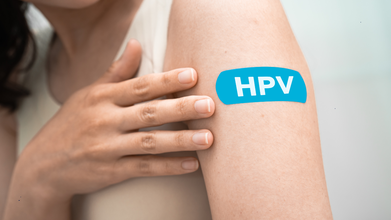
Cervical cancer is still one of the most common cancers for women in India. It's mostly caused by a persistent infection with the Human Papillomavirus, or HPV for short.
This virus spreads through sexual contact and often doesn't show any symptoms early on. A lot of women don't even realize they have the virus until abnormal cell changes start to show up.
The World Health Organization says that cervical cancer is one of the most preventable cancers if people get vaccinated and screened on time.
Also Read: Woman Lost Weight On Mounjaro But Her Breasts Didn't Stop Growing, This Is Why...
In India, thousands of women still die every year because they're diagnosed late and don't have enough access to regular screening. That's where the new nationwide HPV vaccination drive is starting to make a difference.
Let’s Talk About The HPV Vaccine
The HPV vaccine basically protects against the types of the virus that are most often linked to cervical cancer. You get it as a shot, and it works best if you get it before you're exposed to the virus, usually when you're a young teenager. But it can still help even if you get it later.
India's really pushing to get this vaccine out there, which is a big change in how they're handling public health. The idea is pretty straightforward and impactful: protect young girls before the virus can do any damage. By focusing on school-aged kids and making sure parents know about it, they're trying to fix a problem that's been around for ages.
Why Is This Drive So Important?
Cervical cancer doesn't just pop up overnight. It usually takes years for an HPV infection to turn into cancer. This long window gives us a chance to prevent it. Vaccination stops the infection at the start, and screening catches early cell changes before they get serious.
Public health experts think that if enough people get vaccinated, we could prevent up to 80,000 cancer deaths in India every year over time. That number isn't just a statistic. It's about saving the lives of mothers, daughters, and sisters with a simple preventive measure.
The vaccine has been studied a lot worldwide and has strong safety and effectiveness data. Countries with high vaccination rates are already seeing big drops in HPV infections and precancerous lesions.
Also Read: 15 States Sue Trump Administration Over Revised Vaccine Schedule
Busting Myths And Building Trust
Even though there's solid science behind vaccines, there's still a lot of wrong info out there. Some parents are concerned about safety or what might happen down the road. Others think getting vaccinated makes kids sexually active sooner, but studies don't back that up.
Getting the facts straight is super important for dealing with these worries. The HPV vaccine doesn't mess with fertility or hormones. It just teaches your body to fight off certain types of the virus.
Getting communities involved, having healthcare pros on board, and running educational campaigns are all crucial for building trust. When families learn that this vaccine can prevent cancer, more people are on board.
Beyond Shots: Screening Matters
Vaccination isn't the only answer. Women who are already sexually active still need regular cervical screening. Pap smears and HPV testing are still super important for catching things early. India's bigger plan includes making screening programs at primary healthcare centers stronger. When vaccination and screening work together, the impact gets way bigger.
Getting Closer To Wiping Out Cancer
The World Health Organization wants to get rid of cervical cancer as a public health issue this century, and India's vaccination plan fits right in with that big goal.
This isn't just about medicine; it's about really caring for women's health and stopping problems before they start. In a country where getting cancer treatment can be tough, prevention is our best bet.
Cervical cancer is mostly preventable. If we keep vaccinating, have good screening, and make sure everyone knows the facts, we could save thousands of lives every year. This campaign is a huge step towards a future where cervical cancer is rare, not something we just expect.
Have Hernia Surgeries Become Less Painful?

Robotic hernia surgery is less invasive. (Photo credit: iStock)
The bulge that appears when an internal organ pushes through a weakened muscle wall will not recede with rest or medication—it will, in most cases, grow larger and more uncomfortable over time. Surgery is the only definitive treatment. What has changed significantly in recent years is what that surgery looks like and what recovery from it requires.
Dr Rajesh Sharma, Director – General Surgery, Minimal Access & Bariatric Surgery, CK Birla Hospitals, Jaipur, in an interview with Health and Me, spoke about the introduction of robotics in hernia treatment and how it can benefit patients.
How hernia surgeries are becoming less painful
With advances in surgical technology, minimally invasive approaches have significantly improved patient outcomes. One of the most important developments in recent years is robotic-assisted hernia surgery using the da Vinci Surgical System. In robotic surgery, the surgeon operates from a console equipped with a high-definition, three-dimensional, magnified view of the surgical field. The robotic system translates the surgeon’s hand movements into extremely precise movements of miniaturised instruments inserted through small incisions. The system also filters natural hand tremors and provides a greater range of motion than the human wrist, enabling meticulous dissection and suturing.
For hernia repair, these capabilities allow surgeons to perform delicate steps such as accurate defect closure and optimal mesh placement, which are important for the long-term durability of the repair.
Benefits for patients
Robotic hernia repair offers several advantages for patients:
- Smaller incisions and minimal scarring
- Reduced postoperative pain
- Lower risk of wound complications
- Shorter hospital stay
- Faster return to normal activities
Because the procedure is minimally invasive, most patients experience earlier mobilisation and quicker overall recovery compared with traditional open surgery. Robotic surgery is particularly useful in complex, recurrent, or large ventral hernias, where precise reconstruction of the abdominal wall is important. While not every hernia requires a robotic approach, the technology expands the surgeon’s ability to perform advanced minimally invasive repairs with improved ergonomics and visualisation.
The future of hernia surgery
The integration of robotic platforms such as the da Vinci system represents a major step forward in modern general surgery. By combining surgical precision with minimally invasive techniques, robotic hernia repair aims to enhance patient comfort, improve recovery, and deliver durable surgical outcomes.
How Liver Disease Affects The Heart
Credit: iStock
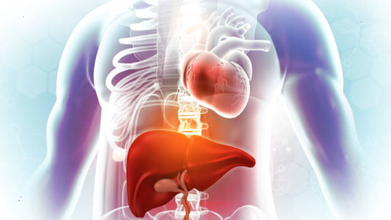
The liver and heart are two of the most vital organs of the body, and although they perform very different functions, they are closely connected. When the liver is not functioning properly, it can place significant stress on the heart and circulatory system of the body.
Liver disease not only affects the digestion process, metabolism, and detoxification but can also trigger serious cardiovascular changes that may go unnoticed in the early stages. Understanding this particular connection is significant for timely diagnosis and better overall care.
The Liver-Heart Connection
The liver helps to regulate the flow of blood, fluid balance, cholesterol metabolism, and inflammation as well. When liver disease develops—whether due to fatty liver, hepatitis, cirrhosis, or alcohol-related damage—all these processes become disturbed.
As a result of the same, the heart may have to work harder to maintain circulation, while blood vessels may also undergo certain changes that impact blood pressure and delivery of oxygen as well.
Changes In Blood Circulation
In well-advanced liver disease, especially cirrhosis, the flow of blood through the liver becomes restricted. This can also increase pressure in the portal vein, a condition known as portal hypertension. At the same point in time, blood vessels in the rest of the body may also widen, causing a drop in effective blood pressure.
To compensate, the heart pumps faster and harder. With the passage of time, this constant strain can weaken cardiac function and even lead to a condition sometimes referred to as cirrhotic cardiomyopathy, where the heart does not respond normally under stress.
Fluid Retention And Heart Stress
Liver disease often causes the body to retain both salt and water. This can also lead to swelling in the legs, abdomen, and surrounding tissues as well. Extra fluid in the body increases the workload on the heart, making it more difficult for it to pump blood in an efficient way. In severe cases, this may also contribute to shortness of breath, fatigue, and worsening cardiovascular strain.
Inflammation And Metabolic Impact
Some of the conditions, such as non-alcoholic fatty liver disease, are also linked with diabetes, obesity, high levels of cholesterol, and high blood pressure – all of which are the major risk factors for heart disease. Chronic inflammation, well-associated with liver damage, may further increase the risk of atherosclerosis and other cardiac complications.
GLP-1 Drugs: Why Not Everyone Taking Ozempic May Have Lower Blood Sugar Levels

Credit: iStock
GLP-1 receptor agonist drugs such as Ozempic and Wegovy have shown significant benefits for people with diabetes and obesity. However, not everyone experiences the same results.
Now, a study suggests that this variation may be due to genetic resistance, which means that some people are biologically less responsive to these medications, making these drugs less effective.
Also Read: NAFLD to MASLD: Experts Explain Why This Common Yet Dangerous Liver Condition Got Renamed
The new study by scientists at Stanford University in the US showed that about 10 per cent of the general population carry genetic variants that lead to what the researchers called “GLP-1 resistance”.
The GLP-1- receptor agonist drugs typically work by mimicking the hormone GLP-1 (glucagon-like peptide-1), which naturally helps regulate blood sugar by stimulating insulin release. The process slows the emptying of the stomach and reduces appetite.
However, in individuals with certain genetic variants, the team found that higher levels of GLP-1 did not regulate blood sugar better.
The researchers noted that the findings, published in the journal Genome Medicine, may be key to developing new therapies for people with GLP-1 resistance.
“There are a whole class of medications that are insulin sensitizers, so perhaps we can develop medications that will allow people to be sensitized to GLP-1s or find formulations of GLP-1, like the longer-acting versions, that avoid the GLP-1 resistance,” said Anna Gloyn, professor of pediatrics and of genetics at Stanford Medicine.
The Gene Linked to GLP-1 Resistance
Also read: Foundayo: US FDA Approves Eli Lilly’s GLP-1 Weight Loss Pill
To zero in on the gene resistant to GLP-1 drugs, the team conducted experiments in humans. They traced this resistance to a PAM variant known as p.S539W.
PAM (peptidyl-glycine alpha-amidating monooxygenase) is an enzyme that is uniquely capable of activating many hormones in the body, including GLP-1.
While the researchers suspected that people with the PAM variant would have lower levels of GLP-1 in their blood, it actually increased levels of GLP-1. Although the exact mechanism is still unclear, experiments in both humans and mice confirmed signs of reduced response to GLP-1.
Analyzing diabetes drug trial data, they found that individuals with these variants were less able to lower their blood sugar levels even after six months of treatment. This suggests that despite having more circulating GLP-1, their bodies are less responsive to it.
“When I treat patients in the diabetes clinic, I see a huge variation in response to these GLP-1-based medications and it is difficult to predict this response clinically,” said Mahesh Umapathysivam, an endocrinologist and clinical researcher at Adelaide University in Australia.
“This is the first step in being able to use someone’s genetic make-up to help us improve that decision-making process,” he added.
Also read: Can Weight Loss Jabs Surge Divorce Rates? What Experts Are Saying
Importantly, participants with the PAM variants did not respond differently to other common diabetes treatments, including sulfonylureas, metformin, and DPP-4i.
The finding may help develop precision medicine, the researchers said. Knowing ahead of time who is likely to respond would help patients get on the right drugs faster, Gloyn said.
Reasons Why Ozempic May Not Help All People Lose Weight
Ozempic is primarily indicated for type 2 diabetes management. But some doctors may prescribe it for weight loss in appropriate patients without diabetes.
Previous research has shown that medical conditions such as sleep apnea, along with certain common medications, such as antidepressants, steroids, and contraceptives, can hamper the process of shedding extra pounds.
Another major reason that can hamper weight loss is the side-effects of these drugs that can prompt a person to halt their prescription mid-way.
- Follow Us :


© 2024 Bennett, Coleman & Company Limited