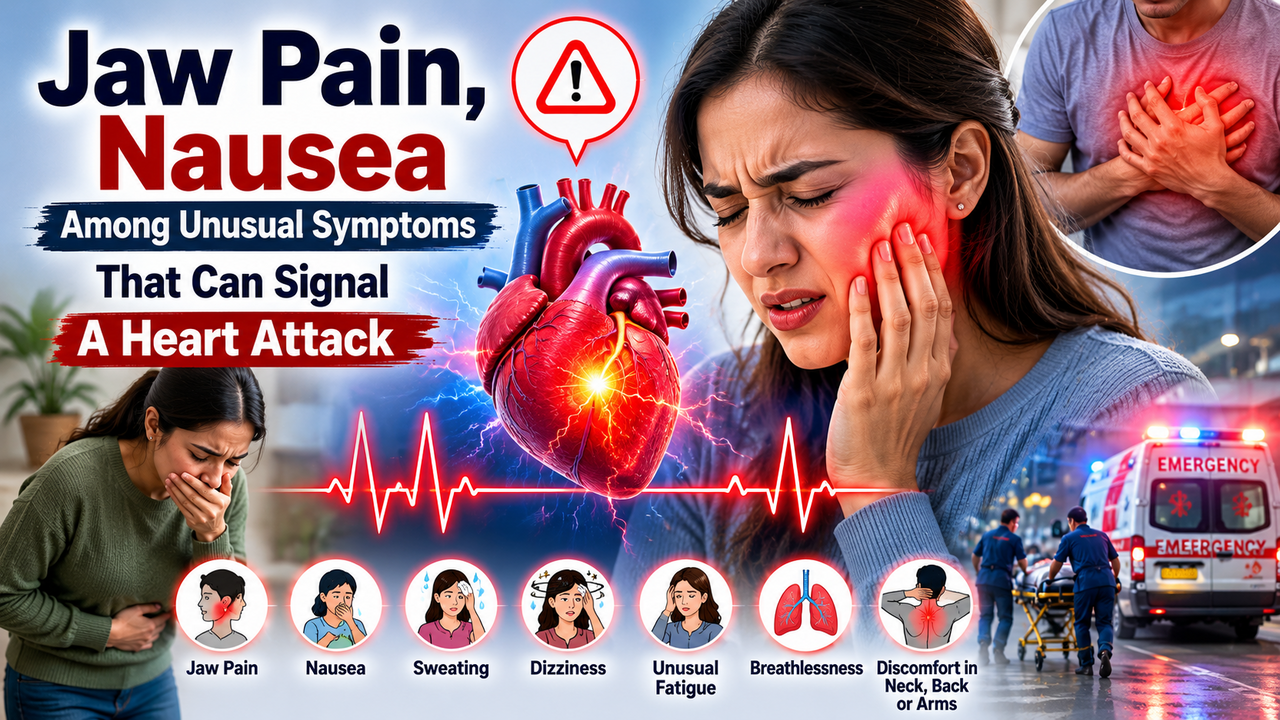
Heart attacks are often associated with severe chest pain, but health experts warned that many cases present with unusual symptoms such as jaw pain and nausea that are frequently ignored or mistaken for less serious conditions.Ischemic Heart Disease (IHD) or heart attacks is the leading cause of death worldwide, responsible for roughly 9 million deaths annuallySpeaking to HealthandMe, the experts highlighted unusual symptoms that may indicate a heart attack — particularly in women, elderly people, and individuals with diabetes. These include:Jaw painNauseaSweatingDizzinessUnusual fatigueBreathlessnessDiscomfort in the neck, back, or armsIgnoring Symptoms Can Worsen OutcomesDr. Prasanthi Ganji, HOD - Emergency Medicine at Manipal Hospital, Gurugram, called these “referred symptoms”, where pain from the heart travels through shared nerve pathways and is felt in other parts of the body, including the jaw, neck, shoulders, or back.The expert explained that nausea may occur because reduced blood flow and stress on the heart can affect the nervous system and digestive response.Also read: Can Extreme Heat Trigger Heart Palpitations? Expert Explains RisksAccording to her, many patients mistake these symptoms for acidity, fatigue, or muscle strain, leading to dangerous delays in treatment.“Recognizing these warning signs during the critical golden hour can significantly improve survival and reduce long-term heart damage,” Dr. Prasanthi told HealthandMe, adding that symptoms lasting more than a few minutes should never be ignored.Heart Attack: Silent Symptoms Often OverlookedDr. Saifa M. Latheef, Associate Professor and Clinical Head – Emergency Medicine at ShardaCare-Healthcity, said public awareness about silent or unusual heart attack symptoms remains low.“Many people believe that a heart attack always causes severe chest pain. However, this is not true in every case,” she said.Dr. Saifa noted that some patients may experience heaviness in the jaw, vomiting sensation, breathlessness, or extreme weakness without chest pain, causing them to delay emergency care.“A heart attack occurs when blood flow to the heart suddenly gets blocked, making immediate medical attention crucial to save heart muscle and prevent complications,” the doctor told HealthandMe.Doctors Warn Against Delaying TreatmentThe health experts also flagged the delaying attitude of patients, which increases the risk of poorer outcomes.Dr. Nitin Jagasia, Regional Director Emergency, Western Region, Apollo Hospitals, said the biggest mistake patients make is waiting too long before seeking help.“As an emergency doctor, I meet patients every day who say, ‘Doctor, I thought it would go away,’” he told HealthandMe.Dr. Jagasia warned that heart attacks do not always begin with crushing chest pain and that unusual symptoms like nausea, sweating, stomach discomfort, or unexplained fatigue are often mistaken for acidity or stress.“A simple rule to remember is this: if a symptom is sudden, severe, or frightening, do not wait for it to pass,” he said.Read More: Early Exposure To Lead And Lithium Can Cause A Lifetime Of Mental ExhaustionHow To PreventThe experts emphasized that timely treatment, CPR awareness, and rapid emergency response remain the strongest defences against sudden cardiac emergencies.They also highlighted the importance of preventive measures such as regular exercise, healthy eating, stress management, quitting smoking, and controlling diabetes and blood pressure.