
- Health Conditions A-Z
- Health & Wellness
- Nutrition
- Fitness
- Health News
- Ayurveda
- Videos
- Medicine A-Z
- Parenting
'Immediate And Only Steps' To Protect Yourself From Delhi's Toxic Air, According To Doctor
Credits: iStock
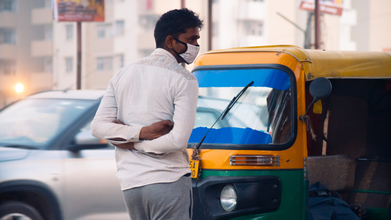
Delhi's Air Quality Index today recorded 'severe' in several location. The Central Pollution Control Board (CPCB) data from 40 monitoring stations from across the city showed AQI above 401 at 7.05 am on Wednesday morning. City's average AQI stood at 376.
While it has only been three days into December, the AQI levels have undergone severe changes. On November 30, Delhi's AQI was recorded at 279, on December 1, it was recorded at 304, while on December 2, the AQI went up to 372.
Amid all this, Dr Ritu Singh, Director Professor and HOD, Department of Biochemistry at Lady Hardinge Medical College posted on her Instagram, what she calls the 'only steps to save your lungs in Delhi".
What Does the Doctor Say?
"If you’re living in Delhi right now, the first line of protection is simple: avoid breathing unfiltered air. If you can’t leave the city, wear an N95 mask every time you step outside or move away from a HEPA-filtered space," says Dr Ritu Singh.
The doctor points out that keeping a high quality HEPA filter at home and at your workplace is essential. She points out that though it may be expensive, but one should know that their "lungs are not replaceable". She says, "Yes, spend all your hard earned money on HEPA filters because the lung is not replaceable."
What Is HEPA Filter? How Does It Help?
As per the US Environmental Protection Agency (EPA), HEPA or also known as the high efficiency particulate air is a type of filter that can theoretically remove at least 99.97% of dust, pollen, mold, bacteria, and any airborne particles with a size of 0.3 microns (µm). The diameter specification of 0.3 microns corresponds to the worst case; the most penetrating particle size (MPPS). Particles that are larger or smaller are trapped with even higher efficiency. Using the worst case particle size results in the worst case efficiency rating (i.e. 99.97% or better for all particle sizes).
What Else Can Be Done To Stay Safe From Air Pollution?
Dr Singh suggests that indoor plants could be added, though it could only offer a "small but meaningful improvement in air quality".
One famous NASA experiment, published in 1989, found that indoor plants can scrub the air of cancer-causing volatile organic compounds like formaldehyde and benzene.
These plants are:
- Spider Plant
- Snake Plant
- Peace Lilly
- Aloe Vera
- Boston Fern
- English Ivy
- Rubber Plant
- Golden Photos
- Bamboo Palm
- Dracaena
The doctor also recommends that one should increase their intakes of antioxidant foods. "Increase your antioxidant intake—turmeric, amla, oranges—these won’t fix pollution, but they help your body cope with oxidative stress.”
Antioxidants strengthen the immune system by fighting oxidative stress, which is caused by unstable molecules called reactive oxygen species (ROS). The body's normal processes, like breathing and metabolism, create free radicals (ROS). Antioxidants donate electrons to these unstable molecules, which neutralizes them and stops them from damaging healthy cells.
"Right now, the goal is extremely clear: prevent inhalation of polluted air. Delhi’s current levels are dangerous for the lungs, the heart, and the entire respiratory system," the doctor says.
Leucovorin Prescriptions Surge After White House Mentions It For Autism Use, Parents Struggle To Find Drug

Credits: Canva and iStock
Leucovorin, a high-dose vitamin - folinic acid, were mostly used for treating toxic side effects of chemotherapy, until last year when the White House touted it as a potential treatment for some children with autism. New prescriptions for leucovorin double within weeks of announcement and parents have been trying hard to get it prescribed. This is also because many doctors have been hesitant to prescribe a chemotherapy medicine for childhood autism. They have also stated that not enough evidence is available to prescribe this drug officially.
CNN reported that in Austin, Texas, Meagan Johnson spent four days calling pharmacies across the region searching for leucovorin for her three-year-old son Jack, who has autism. She contacted nearly 40 pharmacies around her home in Pflugerville, hoping to locate the medication.
The effort came after a neurologist agreed to prescribe leucovorin on a trial basis. Johnson’s hope was simple: even a small improvement in her son’s communication would mean a lot. At age three, most children can say hundreds of words, but Jack speaks only about 20, many of which only his mother understands.
However, getting the prescription turned out to be far harder than obtaining it.
Across the United States, pharmacies have been reporting growing difficulty keeping leucovorin tablets in stock. Online support groups for parents of autistic children are now filled with posts from families searching for the medication or asking where it might still be available.
Although leucovorin is not approved specifically for autism, some small studies have suggested that it may help certain children who have unusually low levels of folate in the brain. Families who have tried it report possible improvements in language and social interaction.
A study published in The Lancet found that prescriptions for leucovorin doubled within weeks of the public remarks and remained elevated through early December. Researchers analysed electronic medical records covering nearly 300 million patients to identify the trend.
Experts say such spikes can quickly strain the supply of inexpensive generic drugs.
A Classic Demand-Driven Shortage
Pharmacy supply specialists describe the leucovorin situation as a demand-side shortage. Unlike manufacturing disruptions, these shortages happen when demand rises faster than manufacturers can increase production.
Generic drug manufacturers typically plan production schedules a year or more in advance. Because leucovorin had historically been a niche medication, companies were not prepared for a sudden surge in prescriptions.
As demand increased, pharmacies began running out of tablets. Many manufacturers have placed the drug on allocation or backorder, meaning pharmacies can only order limited quantities.
To ease the pressure, the US Food and Drug Administration allowed temporary imports of leucovorin tablets from Canada and Spain. However, the drug has not yet been officially listed on the FDA’s national drug shortage database, a designation that could trigger additional measures to boost supply.
Families Searching For A Treatment
For parents like Johnson, the debate over research evidence matters less than the possibility of progress.
After days of phone calls, a CVS pharmacist finally located a supply at another branch nearly an hour away. Johnson drove the distance to pick up the medication and gave Jack his first dose that same evening.
The moment brought relief, but also frustration.
Drug shortage advocates say the situation was predictable. Because leucovorin is inexpensive and historically prone to shortages, any sudden increase in demand could easily disrupt supply.
Still, families continue to search for it.
Is There A Link Between Your Kidney Health And Other Chronic Diseases? Study Says Yes
Credits: Canva
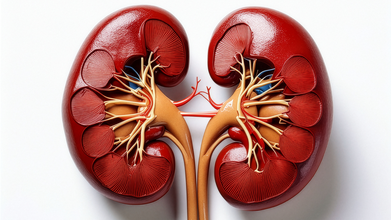
Turns out, kidney disease is not just a ‘kidney’ problem anymore, it can, in fact, affect other organs, and could even be linked to other chronic conditions, revealed a recent study.
In the US, more than 1 in 7 adults are affected by chronic kidney disease or (CKD). This means that 35.5 million Americans are affected by it, and what makes it worse is that 9 out of 10 people do not even know they have CKD, says the Centers for Disease Control and Prevention (CDC). Amid all these numbers thrown on to, something more concerning lies. A recent Lancet study shows a link between the rise in CKD and other chronic diseases. We are talking about chronic conditions like diabetes, high blood pressure, and obesity.
Also Read: Years After PrEP Rollout, The HIV Prevention Drug Still Remains A Privilege In India
So, What Does The Study Say?
The researcher saw that 14 percent of adults who are over the age 20 or older, which makes 788 million Americans who had CKD in 2022. The biggest problem is not the disease itself, but the unawareness. Doctors, experts, and researchers from time and again have pointed out how kidney disease is often asymptomatic, this is why it is ignored until it becomes advanced. However, at that point the patients could already need dialysis or even an organ transplant. This gap in early diagnosis and treatment is what has made CKD the ninth leading reason of death, worldwide.
When you kidney functions naturally, it works as the powerhouse of filtration. A pair of healthy kidneys are able to filter and process more than 150 liters of fluid from the blood. These organs are also responsible for filtering out the waste and toxins through your urine. Not just that, but your kidneys also help in red blood cells production that keeps you healthy. When all of that does not happen, it can eventually impact every other organ in your body.
Like they say, everything is connected, and it surely is. For instance, somewhere around 20% of the blood that your heart pumps goes to your kidneys. If someone has diabetes and high blood pressure, it could damage the blood vessels and lead to protein in the urine and a slower filtration rate. It can then lead to other chronic infections, autoimmune disorders, and even genetic variants.
Also Read: Virus Without Vaccine Hits California; No Need To Worry, Say Public Health Officials
Kidney-Body Relation
If you leave your kidney disease untreated, it could lead to kidney failure. This is when you would be more in need of dialysis or a transplant. Doctors have pointed out that most people do not die of chronic kidney disease, rather it impacts their quality of life, worsening their cardiovascular conditions. It can lead to complications like a heart attack, a stroke, or a heart failure.
How Does This Happen?
People who have kidney diseases are at an increased risk for high blood pressure. Due to hurdles in the process of filtration, plaque build ups and hardens the arteries. This in return increases stress on the heart. In fact, the American Heart Association also defined the link between kidney and heart as 'cardiovascular-kidney metabolic syndrome'. This defines a health disorder that is a condition of the overlap of obesity, chronic kidney disease and cardiovascular diseases.
The bleed out of CKD is not just limited to your heart. The National Institute of Health, US points out that along with heart complications and high blood pressure, CKD could also lead to anemia, mineral and bone disorder, metabolic acidosis, malnutrition, and electrolyte imbalances in the blood.
So, What Is The Best Way To Keep Yourself Safe?
The first way is to note any symptoms and get yourself diagnosed. Look for signs like loss of appetite, unexplained nausea or vomiting. Do you feel tired often? Are you having trouble concentrating? Is there any change in how often you go pee?
Other symptoms like a change in your urine color or texture, or feeling itchy or dry, muscle cramps, unexplained weight loss or skin conditions could also signal towards kidney diseases.
However, not always does CKD show symptoms, experts suggest that to be one step ahead, it is important to undergo regular health checkups, including blood culture. General guidelines usually point towards getting a blood test done every 3 to 6 months. For someone with high blood pressure, diabetes or any other disease, the current guidelines say that those people should get regular blood and urine tests to screen for kidney disease. But what really happens is that though these tests exist, they are still used far too little. Doctors point out that many patients skip them because collecting a urine sample feels inconvenient, and overall awareness about kidney disease remains low. As a result, research shows that only about 35 percent of people with diabetes, and just 4 percent of those with high blood pressure, actually end up getting the recommended urine screening.
A ray of hope is that there are now several effective tools to slow the progression of kidney disease. Along with traditional options like ACE inhibitors, newer classes of medications including certain heart failure drugs and GLP-1 drugs. These medicines have shown to help protect kidney function. Although these newer treatments are not widely used yet, their adoption is steadily increasing.
What is important to remember is to also always consult your GP to ensure all preventative measures are followed carefully.
Years After PrEP Rollout, The HIV Prevention Drug Still Remains A Privilege In India
Credits: Canva
In 2022, the National AIDS Control Organisation (NACO) of India published the National Technical Guidelines for PrEP pr the pre-exposure prophylaxis (PrEP), a medicine that reduces the risk of HIV infection. It has been four years since then and the access still remains limited. It was called a novel strategy to deal with HIV, however, there not has been public rollout and government too has not distributed it. This means awareness remain low and the cost is too high for everyone to afford it. PrEP is available for Rs 2,200 to Rs. 3,000 a month in private markets and at subsidized rates in just a few handful of non-profits that too in select cities.
HIV was first identified in 1986 in India, since then the country has made gradual progress in controlling the disease. As per the Sankalak, Status of National AIDS and STD Response Report 2024, released by NACO, HIV prevalence among adults, which is considered between 15 to 49 years was 0.20 per cent. This represented a 44 per cent decline since 2010.
Also Read: Is There A Link Between Your Kidney Health And Other Chronic Diseases? Study Says Yes
However, the prevalence and incidence remain high in vulnerable populations. While the incidence in general population was 0.05 per 1,000 uninfected persons in 2023, men who have sex with men (MSM) see an incidence of 1.55, Hijra/Transgender persons (HTG) have 2.76, and female sex workers (FSW) are at 3.33. This means that nearly a million of FSWs, 350,000 MSM and 96,000 HTGs have the disease. A report from India Spend notes that it is not an actual headcount, but an estimation, which represents that the real number could be more than that.
How Does PrEP Work?
HIV spreads in the human body by targeting and infecting T cells or the critical white blood cells of our immune system. PrEP blocks HIV from replicating inside T cells after exposure. It stops the infection from taking hold. PrEP has also come in form of oral pill which could reduce the chances of contracting HIV through sexual contact or injection drug use.
Studies have documented a sharp fall in HIV infections in communities where Pre-Exposure Prophylaxis (PrEP) is widely used. In Australia, a study involving more than 62,000 people found that government-subsidized oral PrEP helped reduce new HIV cases by 78% among men who took the medication for at least 60% of days between 2018 and 2023. PrEP works best when taken daily, lowering the risk of HIV transmission through sex by over 99% and by more than 74% through infected needles. It can be stopped when a person is no longer engaged in high-risk activities such as having multiple sexual partners or injecting drugs.
Last year, the United States Food and Drug Administration (FDA) approved twice-yearly injectable PrEP, lenacapavir. The World Health Organization recommended for a fast rollout. Maker Gilead Sciences signed agreements with generic manufacturers, including Dr Reddy’s Laboratories, to make the jab available in 120 low- and middle-income countries at lower cost.
Amid this, Zimbabwe become the first African country to roll out the breakthrough injection, while Japan approved the pill version made by Gilead Sciences - Truvada.
- Follow Us :


© 2024 Bennett, Coleman & Company Limited