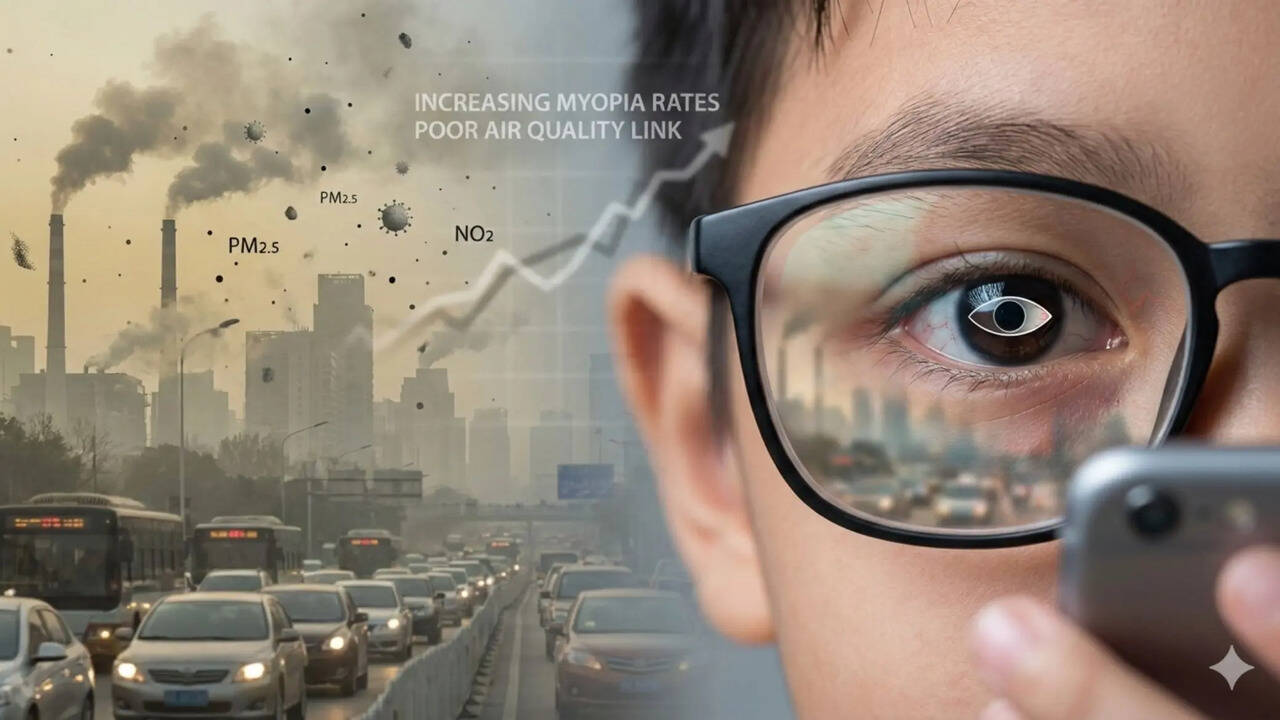
For a long time, screens have taken most of the blame for declining eyesight among children. Doctors, however, are now drawing attention to another factor that often goes unnoticed: polluted city air. Delhi continues to struggle with severe smog. On December 23, 2025, residents woke up to a thick blanket of haze as air quality worsened sharply across the capital. At 8 am, the average Air Quality Index stood at 414, placing it in the ‘severe’ category, according to data from the Central Pollution Control Board (CPCB). While toxic air is known to harm the lungs, skin, and heart, eye specialists are now observing a worrying trend. Children are developing myopia, or near-sightedness, at much younger ages, and the condition appears to be progressing faster than before.As India faces some of the highest pollution levels in the world, new research is shedding light on how fine particulate matter, limited exposure to natural daylight, and ongoing eye irritation may be affecting the visual health of children growing up in urban areas. To understand this better, we spoke to Dr Rishi Raj Borah, Country Director, Orbis (India), who explained how air pollution may be playing a role.Is Smog Affecting Children’s Vision?Healthy eye development during childhood relies heavily on regular exposure to bright outdoor light. This light helps regulate dopamine release in the retina, which plays a key role in preventing the eyeball from growing longer than normal, a defining feature of myopia. Multiple studies have shown that children who spend more time outdoors are less likely to develop near-sightedness.Although excessive screen use remains a concern, polluted air is now being recognised as an added risk. High smog levels can lead to:Eye irritation and rednessDry eyes and allergic inflammationDiscomfort that discourages outdoor playExplaining the connection, Dr Rishi Raj said, “With rising air pollution and high concentrations of PM2.5 in the environment, children may spend less time playing outside and more time on screens. Exposure to polluted air can also trigger inflammatory changes on the eye surface, reducing comfort and causing strain or irritation, especially in children.”What Is Myopia?Myopia, commonly known as near-sightedness, is a vision condition in which distant objects appear blurred because light entering the eye focuses in front of the retina instead of directly on it. This usually happens when the eyeball grows longer than normal. While close objects remain clear, far-off objects become difficult to see. Myopia often develops during childhood or adolescence and is typically managed with glasses, contact lenses, or, in some cases, surgery, according to the Cleveland Clinic.How Is Smog Leading To Myopia In Children?Smog may contribute to the development and progression of myopia by causing inflammation and oxidative stress within the eyes. This can damage ocular tissues, thin the sclera, and encourage axial elongation of the eyeball. Pollutants such as PM2.5 and nitrogen oxides (NOx) are small enough to affect eye tissues, triggering inflammatory responses and activating enzymes that break down collagen. Research cited on ScienceDirect.com also suggests these pollutants may interfere with dopamine pathways that help regulate eye growth, further speeding up myopia progression.Highlighting the long-term risks, Dr Rishi Raj said, “When myopia starts at a very young age, it tends to worsen more rapidly over time. As vision continues to decline, the risk of serious eye conditions later in life, including retinal detachment, glaucoma, and myopic maculopathy, increases significantly. Early detection and timely management are therefore extremely important.”How To Protect Children From Myopia?Dr Rishi Raj suggests several practical measures parents can take to support their children’s eye health:Follow the 20-20-20 rule. Every 20 minutes, look at something 20 feet away for 20 seconds.Reduce recreational screen time and encourage frequent breaks.Make sure children get at least one to two hours of outdoor play each day, when air quality allows.Arrange regular eye check-ups, even if there are no obvious vision complaints.Ensure proper lighting and good posture during reading and screen use.Doctors caution that if air quality continues to worsen and outdoor time keeps shrinking, India may see a sharp rise in childhood vision problems in the years ahead. While parents cannot fix pollution on their own, adopting healthier daily habits, staying alert to early signs of vision changes, and creating safer indoor environments can still go a long way in protecting a child’s eyesight in today’s polluted cities.