
- Health Conditions A-Z
- Health & Wellness
- Nutrition
- Fitness
- Health News
- Ayurveda
- Videos
- Medicine A-Z
- Parenting
From Vaping to Worm Attack: 5 Unimaginable Ways to Contract Meningitis

The meningococcus bacteria can harmlessly live in the throat without showing any symptoms, but in order to cause damage, it must cross the nasopharyngeal barrier. (Photo credit: iStock)
New Delhi: Meningitis may not have been the talk of the town, but it is now making headlines after an outbreak in the UK wreaked havoc on students—the outbreak recently resulted in the death of two students, and 11 others have been hospitalised. The outbreak is being linked to a nightclub event in Canterbury, Kent. Following this, the UK Health Security Agency contacted 30,000 students, staff, and their family members, along with anyone who visited the club from March 5 to March 7. This was a precautionary measure, they said, and a new report by UK health officials suggests that meningitis B has caused the outbreak. But what is most shocking is how this infection makes its way into your body.
What is meningitis?
Meningitis is an infection of the protective membranes around the spinal cord and the brain. It can become very serious if not treated or diagnosed in time. It is a consequence of bacterial or viral infection. Despite being a rare occurrence, the infection can spread through coughs, sneezes, a cold, or physical contact in the form of kissing.
Uncommon ways of contracting meningitis
Some of your daily habits may seem normal, but in turn, they can be among the worst ways to catch meningitis. Some of the most obscure ways are:
Vaping: Reminder—vaping might be common now, but that does not make it a safe practice. It is associated with respiratory disorders and even lung collapse in some cases. When it comes to meningitis, vaping can be a means of passing germs on to another person—for instance, by sharing a contaminated vape. The meningococcus bacteria can harmlessly live in the throat without showing any symptoms, but in order to cause damage, it must cross the nasopharyngeal barrier.
Second-hand smoke: Second-hand smoke may not just cause cancer, but also meningitis. This risk is particularly prevalent in children, as it may increase their chances of developing invasive meningococcal disease, a serious form of meningitis. Experts from the University of Nottingham have noted that breathing in smoke from someone else's cigarette can make one more vulnerable to infection. This makes people more likely to harbour meningitis-related bacteria in the throat and nose, thus leading to infection.
Worm infection: Some types of parasites, such as tapeworms, can cause a rare type of meningitis known as eosinophilic meningitis. These worms take residence in the gut and feed on nutrients that the body needs to stay healthy. This can result in diarrhoea, nausea, and tiredness. If the infection spreads to the brain, it can cause meningitis. Despite being rare, it is still a possibility.
Sharing cutlery: Meningitis can spread through close contact, and sharing cutlery can be one of the most overlooked ways. This can also include sharing toothbrushes. The infection can spread through droplets and saliva.
Unwashed hands: An act of laziness can cost you in the long run; therefore, using a sanitiser or regularly washing hands is a must. Experts say that particles from faeces can linger on the hands, and ingesting them in any way can lead to infections such as meningitis. The infection can also spread through coughing and sneezing.
COVID-like Nasal Swab Test May Help Spot Early Alzheimer's Signs
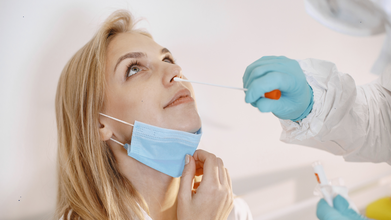
Credit: Canva
A team of US researchers has developed a novel nasal swab test, akin to those used to detect COVID-19 infections, which can spot early signs of Alzheimer's Disease -- affecting over 55 million people worldwide.
The condition is treatable in early stages to manage symptoms and slow cognitive decline. However, it remains the hardest to detect, affecting treatment outcomes. The brain changes can begin 10 to 20 years before symptoms become apparent.
The novel outpatient nasal swab, developed by Duke University researchers, has shown promise in picking up early biological changes linked to Alzheimer's. It can spot the degenerative condition, even before problems related to thinking and memory begin to appear.
"We want to be able to confirm Alzheimer's very early, before damage has a chance to build up in the brain," said Bradley J. Goldstein, professor at Duke University's School of Medicine.
"If we can diagnose people early enough, we might be able to start therapies that prevent them from ever developing clinical Alzheimer's," Goldstein added.
How Effective Was The Nasal Swab?
In the study, published in the journal Nature Communications, the team placed a gentle swab high inside the nose of 22 participants.
The swab collected thousands of nerve and immune cells to see which genes are active.
The analysis clearly differentiated people with early or diagnosed Alzheimer's from those without the disease -- 81 percent of the time. It also included people with no symptoms.
Alzheimer’s Disease: The Leading Cause of Dementia
Alzheimer's disease is one of the most common forms of dementia and mostly affects adults over the age of 65.
About 8.8 million Indians aged 60 and above are estimated to be living with Alzheimer's disease. Over seven million people in the US, 65 and older, live with the condition, and over 100,00 die from it annually.
Alzheimer's disease is believed to be caused by the development of toxic amyloid and beta proteins in the brain, which can accumulate and damage cells responsible for memory.
While there is no clear cause of Alzheimer's disease, experts believe it can develop due to genetic mutations and lifestyle choices, such as physical inactivity
unhealthy diet
social isolation.
Early symptoms of Alzheimer's disease include forgetting recent events or conversations. Other signs include:
- losing or misplacing things
- getting lost when walking or driving
- being confused, even in familiar places
- losing track of time
- difficulties solving problems or making decisions
- difficulties performing familiar tasks
- misjudging distances to objects visually.
Over time, Alzheimer's disease leads to serious memory loss and affects a person's ability to do everyday tasks.
Currently, there is no cure for this progressive brain disorder, and in advanced stages, loss of brain function can cause dehydration, poor nutrition, or infection. These complications can result in death.
Being physically active and taking part in activities and social interactions that stimulate the brain and maintain daily function can help prevent the condition.
HPV: Why Vaccination In Adolescents Is Important?
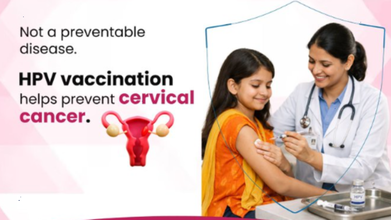
Credit: Health Ministry/X
The Human papillomavirus (HPV) vaccine is one of the most important advances in preventive healthcare, with the unique ability to prevent cancers.
Evidence consistently shows that the most appropriate age for HPV vaccination is between 9 and 14 years. At this stage, children develop a significantly stronger immune response, producing higher antibody titers than older adolescents and adults.
This enhanced immunogenicity translates into durable and highly effective protection and also allows simplified schedules, including the possibility of single-dose protection, thereby improving feasibility and coverage at a population level.
HPV Vaccine: Why Age 14 Matters The Most
The emphasis on vaccination by the age of 14 years is particularly important. Beyond this age, the immune response is relatively lower, and the number of doses required increases, making early vaccination both scientifically and programmatically more efficient.
Recognizing this, the Government of India has adopted a strategy of administering a single-dose HPV vaccine to adolescents up to 14 years of age through school- and community-based outreach programs. The program utilizes the Gardasil vaccine, which has an established track record of safety and efficacy over nearly two decades.
Equally critical is the timing of vaccination in relation to exposure. HPV is primarily transmitted through sexual contact, and vaccination before exposure ensures maximum effectiveness. Administering the vaccine in early adolescence provides protection well before any potential risk, making it a true preventive intervention with near-complete benefit.
Persistent infection with high-risk HPV types is a well-established cause of several cancers. In India, cervical cancer continues to be one of the leading causes of cancer-related illness and death among women. While HPV is also responsible for anal, penile, and oropharyngeal cancers, the burden of cervical cancer is substantially higher, which has historically led to a greater focus on vaccinating girls.
HPV: Are Boys At Risk?
However, HPV infection affects both genders. Boys are also at risk of HPV-related diseases, including anal and penile cancers, genital warts, and oropharyngeal cancers, the incidence of which is rising globally.
Vaccinating boys offers direct protection to them and also contributes to reducing transmission within the community. A broader, gender-inclusive approach has the potential to enhance population-level protection.
Public health agencies, including the World Health Organization, have emphasized HPV vaccination as a key strategy in cancer prevention and in reducing the long-term burden of non-communicable diseases.
HPV Vaccine: Part of Adolescent Health Check-ups
Integrating HPV vaccination into routine adolescent health check-ups can further normalize it as a standard preventive health measure. This approach can complement government efforts by encouraging participation from the private healthcare sector and improving overall uptake.
HPV vaccination in the 9–14 year age group is therefore not merely a recommendation; it is a time-sensitive, evidence-based intervention that can prevent cancers decades later. Strengthening awareness and ensuring timely vaccination will be critical in reducing the future burden of HPV-related cancers in India.
Unique Symptoms Of Meningitis That Caused An Outbreak In Kent University
Credits: Canva
A meningitis outbreak in Kent University has led to it being declared as a national incident. Two people have died, one of them being a student of the university. As per the UK Health Security Agency (UKHSA), Susan Hopkins, the outbreak is a "super-spreader" event with "ongoing spread" through universities' halls of residence. She also noted that in her 35 years of service, she has never seen so many cases in a single weekend. She said it is the "quickest-growing outbreak".
While some of the common symptoms of Meningitis is rashes, but there are certain unique symptoms too that helps one tell the symptoms apart from any other diseases.
Unique Symptoms of Meningitis
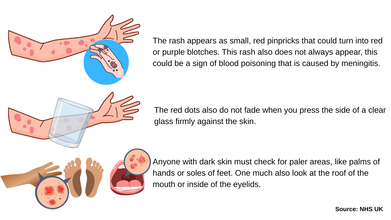
Rashes are the most common symptoms of meningitis, however, rashes are common with any diseases. In fact, common allergies, or trying new clothes too could leave you with rashes. Diseases like mpox, dengue or measles too have rashes as symptoms. So, what is so unique about meningitis rashes?
As per NHS UK, the rash appears as small, red pinpricks that could turn into red or purple blotches. This rash also does not always appear, this could be a sign of blood poisoning that is caused by meningitis.
The red dots also do not fade when you press the side of a clear glass firmly against the skin. NHS UK notes that anyone with dark skin must check for paler areas, like palms of hands or soles of feet. One much also look at the roof of the mouth or inside of the eyelids.
NHS UK notes that one must call 999, if they find such a rash. In meningitis the rash could be a non-balancing rash, which means it does not fade away under a glass, which is a distinctive meningitis symptoms. This could also indicate potential sepsis. Furthermore, a bulging soft spot or fontanelle in infants could be seen.
Other than rashes, a sudden high fever, severe headache, and a rigid, stiff neck are also some of the symptoms unique to meningitis.
There have been cases of people with photophobia. This means that anyone with meningitis could also develop a fear of light.
Read: Meningitis Outbreak: How to Differentiate The Symptoms From a Common Rash
What Is Meningitis?
Meningitis is a serious medical condition that affects the protective membranes covering the brain and spinal cord, the meninges. While fever is not always present, it is usually considered as one of the classic symptoms of meningitis. It is important to know the varied symptoms, causes, and treatments of meningitis for early diagnosis and proper management of the disease.
Meningitis is an infectious illness that brings about inflammation in the meninges. The most common cause of such inflammation is bacterial or viral infections, though other causes are also possible including fungal, parasitic, or non-infectious causes (autoimmune disease, head injury, or brain surgery). Meningitis may be caused by bacterial meningitis, which the Centers for Disease Control and Prevention (CDC) indicates can be so severe and bring about conditions like hearing loss, vision problems, and death if not received on time.
- Follow Us :


© 2024 Bennett, Coleman & Company Limited