
- Health Conditions A-Z
- Health & Wellness
- Nutrition
- Fitness
- Health News
- Ayurveda
- Videos
- Medicine A-Z
- Parenting
NHS Rolls Out Chickenpox Vaccine For Kids— What Parents Should Know

Credits: Canva
Chickenpox will soon become part of the NHS routine childhood vaccination schedule, a step health leaders are calling a landmark moment for public health. Officials say the decision will strengthen population immunity, reduce hospital admissions, and help the NHS save substantial costs over time. It is also expected to cut down on missed nursery and school days for children, while easing the burden on parents who often have to take time off work to care for sick kids.
Doctors have also stressed that while chickenpox is often mild, it can lead to serious complications and, in very rare cases, can be life-threatening. Below, we answer key questions, including why the vaccine is being introduced now, which children are eligible for free NHS doses, and what parents should do if their child falls just outside the qualifying age group.
Also Read: Superbug Fungus Candida Auris Is Spreading In The U.S., Check Where Cases Are Rising Fastest?
Dr Claire Fuller, National Medical Director for NHS England, said the move marks a major step forward. “This is a hugely positive moment for children and their families,” she said, adding that routine protection against chickenpox will now sit alongside other childhood vaccinations designed to guard against serious illness.
Chicken pox vaccine: What Is Chickenpox?
Chickenpox is caused by the varicella zoster virus, which is why the letter “V” has now been added to the standard MMR vaccine. The illness mainly affects children, but anyone can catch it at any age.
During the pandemic, chickenpox cases fell sharply due to lockdowns and reduced social contact. As a result, experts believe natural immunity to the virus across the population remains lower than usual.
Although uncommon, complications can include serious bacterial infections such as group A streptococcus, brain swelling known as encephalitis, lung inflammation called pneumonitis, and even strokes. Very young babies under four weeks old face a higher risk of severe illness, as do adults who have never had chickenpox before.
Also Read: Australian Cricketer Damien Martyn in Hospital With Meningitis
Chicken pox vaccine: Why Is The NHS Rolling It Out Now?
Until now, chickenpox vaccination was not routinely offered to all children because of long-standing concerns about shingles. Shingles is caused by the same virus, which can lie dormant in the nervous system for years before reactivating later in life, often when immunity weakens due to age, illness, or stress.
In 2009, the Joint Committee on Vaccination and Immunisation decided against a nationwide rollout, fearing it could increase shingles cases among middle-aged adults. At the time, it was thought that natural exposure to chickenpox helped protect against shingles later on. More recent research from the United States, however, has challenged and largely dismissed that theory, paving the way for the NHS decision.
Chicken pox vaccine: Which Children Are Eligible And When?
Children born on or after 1 January 2025 will be offered two doses of the combined MMRV vaccine at 12 months and again at 18 months. Those born between 1 July 2024 and 31 December 2024 will receive two doses at 18 months and at 3 years and 4 months.
Children born between 1 September 2022 and 30 June 2024 will be offered a single dose at 3 years and 4 months. In addition, the NHS plans to introduce a one-dose catch-up programme later this year for older children born between 1 January 2020 and 31 August 2022.
Previously, children received two doses of the MMR vaccine at 12 months and at 3 years and 4 months. For children born on or after 1 July 2024, the second dose will now be brought forward to 18 months to offer earlier protection.
Chicken pox vaccine: What Happens Next?
The rollout across England, Scotland, Wales, and Northern Ireland means hundreds of thousands of children will become eligible for the vaccine from Friday. Parents should be contacted by their GP and invited to book appointments for the new combined MMRV jab as part of routine childhood vaccinations.
As per Mirror News, Dr Claire Fuller said the change ensures protection against measles, mumps, rubella, and chickenpox is now delivered together. She added that making the vaccine part of standard appointments will help keep children healthier and reduce the spread of these highly contagious infections.
NHS Warns Furosemide Users About Dehydration Risk: Here’s Why
Credits: Canva
Furosemide is commonly prescribed in the UK to help manage conditions such as heart failure and high blood pressure. The diuretic medication is used by people of all ages, including children and infants. In 2024 alone, it was dispensed around 11 million times, making it one of the 20 most frequently prescribed medicines in the country.
Although it is widely used, doctors stress that furosemide must be taken carefully and in line with medical advice, as misuse can lead to serious health problems.
Furosemide: Why The NHS Is Warning Furosemide Users About Dehydration
To ensure safe use, the NHS has issued guidance urging certain people to speak to a doctor before taking furosemide. This is particularly important for anyone showing signs of dehydration, which can include feeling unusually thirsty, having a dry mouth, or noticing dark-coloured urine. Because furosemide increases urine output, it can raise the risk of fluid loss if not managed properly.
Who Should Speak To A Doctor Before Taking Furosemide?
The NHS advises the following people to consult a doctor before using furosemide:
- Anyone who has previously had an allergic reaction to furosemide or any other medicine
- Anyone with low blood pressure, also known as hypotension
- Anyone showing signs of dehydration, such as thirst, dry mouth, or dark urine
- Anyone diagnosed with liver disease
- Anyone living with diabetes
- Anyone who has difficulty passing urine
- Anyone diagnosed with Addison’s disease, a rare disorder affecting the adrenal glands
- Anyone diagnosed with gout
Furosemide: When Should Users Contact A Doctor Or Delay Treatment
Beyond these groups, the NHS also says furosemide users should seek medical advice if:
- You are due to have a glucose test
- You are scheduled for a scan or X-ray that involves an iodine-based dye being injected into your blood
- You are preparing for major surgery or a procedure that requires a general anaesthetic
How Furosemide Works And Why It Is Called A ‘Water Tablet’
Official NHS guidance explains that diuretics are often referred to as “water tablets” because they increase how often you urinate. This helps the body remove excess fluid.
“Furosemide is only available on prescription,” the NHS states. “It comes as tablets and a liquid that you swallow. It can also be given by injection, but this is usually only done in hospital.”
Medicines That Can Interfere With Furosemide
The NHS also warns that certain medicines can reduce how well furosemide works or increase the risk of side effects. This includes some commonly used over-the-counter treatments, such as paracetamol, co-codamol, and remedies for heartburn or indigestion.
Common Painkillers And Remedies To Use With Caution
Anyone prescribed furosemide is advised to speak to a doctor before taking:
- Medicines used to treat mental health conditions, including amisulpride, lithium, pimozide, or risperidone
- Medicines used to treat high blood pressure, or drugs that may cause low blood pressure as a side effect
- Sucralfate, a medicine used to treat stomach ulcers. Patients should leave around two hours between taking sucralfate and furosemide
- Non-steroidal anti-inflammatory drugs, known as NSAIDs, such as diclofenac, ibuprofen, or naproxen
Why Potassium Supplements Can Affect Furosemide?
Other medicines can also interfere with how furosemide works, including:
- Potassium supplements, steroids, or other diuretics that affect potassium levels
- Medicines used to treat, or that may cause, irregular heart rhythms, such as amiodarone, digoxin, disopyramide, flecainide, or sotalol
- Soluble paracetamol
- Soluble co-codamol
Certain Treatments For Heartburn And Indigestion
The NHS advises patients to tell their doctor if they are taking potassium supplements, as these can alter potassium levels in the blood and affect how furosemide works.
The health service also cautions against combining furosemide with herbal remedies or supplements. According to NHS guidance, there is not enough evidence to confirm they are safe to take alongside the drug.
Unlike prescription and pharmacy medicines, herbal products are not tested to the same standards and are generally not assessed for how they interact with other medications.
High Blood Pressure In UK Children: Who Is At Risk As Doctors Raise Concern
Credits: Canva
High blood pressure, also known as hypertension, is usually thought of as an adult health issue. But doctors are now raising serious concerns after a study published in The Lancet Child & Adolescent Health in November 2025 showed that rates of high blood pressure among children and teenagers have nearly doubled over the past two decades.
Blood Pressure In UK: The Lancet Study and Why Doctors Are Concerned in the UK
Hypertension has long been associated with people in their 30s and 40s, often linked to work stress and ageing. Today, however, shifts in daily habits and increasingly inactive lifestyles mean the condition is appearing more often in children and adolescents too. For years, young people were largely overlooked in discussions around blood pressure, and routine screening was rarely carried out. As a result, the true scale of the problem remained unclear. UK doctors are now calling for a nationwide testing programme to assess how widespread the issue is and to identify children who may need early support and treatment.
What Is Hypertension?
Hypertension is the clinical term for high blood pressure. It develops when the force of blood pushing through the arteries remains higher than what is considered healthy over time. Arteries are the blood vessels that carry oxygen-rich blood from the heart to the brain and the rest of the body. High blood pressure is often described as a silent killer because it can cause lasting damage without clear warning signs or symptoms.
Blood Pressure: How Is It Diagnosed?
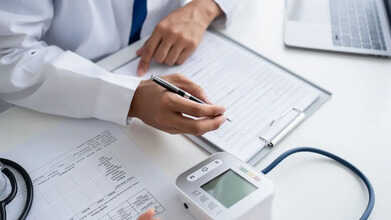
Blood pressure is usually checked using a monitor with an inflatable cuff placed around the upper arm. The reading is shown as two numbers, measured in millimetres of mercury, written as one over the other. The top number, known as systolic pressure, reflects the force of blood when the heart beats and pumps blood around the body. The bottom number, called diastolic pressure, measures the pressure in the arteries when the heart relaxes between beats.
The definition of high blood pressure varies between countries. In the UK, a normal adult reading falls between 90/60 and 119/79. Readings from 120/80 to 139/89 are considered raised, while 140/90 and above is classed as high blood pressure. In the United States, readings between 130/80 and 139/89 are labelled stage 1 hypertension, with stage 2 beginning at 140/90.
Diagnosing hypertension in children is more complex. Blood pressure naturally changes as children grow and depends on age, height, and sex. Rather than fixed numbers, doctors diagnose high blood pressure when a child’s readings fall within the highest five per cent for others of the same age, height, and sex.
Blood Pressure In UK: Who Is At Risk?
High blood pressure is widespread, particularly among older adults. Around one in three adults in the UK and nearly half of adults in the US live with hypertension. Age plays a key role because arteries gradually lose flexibility and become thicker over time. Family history also matters, as genetics can increase risk. People from Black African, Black Caribbean, and South Asian backgrounds are known to face a higher likelihood of developing the condition.
Lifestyle choices also have a strong influence. Diets high in salt, being overweight or obese, lack of regular physical activity, smoking, excessive alcohol intake, and prolonged stress can all contribute to raised blood pressure.
What About Children?
In babies and very young children, high blood pressure is usually linked to underlying medical issues such as heart defects, kidney disease, or genetic and hormonal conditions. This form is known as secondary hypertension. Since the 1990s, however, rates of high blood pressure among children and adolescents have risen more than fourfold, reaching around six per cent. Poor diets, low levels of physical activity, and increasing rates of overweight and obesity are major factors behind this rise.
Why Is Hypertension Harmful?
High blood pressure can quietly harm the body for many years before symptoms appear. Constant strain on the blood vessels can lead to aneurysms, where weakened artery walls bulge and may rupture, sometimes with fatal consequences. The heart is forced to work harder, increasing the risk of heart failure. Damage to the inner lining of arteries can trigger inflammation and the buildup of plaques, making blood vessels narrower and less flexible. This restricts blood flow and raises the risk of chest pain, irregular heartbeats, and heart attacks.
The kidneys are especially sensitive to high blood pressure. Damaged blood vessels can stop them from filtering waste effectively, potentially leading to kidney failure that requires dialysis or a transplant. The eyes can also be affected, as their delicate blood vessels are prone to damage, causing bleeding, blurred vision, or even blindness.
When blood flow to the brain is reduced by narrowed or blocked arteries, it can lead to vascular dementia or mini-strokes. Severe cases may result in major strokes caused by clots or bleeding linked to long-term high blood pressure.
In children, hypertension can harm vital organs such as the heart, kidneys, and eyes at an early age. This makes early detection and treatment crucial to protect long-term health.
30% of Delhi’s Children Are Borderline Asthmatic, Says Doctor, As Young Ones Keep Breathing Toxic Air

Credits: iStock
Delhi's AQI dropped at 302 on Friday, which is at the lower end of the 'very poor' category. In fact, neighboring cities like Noida, Ghaziabad, Faridabad and Gurugram too experienced a lower AQI, with 299, 300, 220, and 232, respectively. India Meteorological Department (IMD) stated that due to the wind speed, the air quality has improved. The IMD also said that cold wave is expected to continue between January 2 and 5. The IMD noted that dense to very dense fog will persist during the night and early morning hours.
While AQI may have improved slightly, doctors have pointed out that Delhi children are still at risk. In fact, a Medanta Hospital chest surgeon, Dr Harsh Vardhan Puri, 30% of Delhi's children are borderline asthmatic.
Delhi Children Most At Risk Of Asthma, Thanks To The Toxic Air
In an interview with India TV, Dr Puri said that Delhi's air pollution has become a "full-blown" public health crisis, with children bearing the heaviest burden.
“Thirty per cent of children in Delhi are borderline asthmatic. The disease of asthma has already begun in them,” the doctor notes. He emphasizes that these are not isolated incidents. “We’re seeing this routinely in our OPDs now,” he says, adding that respiratory problems in children have become disturbingly common rather than rare.
According to Dr Puri, children are particularly at risk because their lungs are still growing. “A child’s lungs continue to develop until around the age of 10 or 12,” he explains. “If they’re exposed to high pollution levels during these crucial years, their lungs may never reach their full capacity.”
The impact, he says, can last a lifetime. “We are raising a generation of respiratory cripples,” Dr Puri warns, referring to children who grow up with weaker lungs, reduced stamina, and a much higher risk of asthma and chronic lung diseases at a much younger age.
What makes this more worrying is that the damage often starts quietly. “Even if children don’t show symptoms right away, the groundwork for chronic disease is already being laid,” he says.
Even before birth, the damage begins
Dr Puri stresses that pollution doesn’t wait until childhood to cause harm. “This isn’t just your problem or mine,” he says. “It’s a problem for a child who hasn’t even taken their first breath.”
He explains that ultra-fine particles like PM1 are small enough to pass from the lungs into the bloodstream. “Through the placenta, these particles can reach the unborn baby,” he says.
Referring to medical studies, Dr Puri adds that tests of umbilical cord samples have found as many as 276 different pollutants. “These toxins enter the lungs, brain and even the cells of the unborn child long before birth,” he says, underscoring how early the damage begins.
Read: Delhi Will See Pollution-free Blue Sky In Next 3-4 Years, Says Authority
Delhi’s fight against air pollution is set to intensify over the next few years, with the CAQM outlining a multi-pronged plan aimed at delivering “more blue-sky days” for the capital. Rather than relying on emergency measures alone, the strategy focuses on long-term, structural fixes across transport, industry, energy and regional coordination.
- Follow Us :


© 2024 Bennett, Coleman & Company Limited