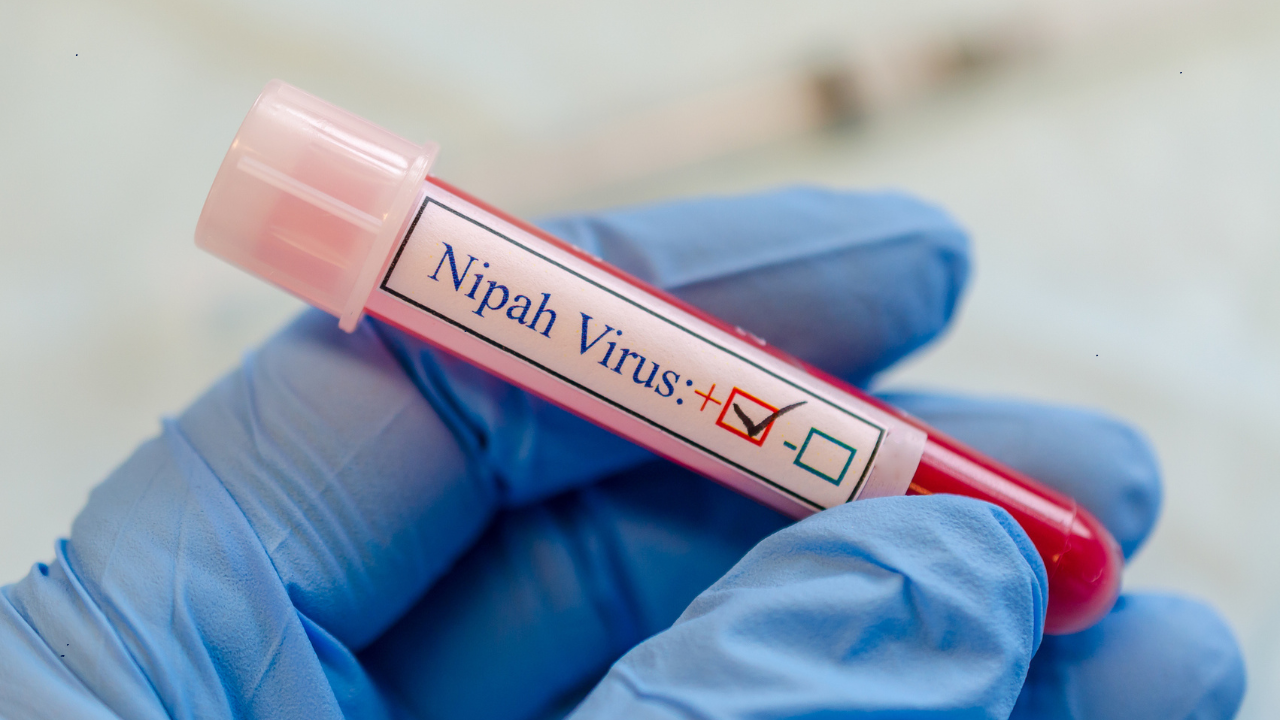
Nipah virus, first identified in 1999, is a serious threat that is 'underestimated' and with its repeated emergence in South and Southeast Asia, it has the potential to turn 'more severe', according to a global team of scientists. Nipah virus is a zoonotic virus, usually transmitted from animals to humans, but can also be transmitted through contaminated food or directly between people. In a correspondence published in The Lancet, the scientific team led by the Campus Bio-Medico University of Rome in Italy stated: “the danger of the Nipah virus is in its persistence, that is, it is periodic, lethal, and preventable". The researchers argued that although the Nipah virus is well understood, there is little action on it, with delays in surveillance, sporadic funding, and episodic preparedness. “How South and Southeast Asia respond now will determine whether the Nipah virus remains a regional epidemic or if it escalates into something far more severe,” said the experts.Also read: Why The Nipah Virus Still Persists After 25 Years In Southeast Asia Recent Nipah Outbreaks In IndiaAccording to the Ministry of Health & Family Welfare, two cases of the deadly Nipah virus Disease (NiVD) -- a male nurse from Purba Medinipur district and a female nurse from Mongolkot in Purba Bardhaman district who worked at a private hospital in Barasat in North 24 Parganas district -- were confirmed in West Bengal since last December. Of these, the 25-year-old female nurse died of cardiac arrest after recovering from Nipah virus infection. "She died of cardiac arrest this afternoon. Though she had recovered from Nipah infection, she was suffering from multiple complications," a state health department official told PTI in February. The male nurse had recovered and returned home. Nipah has been endemic to both West Bengal and Keralam (formerly known as Kerala). The first recorded Nipah outbreak in India occurred in 2001 in West Bengal’s Siliguri, where about 66 cases were reported with high fatality, with significant hospital-based transmission among healthcare workers. Again in 2007, the eastern state’s Nadia district reported an outbreak. Keralam reported its first Nipah virus outbreak in 2018. The state’s northern districts, Kozhikode and Malappuram, have been on high alert with sporadic and periodic cases occurring in the state in 2019, 2021, 2023, 2024, and 2025. These cases “are not anomalies and are a reminder of a virus causing recurrent outbreaks for more than two decades, with high mortality, frequent infections of health-care workers, and no approved vaccines or treatments,” said the scientists in the Lancet Correspondence.Also read: These 24 Pathogens Could Trigger The Next Pandemic, Says UKHSA What Is The Nipah Virus? How To Prevent? Nipah is essentially a zoonotic infection -- from animals to humans -- and then from human to human. The Nipah virus spreads through saliva, urine, other body fluids of an infected person.The virus, carried by fruit bats, can cause severe respiratory illness and brain inflammation. There is currently no vaccine or specific treatment. The Nipah virus, although rare, is unpredictable. It is not limited to just one part of the body. In severe cases, it can affect multiple organs. The Lancet paper also highlighted the "lack of diagnostics, protective equipment, and trained personnel" in many facilities in rural and peri-urban areas. The researchers suggested prioritizing sustained investment boosting surveillance, improving infection prevention and control, decentralizing laboratory capacity, One Health implementation, regional data sharing, accelerated development of vaccines and therapeutics. “Viruses do not depend on political visibility or public concern to spread; transmission occurs when ecological disruption, delayed detection, and health-system susceptibilities converge,” the experts said.