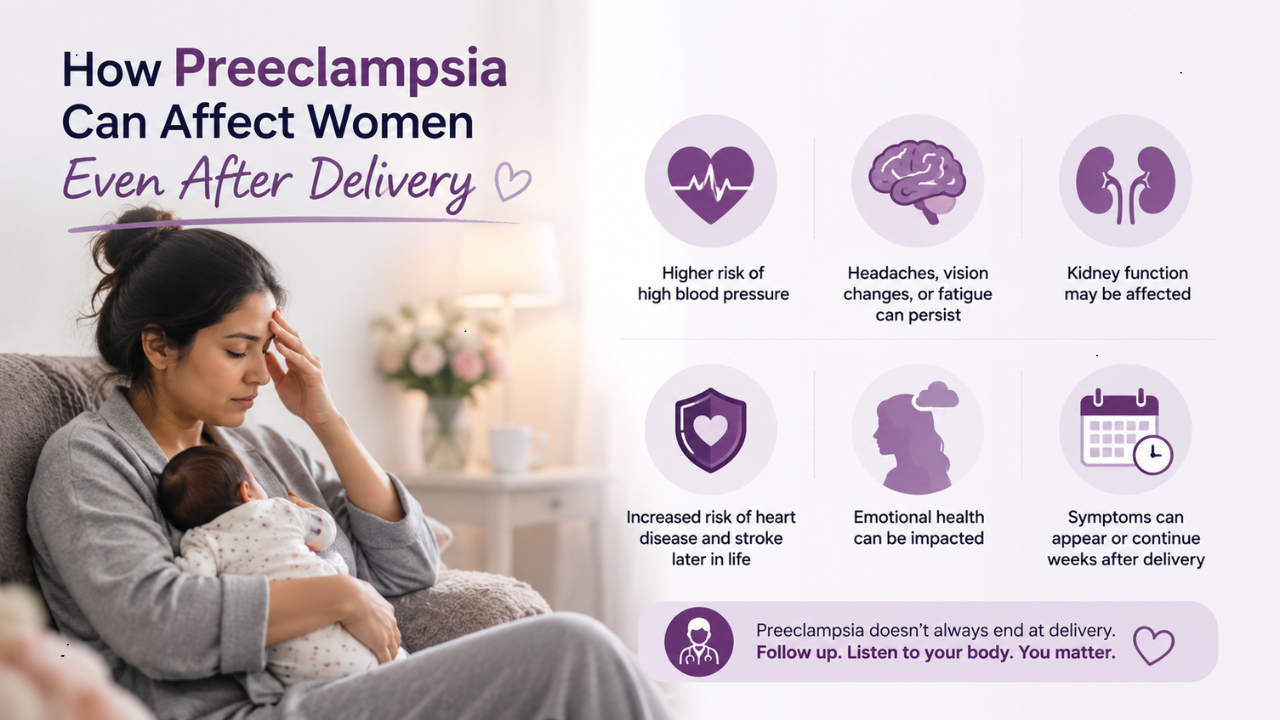
Preeclampsia is usually discussed as a pregnancy complication, but the risk does not end automatically after childbirth. Delivery is an important part of treatment, but it is not an instant cure. A woman can still develop postpartum preeclampsia in the days or weeks after delivery, even if her blood pressure was normal during pregnancy. The risk is highest soon after childbirth, but it can remain for up to six weeks. This period needs close attention because the mother is recovering, sleep-deprived, caring for a newborn, and may mistake warning signs for normal post-delivery discomfort. This is when the condition can become dangerous if symptoms are missed.The warning signs of postpartum preeclampsia should be taken seriously. A severe headache, blurred vision, seeing spots, swelling of the face or hands, pain below the ribs, nausea, vomiting, breathlessness, chest pain, reduced urination, sudden weight gain, or very high blood pressure should be checked urgently. If postpartum preeclampsia is not treated in time, it can lead to seizures, known as eclampsia, and may also cause stroke, fluid in the lungs, acute liver or kidney injury, and, in rare severe cases, hepatic subcapsular hematoma, which is bleeding beneath the capsule of the liver, or intracranial bleeding, also called brain hemorrhage. In the most severe cases, it can be fatal.The reassuring part is that the condition is treatable when identified early. Treatment may include blood pressure medicines such as labetalol, nifedipine, or amlodipine, magnesium sulphate if there is a risk of seizures, and diuretics in selected cases where there is fluid overload. Many of these decisions can be safely planned even if the mother is breastfeeding, but treatment should always be guided by her treating doctor. The responsibility should not fall only on the mother. Families need to watch her health with the same seriousness with which they attend to the newborn. As a precaution, blood pressure checks should continue at home or during scheduled visits, especially in the first few weeks after delivery. Postpartum follow-ups should not be missed, prescribed medicines should be taken properly, and self-medication should be avoided, particularly painkillers or over-the-counter drugs unless approved by the doctor. If symptoms worsen, or if there is headache, breathlessness, chest pain, visual disturbance, or swelling, she should be taken back to the hospital without delay. A history of preeclampsia also remains important after recovery because it can increase the woman’s future risk of chronic hypertension, heart disease, stroke, and kidney disease. Postpartum care should never be treated as a formality. It is an essential part of protecting the mother’s recovery, her future pregnancies, and her long-term health.