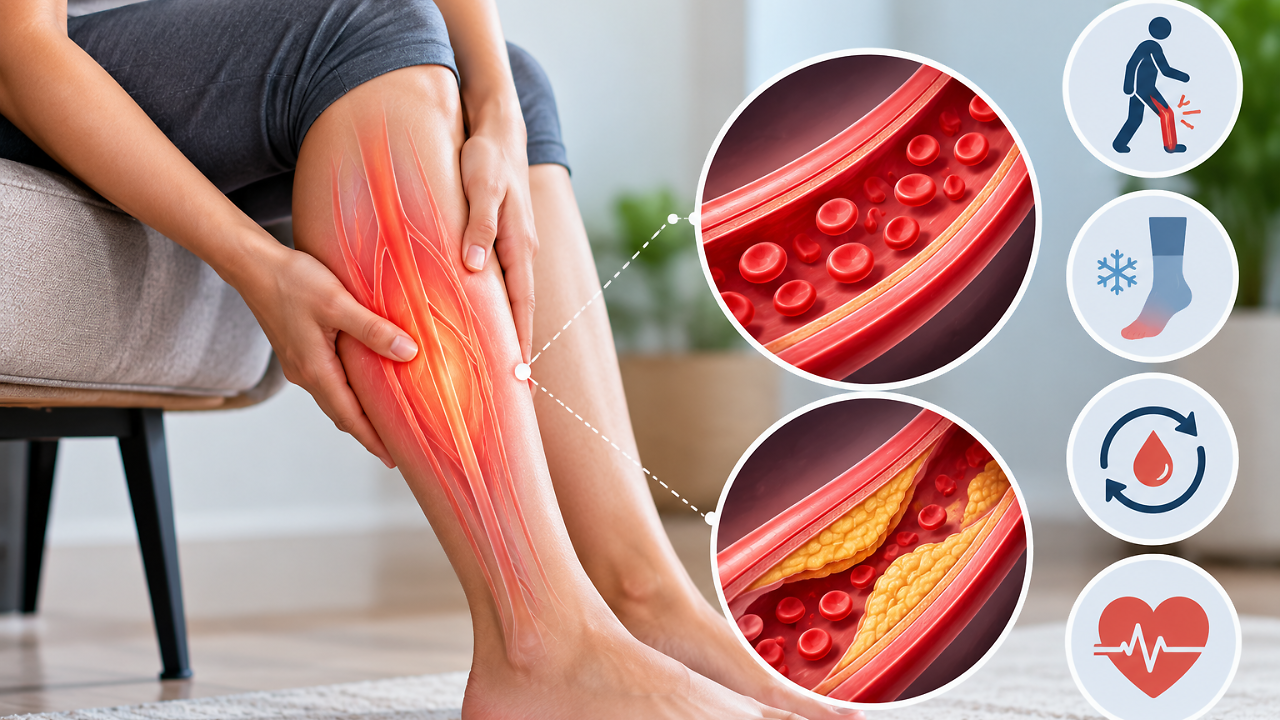
Peripheral vascular disease (PVD) is a circulatory disorder that restricts blood flow to the limbs, most commonly the legs, due to narrowed or blocked blood vessels. Unlike heart disease, which affects only one organ, PVD involves multiple arterial systems including the heart, brain, kidneys, and limb vessels. This multi-system involvement makes PVD more damaging and complex, often earning it the description of a silent killer.Why Peripheral Vascular Disease (PVD) Is Frequently Overlooked Heart attacks are dramatic, with sudden chest pain and breathlessness prompting immediate medical attention. In contrast, PVD progresses slowly, with patients noticing difficulty walking, fatigue, or leg pain over weeks or months. These signs are often dismissed as aging, weak bones, or orthopaedic issues. Many patients consult orthopaedics or physiotherapists instead of vascular specialists, delaying diagnosis until ulcers, gangrene, or even limb loss occur. By the time patients reach advanced hospitals, they are often in late stages of the disease, facing irreversible complications.Also read: Cholera Deaths Hit Highest Level Since 1999: 7 Countries Drive 90% Of Global Toll In 2025Recognizing the Symptoms The symptoms of PVD are subtle but critical. A foot or leg colder than the rest of the body is a clear sign of reduced blood supply. Pain that occurs while walking and forces patients to stop, only to recur at the same distance, is another hallmark symptom. Non-healing wounds, particularly in diabetic patients, are a serious warning sign. Skin changes such as shiny texture, hair loss, dryness, scaling, or discoloration also indicate compromised circulation. These symptoms should never be ignored, especially by individuals with diabetes or a history of smoking, as they are at significantly higher risk.Risk Factors and Complications The risk factors for PVD mirror those of heart disease. Diabetes accelerates cholesterol deposition inside arteries, narrowing them and reducing blood flow. Smoking compounds this damage by injuring arterial walls, worsening blockages. High cholesterol, hypertension, and family history further increase vulnerability. A major complication is diabetic foot, which combines three problems: neuropathy, where nerve damage causes loss of pain sensation; poor blood supply, which prevents wounds from healing; and increased susceptibility to infections. This combination often leads to ulcers, gangrene, and amputations. Alarmingly, studies show that nearly half of diabetic patients who undergo amputation die within five years, underscoring the systemic impact of diabetes and PVD.Early detection is critical and can be achieved through simple, non-invasive tests. The ankle-brachial index compares blood pressure in arms and legs to identify discrepancies. Arterial Doppler uses ultrasound imaging to visualize leg arteries and detect blockages. CT or MRI angiography can pinpoint exact locations of narrowing or occlusion. These tests are widely available and can identify PVD before severe complications develop, making timely diagnosis possible.Also read: 'Heart Attack Of The Leg': Women May Overlook This Leg Symptom That Signals Blocked Arteries & Heart RiskTreatment Options Treatment depends on the severity of blockages. Early-stage disease can often be managed with medication such as blood thinners. More advanced cases may require minimally invasive procedures. Balloon angioplasty can open narrowed arteries, while stent placement restores circulation in severe blockages. Plaque removal devices can shave off arterial deposits without leaving stents behind. Intravascular lithotripsy breaks calcium deposits and remodels arteries, offering another option for restoring blood flow. Not all patients require stents, and modern techniques often avoid leaving permanent implants, reassuring patients who fear foreign bodies in their system. Patient Journey: Early vs Late Detection Modern vascular procedures are performed under conscious sedation, using small catheters inserted through the groin or wrist. Patients experience minimal discomfort, and recovery is far quicker than traditional surgery. The goal is not only to save limbs but also to restore mobility and quality of life. Early detection allows patients to manage risk factors, monitor diabetes and cholesterol, and undergo regular vascular checks. Late detection, however, often means irreversible damage, gangrene, and amputations. Daily vigilance, especially for diabetic patients, is essential. Inspecting feet for wounds, discoloration, or dryness can prevent complications and save limbs. Peripheral vascular disease is a serious but often overlooked condition. Its gradual onset and subtle symptoms make it easy to dismiss, yet its consequences are severe, affecting not just the legs but the heart, brain, and kidneys. Awareness, early diagnosis, and timely treatment are critical to preventing disability and improving outcomes. By recognizing the signs and addressing risk factors, patients can protect both their limbs and their lives.