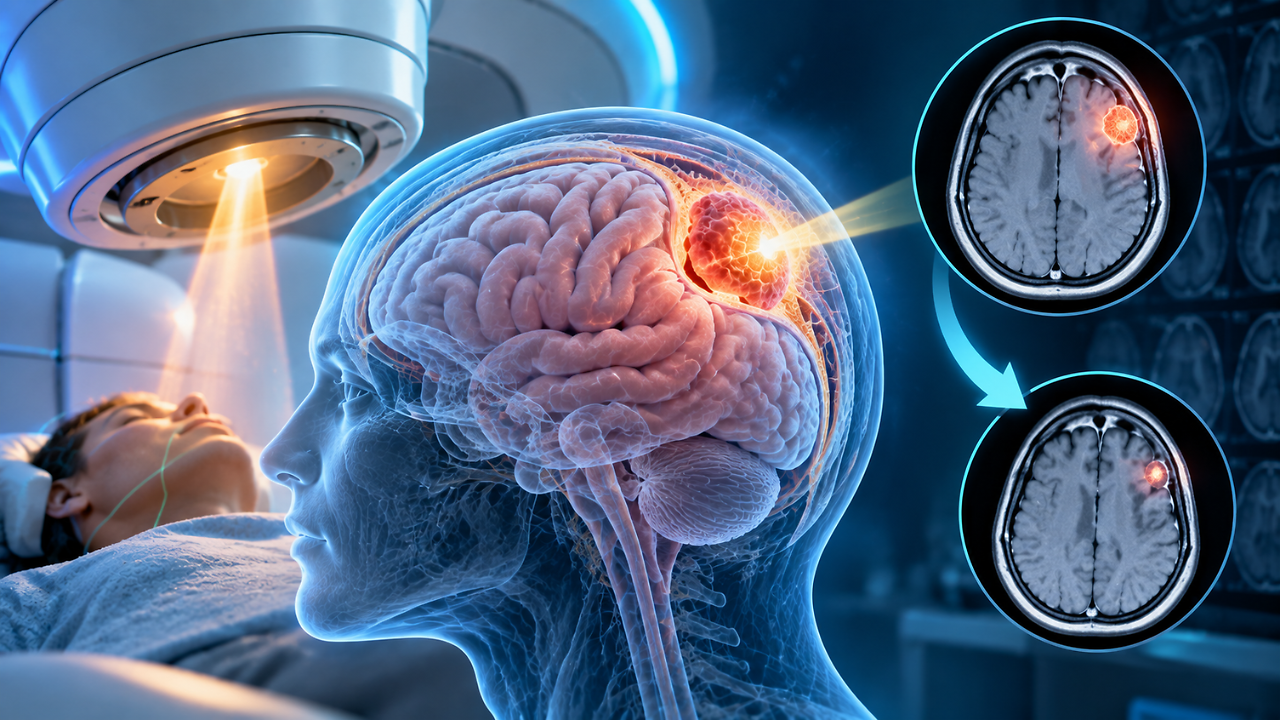
After surgery, radiotherapy could significantly decrease the chances of an atypical meningioma returning, according to a new international phase 3 trial published in The Lancet. The findings come from the ROAM/EORTC-1308 trial, the first randomised controlled trial to directly test whether patients with a completely removed atypical meningioma benefit from receiving radiotherapy or whether regular scans and observation are enough. The results could help settle a treatment question that has remained uncertain for years. What Is An Atypical Meningioma? Meningiomas are the most common brain tumours in adults. They develop from the meninges, the protective membranes surrounding the brain, and spinal cord. An atypical meningioma is classified as a WHO grade 2 tumour. Unlike grade 1 meningiomas, that generally grow slowly, grade 2 tumours are more likely to grow again after surgery. Even when surgeons manage to remove the entire visible tumour, microscopic tumour cells may remain, sparking a risk of recurrence.Also read: The Gynecological Cancer Symptoms Women Often Mistake for “Normal” Ageing Like What Did The Lancet Study Find? The ROAM/EORTC-1308 trial enrolled 157 patients whose atypical meningiomas had been completely removed surgically. They were randomly assigned to either: Radiotherapy: 78 patients received 30 sessions of radiotherapyObservation: 79 patients underwent regular imaging surveillance After a median follow-up of about five years, the difference in recurrence was significant. 14% of patients in the radiotherapy group experienced a recurrence, compared to 30% in the observation group. In other words, the risk of recurrence was reduced by nearly half with postoperative radiotherapy. Additionally, at five years, about 80% of patients receiving radiotherapy remained free of recurrence, compared to about 64% of those who were monitored without immediate radiotherapy.Also read: After 70% of His Tongue Was Removed For Cancer, Lawyer Regains Speech & Returns To Court The Trial Cements Necessary Evidence Until now, doctors have had to weigh two approaches after complete surgical removal of an atypical meningioma. One option is to give radiotherapy immediately, hoping to destroy microscopic tumour cells that surgery may have missed. The other is to monitor the patient with regular brain scans and use radiotherapy if the tumour returns. The uncertainty existed as strong randomised evidence showing whether immediate radiotherapy actually reduced recurrence had been lacking. The trial helps cement that evidence. Who Needs Radiotherapy After Surgery? The researchers say that treatment decisions still need to be made jointly by doctors and patients, taking into account possible side effects and the long-term consequences of radiation treatment. Serious radiation-related complications were uncommon in the trial. The study also did not establish whether the recurrence benefit extends beyond five years. This means that longer follow-up will be needed to gather more evidence. According to the researchers, the findings are expected to shape national and international treatment guidelines. The options may extend for patients who have undergone complete removal of a WHO grade 2 atypical meningioma. Rather than contemplating “Should we simply watch and wait?”, they can consider moving to a more evidence-based discussion about whether postoperative radiotherapy should be offered upfront.