
- Health Conditions A-Z
- Health & Wellness
- Nutrition
- Fitness
- Health News
- Ayurveda
- Videos
- Medicine A-Z
- Parenting
Sleeping Too Much or Too Little Raises Liver Disease Risk, Study Finds

Credit: Canva
Abnormal sleeping patterns, whether excessive or brief, can significantly increase your risk of developing chronic liver disease, an EMJ study suggests.
Sleep duration has previously been linked to worsening your chances of Type 2 diabetes; obesity; cardiovascular diseases including hypertension, stroke, heart attack; mental disorders such as depression, anxiety; weakened immune system and potentially contributing to neurological conditions such as dementia.
However, researchers have now also found that sleep disruption may intensify existing stress on the liver which can worsen metabolism and pave the way for disease progression.
The authors noted that poor sleeping habits may influence liver health for multiple reasons including by altering glucose metabolism, increasing inflammation and disrupt circadian rhythms that regulate liver function.
"Participants who reported consistently short sleep duration were more likely to have elevated liver enzymes and higher fibrosis risk scores compared with those reporting moderate sleep duration. Long sleep duration was also associated with adverse liver markers, though the relationship was weaker than that observed for short sleep," the study noted.
Despite discovering links, the involved researchers noted that the study only highlighted sleep as a potential factor that could worsen liver function along with other lifestyle reasons and did not act as a clear cause.
Why Is Chronic Liver Disease A Concern?
Once a rare condition, non-alcoholic fatty liver disease (NAFLD) now affects one in three Indians. A JAMA study has now found that about 40 percent of the global population is now suffering from NAFLD, with abdominal obesity identified as its single biggest risk factor.
Researchers found that nearly 70 percent of people with Type 2 diabetes and about 80 percent of those with obesity are affected by NAFLD. They also discovered that NAFLD prevalence is higher in men than in women, with rates of 15,731 per 100,000 population in men compared with 14,310 in women.
READ MORE: This Deadly Liver Disease Is Affecting People In Their 20s And This One Symptom Is The Red Flag
Between 2010 and 2021, India recorded a 13.2 percent increase in age-standardized prevalence, ranking just behind China at 16.9 percent and Sudan at 13.3 percent. Additionally, the disease peaks earlier in men, between 45 and 49 years of age, while women show the highest prevalence between 50 and 54 years.
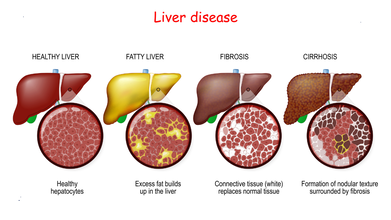
NAFLD, now called as metabolic dysfunction-associated steatotic liver disease (MASLD), is when excess fat builds up in the liver, unrelated to heavy alcohol use, due to obesity, Type 2 diabetes, high blood pressure and cholesterol.
It ranges from simple fat accumulation to inflammation and damage, which can progress to fibrosis, cirrhosis or liver cancer, The disease often has no symptoms and is managed with lifestyle changes such as diet and weight loss.
Why Is NAFLD on the rise?
Poor diets (high carbs/sugar), sedentary habits and rising obesity are some of the key reasons why an uptick in NAFLD cases has been seen pan-India. Increased intake of refined carbs, sugary drinks, processed foods and unhealthy fats can increase the risk of obesity, diabetes, hypertension and high cholesterol which can pave the way for this liver disease.
Experts also note that working long hours at desks without any proper physical activity can lead to weight gain and fat accumulation in the liver.
According to the Union Health Ministry, the prevalence of the condition could be in the range of 9-53 percent. Multiple other health studies also suggest nearly 40 percent of urban Indians may have some form of fatty liver disease
Hepatologist Dr Cyriac Abby Philips, popularly known as LiverDoc on social media, noted on X that many patients do not realize that timely lifestyle changes can completely reverse the condition. “All it takes is being in charge of your body and health. No shortcuts—go slow and steady,” he wrote.
If left untreated, NAFLD can progress to Non-Alcoholic Steatohepatitis (NASH), where liver inflammation begins. Over time, this inflammation can lead to scarring of the liver, known as fibrosis. Advanced fibrosis results in cirrhosis, which severely affects liver function.
NAFLD can also increase the risk of chronic liver disease, liver failure and hepatocellular carcinoma. Many patients diagnosed with liver cancer have a history of untreated fatty liver.
1 In 4 Diabetic Patients in India Suffer from Liver Fibrosis, Finds Lancet Study
Credit: iStock
One in four or 25 percent of adults with type-2 diabetes in India also suffer from liver fibrosis, according to an alarming study published in The Lancet Regional Health Southeast Asia journal today.
With data from more than 9,000 patients across the country, it is the largest ever real-world survey of liver fibrosis in type 2 diabetes from any low- or middle-income country.
While fatty liver disease has been touted as the most common liver condition among diabetes patients, the new study established liver fibrosis as the real danger among people with high blood sugar.
“Type 2 diabetes is closely linked to fatty liver disease (also known as MASLD). But how common is liver Fibrosis — the real danger — in Indian diabetics? Our answer: 1 in 4 has clinically significant liver fibrosis. One in 20 already has probable cirrhosis. Most had no symptoms. We propose liver fibrosis as the ‘4th major complication’ of diabetes,” said Ashish Kumar, from Ganga Ram Postgraduate Institute of Medical Education and Research (GRIPMER), from Sir Ganga Ram Hospital, in a post on social media platform X.
What Did The Study Find?
Fatty liver is typically the first and reversible stage of liver disease, where excess fat builds up in liver cells. Left untreated, it progresses to liver fibrosis, which is the excessive accumulation of scar tissue (collagen) in the liver resulting from chronic inflammation. The condition then progresses to the third and late stage, irreversible scarring (fibrosis) of the liver. The final stage is liver cancer.
The DiaFib-Liver Study included a total of 9,202 adults with type-2 diabetes patients who underwent FibroScan (VCTE) to assess liver fibrosis in routine diabetes care.
Of these:
- 26 percent had clinically significant fibrosis,
- 14 percent had advanced fibrosis,
- 5 percent had probable cirrhosis
- 65 percent had fatty liver disease.
- obesity
- dyslipidaemia
- kidney problems
- diabetes duration ≥10 years.
Fibrosis: The Screening Target
The study suggested the urgent need to integrate fibrosis screening into national diabetes programs.
“One in four adults with type 2 diabetes in India has clinically significant liver fibrosis and one in twenty already has probable cirrhosis, establishing advanced liver disease as a 'fourth major complication' of diabetes,” said the researchers.
“The DiaFibLiver Study calls for: Fibrosis — not steatosis — as the screening target. FibroScan integration into routine diabetes care. Moving beyond ultrasound-based referral,” Jha said.
“We hope this data from India adds to the global conversation on diabetes and liver disease,” he added.
Also read: The Silent Rise of Fatty Liver Disease: How India-Specific Guidelines Can Help
The findings highlight the urgent need to:
- move beyond steatosis
- systematically integrate fibrosis assessment into routine diabetes care,
- deploy non-invasive tools such as vibration-controlled transient elastography (VCTE) in community practice
- define screening strategies,
- evaluate therapeutic interventions.
Everyday Habits That Harm the Liver
Certain lifestyle choices can accelerate liver damage, such as:
Overeating processed or fried foods
High sugar intake (soft drinks, sweets, desserts)
Physical inactivity or prolonged sitting
Ignoring health issues like diabetes or hypertension
Crash dieting or taking unprescribed supplements.
How To Improve Liver Health?
Early screening and detection are key to prevent irreversible stages. Yet liver disease can be prevented with lifestyle changes such as:
- Eating a balanced diet with vegetables, fruits, whole grains, and lean protein
- Engaging in at least 30 minutes of exercise daily
- Staying hydrated to help the liver flush out toxins
- Avoiding alcohol and smoking
- Avoiding self-medication and unnecessary pills
- Getting routine health screenings.
Problem Of Plenty: Psychiatrist Explains How Too Many Choices Affect Mental Health

Taking too many decisions in a day can lead to mental exhaustion. (Photo credit: iStock)
New Delhi: Every day, the brain processes hundreds of choices. Most pass unnoticed: what to wear, which route to take, what to eat. But accumulated over hours and across competing demands, this constant decision-making exacts a cost. Decision fatigue is the gradual erosion of the brain’s capacity to make good choices, and over time it affects both mental functioning and physical health. Dr Shivi Kataria, Consultant – Psychiatry, CK Birla Hospitals, Jaipur, addressed the problem of plenty and said that it could take a toll on mental health in certain circumstances.
Read more: India Launches 1st Repository Of Data On Major Psychiatric Disorders
What are the signs?
The earliest signs tend to be emotional. Simple decisions start to feel disproportionately heavy. Choosing between two options takes longer than it should. Irritability surfaces. Tasks that once felt manageable begin to pile up as the mental energy required to engage with them thins. Procrastination, self-doubt, and a general withdrawal from decisions are common responses, with the brain essentially rationing what little capacity remains.
Cognitive symptoms follow. Concentration narrows. Judgement becomes less reliable. Small errors accumulate. People in this state often describe feeling mentally stuck, present in the room but unable to engage with any clarity or momentum.
The physical dimension is frequently overlooked. Headaches, low energy, disrupted sleep, and difficulty sustaining attention are all associated with sustained decision overload. These symptoms register what prolonged mental strain produces in the body and are worth taking seriously.

Who is most at risk?
Decision fatigue affects most people at some point, but the load is not evenly distributed. Professionals in high-responsibility roles, caregivers, and anyone managing multiple competing demands make a disproportionately high number of decisions each day. By the end of a long day, the quality of choices made about food, purchases, relationships, or work often reflects exhaustion more than intention.
Read more: Smartphone Overuse Linked To Rising Risk Of Eating Disorders Among Youth, Study Finds
Is there a solution?
Reducing the number of decisions that require active thought each day is the most direct intervention. Fixed routines for meals, schedules, and recurring tasks remove the need to deliberate repeatedly over the same ground. This is conservation of mental energy, and it compounds over time.
Important decisions are better made earlier in the day, when the brain is rested and cognitive resources are intact. Short breaks during sustained work periods allow partial recovery. Even brief physical activity or deliberate rest between decision-heavy tasks restores some capacity.
The brain has a finite decision-making budget each day. Spending it on low-stakes choices leaves less available for the ones that carry real consequence.
Over 30% Fever Cases In India Linked To Dengue, Typhoid: Report
Credit: iStock
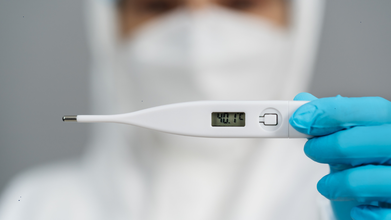
While fevers are often overlooked and brushed aside or even managed with antibiotics — a dangerous trend — an alarmingly nationwide study linked it to infectious diseases with far-reaching consequences.
The report, based on data of over one lakh individuals in India with fever, between 2023 and 2025, showed that these were not vague or self-limiting, but in more than 30 percent or one-third cases had clear links to serious infections, such as dengue, and typhoid.
According to the report by healthcare diagnostics company Thyrocare, the fevers were mostly linked with
- typhoid – in over 18 percent cases
- dengue -- over 14 percent cases.
- Other diseases include malaria, chikungunya, and leptospirosis.
Presence Of Multiple Infections
Importantly, the findings highlighted the presence of co-infections in 10 per cent cases. The most common was a combination of dengue and typhoid.
Dr Preet Kaur, Chief Scientific Officer, Thyrocare, said that a significant number of patients carry serious infections, sometimes more than one at a time, revealing patterns that simple assumptions cannot capture.
"Beyond the visible rise in temperature, laboratory markers highlight hidden stress on organs, from drops in platelet counts to elevated liver enzymes, underscoring that fever is a systemic signal, not an isolated event," she added.
Also read: ‘Breakbone Fever’: US CDC Warns Of Dengue Surge Across 17 Countries
Further, the report noted that dengue positivity declined significantly over the three-year report period, malaria increased despite its lower overall base.
Typhoid and chikungunya rose in 2024 before easing in 2025 but remained present across the testing population.
Also read: Drug Resistance Driving Severe Typhoid Disease, Death Among Children Under-5s in India: Lancet Study
Fever: Men Vs Women
The report noted that more women were affected with typhoid than men. On the contrary, men reported more malaria cases.
More than 32 percent of females had fevers compared to 29 percent of men. Fevers in women was largely driven by higher typhoid detection (21 percent vs 15 percent).
Malaria affected men more than twice as often as women (1.1 percent vs 0.5 percent).
The lab reports also revealed key physiological markers such as platelet counts and liver function among people with fever, dengue, and malaria.
Low platelet levels were seen in
- 27 percent of patients with fever
- 80 percent malaria positive patients
- 37 percent dengue-positive patients
- All fever patients (56 percent) showed elevated SGOT levels and 37 percent SGPT
- Liver stress was seen across patients with dengue, malaria and leptospirosis.
Dengue cases rose throughout the year and typically peaked around October.
Typhoid positivity steadily fell from 2023 to its lowest in 2025. Despite a mild monsoon spike each year, 2025 remained consistently lower overall.
Chikungunya cases rose gradually from lower, volatile levels in 2023, peaked sharply in 2024, and moderated to a softer trend in 2025.
Malaria positivity remained relatively low overall but increased during the monsoon months, with transmission peaking between May and September.
Over the three-year period, malaria positivity rose from 0.5 percent to 1.1 percent, indicating a gradual increase despite its lower overall base.
- Follow Us :


© 2024 Bennett, Coleman & Company Limited