
- Health Conditions A-Z
- Health & Wellness
- Nutrition
- Fitness
- Health News
- Ayurveda
- Videos
- Medicine A-Z
- Parenting
Study Shows Single-use Plastics Still Rampant In India: How It Can Affect Your Health?

Credit: Toxic Link
While India’s Ministry of Environment, Forest, and Climate Change (MoEFCC) enforced a nationwide ban on identified single-use plastic (SUP) items from July 1, 2022, a new survey showed that violations continue to persist across major cities in the country, raising significant health and environmental risks.
The survey of 560 locations by Toxics Link -- an Indian environmental research and advocacy organization -- showed that 84 percent of sites across Delhi, Mumbai, Guwahati, and Bhubaneswar still use or sell banned plastic items.
Bhubaneswar recorded the highest availability of banned SUPs at 89 percent of survey locations, followed by Delhi at 86 percent, Mumbai at 85 percent, and Guwahati at 76 percent.
The survey noted that high use among street food vendors, juice shops, coconut water sellers, vegetable vendors, and ice cream parlours.
"The continued presence of banned plastic items in a majority of locations suggests that enforcement remains inconsistent,” said Ravi Agarwal, Director of Toxics Link.
“Unless implementation improves and the supply of these products is controlled, the ban will not effectively address plastic littering and pollution,” he added.
How Plastics Can Harm Your Body
Plastic carry bags, disposable plastic cutlery, cups, plates, and straws often contain chemicals like BPA and phthalates, which can interfere with the body’s hormonal balance.
BPA is an industrial chemical used to make certain plastics and resins, and its exposure has been linked to several health conditions, including an increased risk of high blood pressure.
Phthalates, another group of chemicals used to make plastics more flexible, have been found to disrupt the endocrine system, leading to potential health issues.
Also read: Your Kids’ Fast-fashion Clothing May Be Laced With High Levels of Toxic Lead
Studies have proven that BPA and phthalates can mimic the body’s hormones, particularly estrogen. This interference can disrupt the normal functioning of the cardiovascular system, leading to increased blood pressure.
Plastics also contain some highly toxic chemicals, such as flame retardants, per- and polyfluoroalkyl substances (PFAS), that can migrate into the environment and into human bodies.
According to a report by WWF, an average person could be ingesting approximately 5 grams of plastic every week.
Scientific studies have proven that the health effects of plastics include cancer or changing hormone activity (known as endocrine disruption), which can lead to reproductive, growth, and cognitive impairment.
Recent evidence also indicates that humans constantly inhale and ingest microplastics through contaminated seafood, including fish and shellfish.
In addition, microplastics have been found in tap water, bottled water, and even commonly consumed beverages, such as beer and salt.
How to Reduce the Disease Risks?
The UNDP urges individuals, organizations, and governments to work together to
- manage plastic waste,
- reduce plastic usage,
- transition to a more sustainable and resilient environment.
Other options include
- Opting for BPA-free and phthalate-free options
- Switching to reusable water bottles, plates, and cutlery made from glass, stainless steel, or other safe materials can significantly reduce exposure to harmful chemicals.
- Avoid exposing plastic bottles or lunch boxes to high temperatures, as heat can accelerate the leaching of chemicals into the water.
Can Holding Your Urine During Long Office Hours or Traffic Jams Affect Urinary Health?

Credit: iStock
Holding urine occasionally, such as during a long meeting or traffic jam, is generally not harmful for most healthy adults. However, repeatedly delaying urination for extended periods may affect urinary health, particularly in people who are prone to urinary tract infections (UTIs) or have existing bladder problems.
What Happens When You Hold Urine for Too Long?
When urine remains in the bladder for too long, it can become uncomfortable and may contribute to bladder overdistension. In some individuals, particularly those with underlying urinary retention or bladder dysfunction, regularly postponing urination may worsen existing problems.
While holding urine does not directly cause a UTI in every case, incomplete bladder emptying can increase the risk of infection.
Also read: Are People With CKD At Higher Risk Of Dementia And Cognitive Problems?
Why You Should Not Reduce Water Intake to Avoid Bathroom Break
People who work long hours or commute frequently should try to respond to the urge to urinate rather than routinely suppressing it.
Maintaining adequate hydration is equally important, as deliberately drinking less water to avoid bathroom breaks can lead to concentrated urine and may increase the risk of certain urinary problems like concentrated urine leading to crystallization and stone formation.
When Should You Seek Medical Advice?
If you experience persistent urgency, burning during urination, lower abdominal discomfort, difficulty passing urine or blood in the urine, seek medical advice. Developing regular bathroom habits and ensuring convenient access to washrooms can help support long-term urinary health.
It is also important to recognise when urinary symptoms may indicate a more serious problem. Inability to pass urine despite a strong urge, particularly when accompanied by severe lower abdominal pain or swelling, requires urgent medical attention.
Fever, chills or pain in the back or side alongside urinary symptoms may indicate a kidney infection and should be assessed promptly. Avoid assuming that such symptoms are simply the result of holding urine for too long.
By Dr. Vikram Kalra, Principal Director - Nephrology and Kidney Transplant, Aakash Healthcare Multi Speciality Hospital, Dwarka
After Menopause, These Breast Changes Shouldn’t Be Ignored
Credit: AI
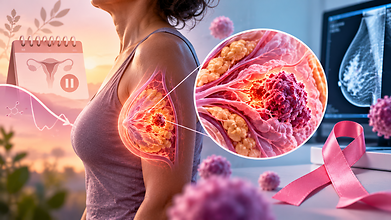
Menopause brings several changes to a woman’s body, and the breasts are no exception. As levels of oestrogen and other hormones decline, the glandular tissue in the breasts gradually decreases and is replaced by fatty tissue. This can change how the breasts look and feel.
For many women, breasts may become softer, less firm or change slightly in size and shape after menopause. Loss of skin elasticity with age can also contribute to changes in breast shape.
These changes can be a normal part of aging. But not every breast change after menopause should be attributed to hormones.
What breast changes can happen after menopause?
The hormonal changes associated with menopause can alter the composition of breast tissue. Some women may notice that their breasts feel softer or less dense than they did before menopause. Changes in skin elasticity can also lead to sagging or a gradual change in breast shape.
These changes, by themselves, are generally not a cause for alarm.
The concern arises when a new, unusual or persistent change appears, particularly if it is different from what a woman has experienced before.
Which breast changes should not be ignored?
After menopause, women should speak to a doctor if they notice:
- A new change in the size or shape of one breast
- A new lump or area of thickening in the breast
- Persistent swelling in the breast
- Dimpling, puckering or thickening of the breast skin
- A newly inverted or retracted nipple
- Unusual nipple discharge, particularly if it contains blood
- A change in the appearance of the nipple or areola
- A new lump or swelling in the armpit or near the collarbone
These signs do not necessarily mean that cancer is present. Several benign breast conditions can cause similar changes. However, they should not be self-diagnosed or automatically dismissed as a consequence of menopause.
What about breast pain?
Breast pain is commonly caused by benign conditions and, before menopause, may also be associated with hormonal fluctuations. After menopause, persistent or unexplained breast pain should nevertheless be discussed with a doctor, particularly if it occurs alongside another breast change.
It is also important to remember that the absence of pain does not rule out breast cancer. Many breast cancers do not cause pain, and some may not produce a lump that can be felt.
This is one reason women should not wait for pain or a clearly palpable lump before seeking medical advice when they notice something unusual.
Is breast cancer screening necessary after menopause?
Screening remains an important part of breast health after menopause, but the appropriate approach depends on factors such as age, family history, personal medical history and individual risk.
Women should discuss screening with their healthcare provider and follow recommendations appropriate to their age and risk profile. Every woman should also learn how to perform a self-breast examination and become familiar with the normal look and feel of her breasts. Regular self-examination can help women notice new or unusual changes early and seek medical advice promptly.
Self-breast examination should complement, rather than replace, recommended screening and clinical evaluation. If a woman notices a new lump, skin change, nipple change or any other unusual finding, she should consult a doctor even if her routine screening is due later.
Those with a strong family history of breast or ovarian cancer, or a known genetic predisposition to breast cancer, may require a different or more intensive screening strategy.
Importantly, screening is intended for women who do not have symptoms. If a woman notices a new breast change, she should not simply wait for her next routine screening appointment; she should discuss the change with a doctor.
Also read: Breast Cancer: Are Women in India Being Diagnosed Too Late?
Don't blame every change on menopause
Menopause is a natural stage of life, but it should not become an explanation for every new symptom.
Most breast changes are not cancerous. However, the only way to determine the cause of a persistent or suspicious change is through appropriate medical evaluation.
Women should become familiar with how their breasts normally look and feel and pay attention to changes that are new or unusual for them.
Breast health does not become less important after menopause. In fact, continuing to pay attention to changes, practising regular self-breast examination and staying up to date with appropriate screening can help detect problems early.
The message is not to fear every change, but to avoid ignoring one simply because menopause has begun. When something feels or looks different, getting it checked is always better than assuming it is “just menopause.”
By Dr. Tapti Sen, Sr. Consultant ,Breast Surgery, RG Stone Urology & Laparoscopy Hospital, Kolkata
Beyond the Lump: Overlooked Breast Cancer Symptoms That Can Delay Diagnosis
Credit: iStock
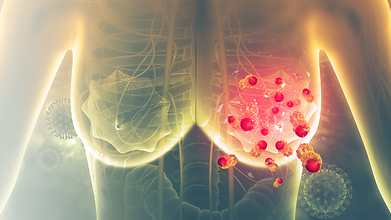
Many women notice changes in their breasts, such as localised tenderness, an itchy nipple or a slight pulling of the skin. These changes are often caused by benign conditions, including hormonal changes, irritation or infection.
Breast cancer does not always present as a painless lump, however. It can sometimes appear in less typical ways, and recognising persistent or unexplained changes can help people seek timely assessment.
India’s breast cancer burden
GLOBOCAN 2022 estimates recorded 192,020 new breast cancer cases and 98,337 deaths in India in 2022. These estimates placed India third globally for the number of new cases and first for the absolute number of deaths. These are estimates for 2022, not current annual counts.
Changes in skin, shape and nipple
A tumour can involve the breast’s supporting fibrous structures and surrounding tissues, causing skin tethering, dimpling or a new change in breast shape or symmetry. Any new, unexplained change deserves clinical assessment.
Changes in the nipple also deserve attention. A nipple that newly flattens, turns inward or deviates to one side should be assessed. Spontaneous discharge from one nipple—particularly bloody or clear discharge—can be a warning sign, although it is not always caused by cancer. Persistent itching, burning, flaking or eczema-like crusting of the nipple may be associated with Paget’s disease of the breast, a rare malignancy involving the nipple–areola complex that is often associated with an underlying breast carcinoma.
Unexplained swelling or persistent lumps in the armpit or above the collarbone can sometimes be an early sign of breast cancer. These findings also have non-cancerous causes and need assessment rather than self-diagnosis.
Pain, redness and swelling
Breast cancer can be painful, even though pain alone is not a reliable way to tell whether a change is cancerous. A painful lump should not be ignored, and a painless lump should not be assumed to be harmless.
Inflammatory breast cancer can be particularly difficult to recognise. It may cause rapid breast enlargement, heaviness, redness, warmth and swelling, sometimes without a distinct lump. The skin may develop a pitted appearance resembling orange peel. Because these symptoms can resemble mastitis or other skin conditions, infection may initially be suspected. However, persistent or worsening redness and swelling, especially when symptoms do not improve as expected with treatment, require prompt reassessment and investigation for an underlying malignancy.
How the diagnosis is confirmed
Any persistent or suspicious breast change warrants clinical assessment. Depending on the person’s age and symptoms, evaluation may include diagnostic mammography and targeted ultrasound. Further imaging or biopsy may be needed when indicated. A suspicious finding should not be dismissed solely because initial imaging is reassuring.
Persistent or suspicious nipple and skin changes require timely specialist assessment. If Paget’s disease or another malignancy is suspected, biopsy may be necessary without a trial of topical treatment. Suspected inflammatory breast cancer requires prompt imaging and tissue diagnosis; a skin punch biopsy may also be indicated.
Also read: Breast Cancer in Young Women: What You Should Know
Common causes of delay
People may delay seeking help because they expect a symptom to become painful, hope it will go away, or assume that redness or itching is due to irritation. Breast symptoms other than a lump can also be associated with longer diagnostic journeys. The length of delay varies between individuals and healthcare settings, so precise comparisons should be interpreted in the context of the study and the interval it measures.
Repeatedly treating persistent skin redness or nipple crusting with antibiotics, moisturisers or steroid ointments without reassessment can delay appropriate investigation. Treatment may be reasonable when infection or a skin condition is suspected, but symptoms that persist, recur or worsen need further evaluation.
When to seek medical advice
A new breast lump, unexplained skin dimpling, new nipple inversion, spontaneous bloody discharge, or persistent redness and swelling warrants prompt medical assessment. Unexplained fullness or swelling in the armpit or above the collarbone should also be checked. Most breast changes are benign, but symptoms should not be ignored or self-treated indefinitely. A healthcare professional can decide whether imaging, biopsy or other investigations are needed.
Early assessment can improve the chance of diagnosing breast cancer at a treatable stage. In general, breast cancer diagnosed while localised has a better prognosis than disease that has spread to distant parts of the body, although outcomes also depend on tumour biology, treatment, and other clinical factors.
By Dr. Arun Kumar Sharma, Consultant, Surgical Oncology, Fortis Hospital Jalandhar
- Follow Us :


© $2026 Times Horizon Private Limited