
- Health Conditions A-Z
- Health & Wellness
- Nutrition
- Fitness
- Health News
- Ayurveda
- Videos
- Bizz Impact
- Medicine A-Z
- Parenting
Taking Magnesium And Melatonin Together? Here’s How It Affects Your Sleep

Credits: Canva
Magnesium and melatonin are both popular supplements, especially among people looking to get more shuteye, but can combining them improve your sleep? Some research indicates that taking magnesium and melatonin together could improve sleep quality, though stronger, larger studies are needed to confirm the effect.
Can We Combine Magnesium and Melatonin To Support Sleep?
Studies on using magnesium and melatonin together are limited, but some evidence suggests it could benefit sleep in certain individuals.
Also Read: China’s ‘Zombie Cell’ Pill Claims To Extend Human Life To 150—Could It Work?
As per Health, one study focusing on women with polycystic ovary syndrome found that taking both magnesium and melatonin improved sleep quality. Another study reported that people with sleep difficulties who used a combined magnesium-melatonin supplement for four weeks noticed modest improvements in how well they slept.
The exact reason why the two work together is not completely understood, but magnesium and melatonin may influence each other in a way that supports sleep.
“Magnesium does have an effect on melatonin levels,” said Marie van der Merwe, PhD, coordinator of the applied physiology and nutrition doctoral program at the University of Memphis, speaking to Health. “The amount of magnesium you have can influence how well your body produces melatonin.”
You don’t necessarily need to take the two supplements at the same time to benefit, van der Merwe noted. It’s fine to take magnesium in the morning and melatonin before bed.
The takeaway: There could be a link between magnesium and better sleep, but more research is needed to be sure.
Magnesium And Sleep
Magnesium is a vital mineral that supports nerve and muscle function, regulates blood pressure and blood sugar, and contributes to the formation of bone, protein, and DNA. As per Mayo Clinic, it is also commonly taken to help with sleep, but it is not without risks.
Benefits of Magnesium for Sleep
Some studies suggest magnesium may help sleep by:
Improving sleep quality: Ensuring adequate magnesium through diet or supplements may help people with deficiencies sleep better and ease anxiety.
Reducing muscle tension: Magnesium can help relax muscles and relieve tension, which can make it easier to fall asleep.
Risks of Magnesium for Sleep
Research on magnesium for sleep is limited. Supplements aren’t regulated by the FDA for safety or effectiveness and carry potential risks:
Delayed effect: It may take several weeks before magnesium supplements noticeably improve sleep.5
Side effects: High doses can cause diarrhea, nausea, and stomach cramps.7
Drug interactions: Magnesium can interfere with some medications, reducing their effect or increasing side effects. Talk to a doctor before starting any new supplement.7
Melatonin And Sleep
Melatonin is a well-known sleep aid, though it’s actually a hormone your body naturally produces to regulate sleep-wake cycles.⁸ “Melatonin is in charge of running the [internal] clock, and it really is important for regulating your circadian rhythms,” van der Merwe said.
Benefits of Melatonin for Sleep
Works quickly when needed: Unlike magnesium, melatonin can act soon after taking it, making it useful for occasional sleepless nights.
May help you fall asleep faster: Studies show that a 2-milligram dose of melatonin helped some people fall asleep about nine minutes sooner than placebo.
Supports sleep timing: Melatonin can help shift workers, travelers with jet lag, or those with irregular sleep schedules align their sleep patterns.
Risks Of Melatonin For Sleep
Melatonin can help with some sleep difficulties but won’t fix all sleep disorders, van der Merwe said. Like magnesium, melatonin isn’t FDA-regulated:
Long-term effects unclear: There’s limited data on the safety of long-term melatonin use.
Medication interactions: Melatonin may interact with antibiotics, antidepressants, and birth control.
Caution for certain groups: It’s generally not recommended for children or people with dementia, and should be used carefully by those with seizures or on blood thinners.
What to Consider Before Taking Magnesium and Melatonin Together?
It’s wise to speak with a healthcare professional before starting any new supplements, alone or in combination.
Van der Merwe emphasized that sleep problems can stem from issues that supplements alone won’t fix. Conditions like cardiovascular disease, type 2 diabetes, and depression can affect sleep.
If you want to try one or both supplements, a doctor can help determine the best timing for magnesium, melatonin, or a combined product.
“Melatonin [should] increase at night,” van der Merwe explained, so it is crucial to take it at the right time. Taking it in the morning can disrupt your internal clock.
Even though sleep-support supplements like magnesium and melatonin have grown in popularity, it’s important to consult a professional to see if they will help in your situation.
Your Hair Transplant Doesn't End In The Operating Room
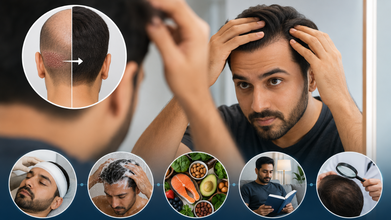
Credit: AI
There is a conversation that comes up in almost every consultation, and it is rarely the one the patient came prepared for. After graft numbers, hairline design, cost and downtime have been discussed, the question of smoking and drinking inevitably follows — and the answer is usually a shrug: occasionally, socially, nothing serious.
Yet of all the variable that determines what a patient sees in the mirror eighteen months later, these two are among the very few fully within their control, and among the most underestimated.
What Smoking and Alcohol Do to the Scalp
The hair follicle is one of the most metabolically demanding structures in the body, dividing faster than almost any other cell population and depending entirely on a dense network of microscopic vessels feeding its base. Nicotine constricts those vessels; over years, repeated narrowing combined with low-grade inflammation contributes to perifollicular fibrosis — scarring that gradually chokes the follicle.
Alcohol takes a different route, depleting the zinc, iron, folate, B12 and protein hair is built from, while fragmenting sleep and raising cortisol — both of which push follicles prematurely into their resting phase. For a transplant candidate, this matters twice over: it reflects donor-area quality, and it signals the kind of healing environment the grafts are about to enter.
Also read: The Hidden Health Risk of Sitting for Long Hours: What Young Professionals Need to Know
Why the First Week After Surgery Is So Critical
For the first few days after surgery, a transplanted follicle is essentially cut off from its blood supply, surviving on nutrients diffusing in from surrounding tissue.
New capillaries begin connecting around day four or five, with full revascularisation taking seven to ten days — the most vulnerable window in the graft's life. Smoking attacks it from two directions: nicotine causes sustained vasoconstriction after every cigarette, while carbon monoxide binds haemoglobin more readily than oxygen, so the reduced blood reaching the scalp also carries less oxygen.
The result is rarely dramatic — just poorer graft survival, patchier density, and a final outcome thinner than the graft count promised. Patients often read this as bad luck; it usually isn't. Notably, this applies equally to vaping, hookah and smokeless tobacco like gutkha or khaini — the delivery method changes, but the nicotine doesn't.
Alcohol's More Immediate Risk
Alcohol's damage is more mechanical. It causes vasodilation and impairs clotting, meaning patients who've been drinking beforehand bleed more during surgery — which makes graft placement less precise and can dislodge grafts already sited.
Afterward, the same vasodilation worsens normal post-op swelling, its diuretic effect fights the hydration healing tissue needs, and its immune-suppressing effect arrives just as the scalp carries thousands of small open wounds. There's a medication risk too: alcohol combined with post-op antibiotics, anti-inflammatories or steroids raises the chance of gastric irritation or a genuinely unpleasant systemic reaction.
Recommended Windows
For smoking: stop at least two weeks before surgery (four is better), and stay off it for two weeks to a month afterwards — the long lead-in accounts for how slowly small-vessel and immune function normalise, and the long tail covers graft revascularisation.
For alcohol: stop five to seven days before, and avoid it for ten to fourteen days after, or as long as medication continues, since its effects reverse faster. One caveat worth repeating: patients often say they've "stopped" when they've merely cut back. A single cigarette produces measurable scalp vasoconstriction — in this window, occasional isn't the same as fine.
Also read: Love Travelling? Here's How Flying Frequently Impacts Your Health
The Myth That Lifestyle Stops Mattering
A costly misconception is that once surgery is done, lifestyle no longer matters. It's a half-truth: transplanted follicles, taken from the DHT-resistant back and sides of the scalp, are permanent and won't miniaturise. But a transplant only redistributes existing hair — every native follicle remains susceptible to ongoing loss.
If that native hair keeps thinning, overall density falls even though every graft survives, and patients often mistake this for transplant failure. In reality, the surroundings have receded, accelerated by smoking, poor sleep, chronic stress and poor nutrition. Surgery buys a foundation; lifestyle determines how long the picture around it holds.
Practical Guidance
Honesty at consultation matters — knowing a patient smokes heavily changes the surgical plan toward more conservative density and staging, which protects the result. The pre- and post-op window should be treated as non-negotiable, even if permanent quitting feels distant; a defined four-week commitment is far more achievable than an open-ended one.
Switching to vaping or nicotine gum isn't automatically safe — it removes carbon monoxide and tar, but nicotine, the actual vasoconstrictor, remains, so replacement therapy should be discussed with the surgeon. Fundamentals also help: adequate protein, iron and vitamin D, seven to eight hours of sleep, hydration, and gentle movement once cleared.
Turning Surgery into Leverage
Finally, surgery itself can be motivating. Patients who've just invested significant money and recovery time in their appearance are often more driven to quit than at any other point in
By Dr. Harikiran Chekuri, Hair Transplant Surgeon, Founder and Chief Plastic Surgeon, Redefine Hair Transplant & Plastic Surgery Center
Why Do Some People Struggle To Know What They’re Feeling? The Neuroscience Of Alexithymia

Credit: AI
It is difficult to determine emotions because of the neurological differences, the surrounding in childhood, the psychological ways of survival, and absence of emotional training.
Alexithymia or "emotional blindness" is the neuropsychological trait associated with severe problems with identification, recognition, and description of the person's emotions. Alexithymia is not a psychiatric disease but a personality trait.
It is characterized by the inability to identify and distinguish emotions and body sensations, difficulty of finding the words to express feelings, inability to understand facial expression and body language of another person and emotional detachment during stressful situations.
It is diagnosed in people with autism spectrum disorder, depressive disorder, generalized anxiety disorder and after traumatic brain injuries. It can be inherited or acquired as a result of childhood trauma, abuse or neurological damage.
The Brain Science Behind Alexithymia
Also read: Brain-Eating Amoeba Leaves North Carolina Teen Critically Ill: How Naegleria fowleri Affects?
The cause of alexithymia is the brain wiring and neurological differences. Therefore, there is impaired interception, which is the inability of the brain to recognize its own physical sensations. Also, an unusual structure of the brain regions like amygdala and insula, that regulate emotions, makes difficult to decode emotional signals.
Early childhood environment and emotional competence must be developed in childhood, because, without that, there can be emotional neglect and emotional vocabulary deficiency. Due to the inability to interpret emotional data, the person misses the compass that directs decisions and self-calming. This leads to emotional outburst, panic, hyperarousal, social and psychological consequences.
How Alexithymia Differs From Emotional Numbness
Also read: World’s First Live AI-Assisted Brain Surgery Saves Patient’s Sight: How Does The Technology Work?
Emotional numbness is the transient psychological state caused by acute trauma, deep grief or burnout.
The lack of emotional intelligence is the lack of social and emotional competence, when the person feels his emotions correctly, but he cannot control temper, lacks empathy, makes inappropriate social decisions or do not know what kind of effect his behaviour causes on the room.
But alexithymia is different since it is long-term personality trait and the person is unaware of the particular emotion.
In terms of neurodevelopment, the insular cortex and the anterior cingulate cortex (ACC) are the structural core of the brain's salience network. They work as a translator, transforming chaotic physical sensations into recognizable emotional experience.
Although there isn't any cure for alexithymia, one can improve his emotional awareness through certain measures. Interoceptive training where individuals are taught how to associate physical body sensations (such as tightness in the chest) with particular emotions (such as stress).
The use of emotion wheel or list of emotional words to bridge the link between vague physical sensation and precise description. Mindfulness, which involves observing oneself without judgment or without trying to suppress those internal feelings right away. And it is always good to seek professional help from a psychologist or a counselor.
By Dr. Arun Shah, Director - Neurosciences, Sir H.N. Reliance Foundation Hospital
Don't Ignore Urine Leakage After Childbirth: Pelvic Floor Physiotherapy Can Support Recovery

Credit: AI
Urine leakage after pregnancy is a common occurrence in many women. It is considered a normal part of motherhood. However, it doesn't have to be. Urine leakage can occur after childbirth, but persistent symptoms should not be ignored or tolerated just because you feel that it is not a big deal. It will be imperative for women to consult a pelvic health physiotherapist to examine the pelvic floor and guide women with the help of personalised rehabilitation for improving bladder control and recovering quickly.
Pregnancy and childbirth lead to changes in a woman's body. However, there can also be an impact on the muscles and tissues that support the bladder, uterus, and bowel. Hence, many women can experience urine leakage while coughing, sneezing, laughing, exercising, or lifting their baby after delivery. Vaginal delivery, prolonged labour, multiple pregnancies, a larger baby, excess weight, and chronic constipation can also cause pressure on the pelvic floor. So, the pelvic floor is a group of muscles that supports the pelvic organs and also contributes to bladder and bowel control.
During pregnancy, these muscles carry load, and childbirth can further stretch or affect their strength and even coordination. Hence, stress urinary incontinence is seen in women post-pregnancy, wherein the urine leaks during activities that increase pressure inside the abdomen. Some women may experience urinary urgency, difficulty controlling urine, pelvic heaviness, or discomfort during physical activity. Even signs such as vaginal pressure and heaviness, urinary leakage during exercise, or difficulty controlling gas can also indicate pelvic floor dysfunction.
Also read: Daraxonrasib: US FDA Approves Once-Daily Pill for Metastatic Pancreatic Cancer
Why Pelvic Floor Recovery Is More Than Just Kegel Exercises
Pelvic floor recovery is more than just doing Kegel exercises: Pelvic floor muscle exercises, commonly known as Kegels, will help to enhance muscle strength and bladder control if done as recommended by the expert. However, not everyone will need the same type or intensity of pelvic floor exercise. Some women tend to have weak pelvic floor muscles, while others may have muscles that are poorly coordinated. So, a pelvic health physiotherapist will help to assess pelvic floor strength, relaxation, coordination, breathing patterns, posture, and abdominal muscle function.
The expert will also help women to understand how the pelvic floor responds to activities such as coughing, lifting, or exercise. The aim will be to have a stronger pelvic floor contract and relax muscles when the body needs it. Breathing and pressure management within the abdomen will also be crucial for women during exercise and doing daily activities. Women may need guidance before returning to running, jumping, gym workouts, or other high-impact activities. Recovery should also be gradual.
Also read: What Happens When Kidney Function Declines: Understanding The Stages Of Chronic Kidney Disease
What Women Can Do To Support Pelvic Floor Health
What women should know: It will be important for women to maintain an optimum weight, exercise daily, quit smoking, avoid constipation by having fiber in the diet and staying hydrated. Quit smoking, use appropriate lifting techniques to reduce unnecessary strain on the pelvic floor, and don’t hold urine for a long time. Women who opted for a Caesarean section should also ensure they prevent pelvic problems.
Pregnancy itself causes pressure on the pelvic floor, so pelvic floor rehabilitation can be recommended for women with a C-section. Motherhood should not mean silently living with bladder problems. So, pelvic floor rehabilitation can improve bladder control and confidence in women.
- Follow Us :


© 2024 Bennett, Coleman & Company Limited