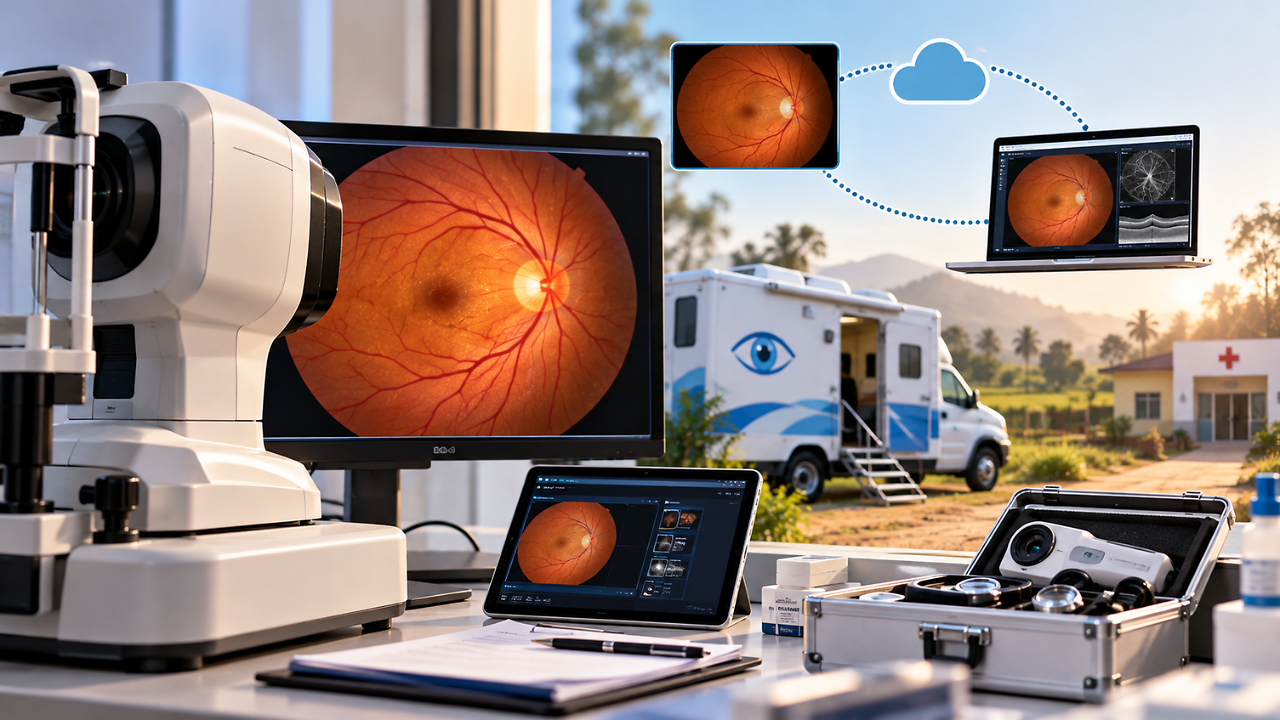
For millions of individuals who are living with diabetes across India, protecting long-term vision can start with a simple, timely retinal screening. However, regular screening remains a challenge for many because access to specialist eye care services can be limited, particularly outside major urban centres. In 2021, India was estimated to have 101 million people living with diabetes and 136 million with prediabetes, highlighting the scale of the country’s metabolic health challenge. On World Sight Day, we discuss another layer to this challenge. Bringing diagnostic capabilities closer to where patients live and seek care can help bridge the gap between early detection and specialized care. Why Must Retinal Screening Move Beyond Specialist Clinics? A significant gap in public awareness continues to hinder early intervention. Data indicates that 85% of people with diabetes are unaware that the condition can impact their vision and have never undergone a retinal examination. Consequently, many patients reach eye-care facilities only after vision changes have occurred. One study found that 45% of patients suffering from diabetic retinopathy have already experienced vision loss even before being diagnosed. This highlights the significance of screening before symptoms appear. Bringing screening closer to primary-care settings can facilitate earlier detection of retinal changes and allow for prompt referral to an eye-care specialist. Although diabetic retinopathy significantly contributes to preventable vision loss, retinal health extends beyond diabetes. Retinal conditions frequently advance without noticeable symptoms, making increased awareness, regular screening and timely access to specialist care crucial for safeguarding vision.Also read: World Sight Day: The Hidden Link Between Diabetes & Blindness - Why Good Vision Doesn't Mean Healthy Eyes Can Technology Expand Screening Access? Modern diagnostic technology provides a scalable solution to overcome geographic and capacity constraints. Artificial intelligence enabled retinal imaging can rapidly analyse retinal scans in non-specialist settings, identifying subtle retinal changes that may require further clinical evaluation. Similarly, Optical Coherence Tomography (OCT) based assessments provides detailed, non-invasive imaging when deeper evaluation is needed provides detailed, non-invasive imaging when deeper evaluation is needed. Integrating appropriate imaging technologies into screening and referral networks can help frontline healthcare teams to conduct preliminary evaluations efficiently, while allowing ophthalmologists to focus their expertise where it is most needed, which is complex diagnoses and advanced care.Also read: Eye Twitching: Is It Just Stress Or Something Serious?What Role Do Community-Based Models Play? Medical technology can fulfil its promise when it meets people where they already are. Placing a diagnostic hub or screening resources closer to neighbourhood health centres, local diabetes clinics and wellness centres can turn routine visits into opportunities for earlier detection. Local, trained healthcare workers are able to easily catch any red flags in high-risk patients and direct them straight to an eye specialist long before minor issues turn into permanent vision loss. Such community-based models can make screening more convenient, particularly for people who may otherwise face geographical, time or access barriers to specialist care. Strengthening the Future of Eye Care The aim of community-based screening is not to take the place of specialists, but to help patients reach them sooner. By combining awareness, portable imaging and technology-enabled screening with clear referral pathways, patients who need further evaluation can be identified earlier and directed to the right level of care. As India continues to strengthen its approach to eye health, bringing screening closer to communities can make it easier to detect retinal problems early, when there is still an opportunity to protect vision. By Dr Vishali Gupta, President - Vitreo Retinal Society of India (VRSI) and Head - Retina, PGIMER, Chandigarh