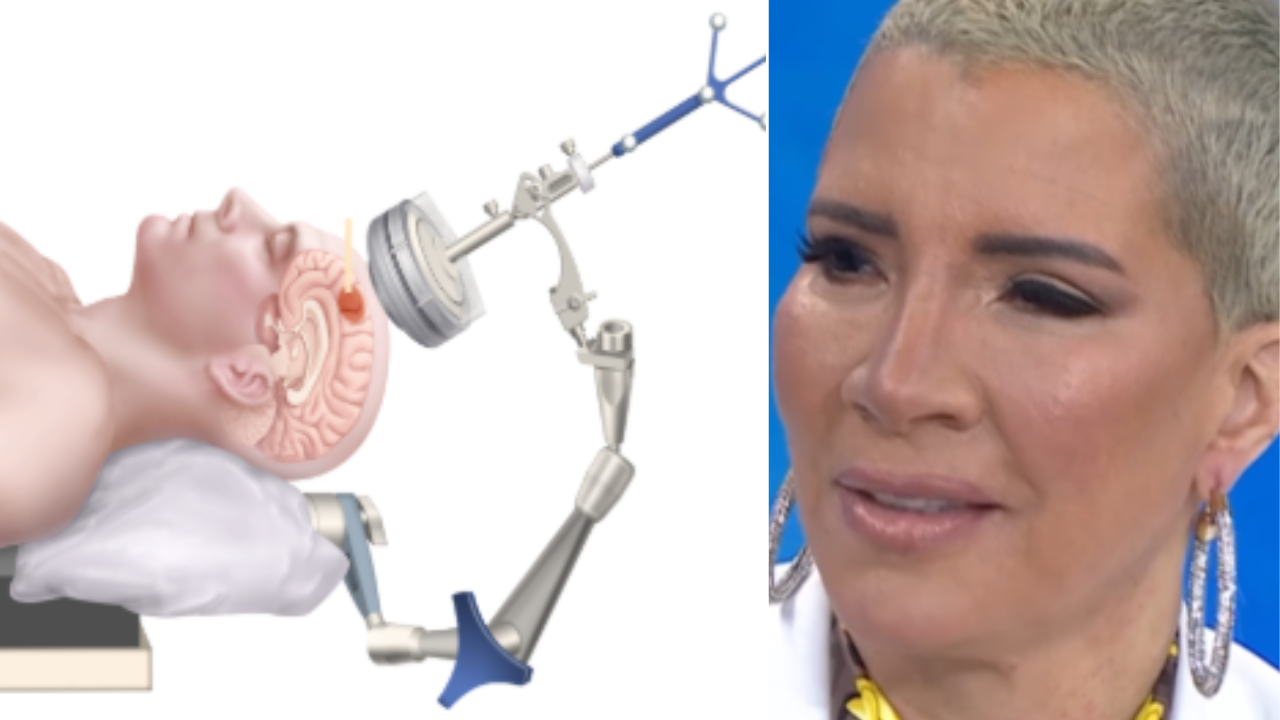
Rebecca King Crews, wife of actor Terry Crews, has opened up about her diagnosis with Parkinson's disease, which was previously dismissed as mere anxiety. Speaking on the TODAY show, she also revealed a newly-approved procedure that has helped manage her symptoms. After three years, she’s able to write. "I feel good," King Crews said during the segment. "I’m able to write my name and my dates, and I’m able to write with my right hand for the first time in probably three years." Parkinson's Dismissed As Anxiety The symptoms came suddenly and progressed quickly. Rebecca revealed that her first set of symptoms appeared around 2012, which began with numbness in her left foot while working out. It then progressed to a limp.Then her left arm wasn't swinging as much as her right during certain exercises. Another was experiencing tremors while applying lip gloss, putting on makeup, or brushing her teeth. However, her doctor just thought she was having anxiety, the Today report said. After three years of confusing symptoms, a Parkinson's specialist in 2015 recognized that she had the condition. US FDA-approved treatment for Parkinson’s Also read: Japan Approves First-Ever Stem Cell Therapies For Parkinson’s And Heart FailureIn the hope of a miracle, Rebecca was praying on her knees beside her bed when her husband, Terry Crews, informed her of a US Food and Drug Administration (FDA) non-invasive surgical procedure for her symptoms. Last month, she underwent the new procedure called a bilateral focused ultrasound. The 2025 approved procedure uses sound waves directed into the brain to eradicate the debilitating symptoms. What Is Parkinson's Disease? Parkinson's disease is a progressive, neurodegenerative movement disorder caused by the loss of dopamine-producing brain cells, primarily affecting people over 60. Apart from motor loss, the disease also causes cognitive decline, depression, anxiety, and swallowing problems. The first symptom may be a barely noticeable tremor in just one hand or sometimes a foot or the jaw. Over time, swinging your arms may become difficult, and your speech may become soft or slurred. The disorder also causes stiffness, slowing of movement, and trouble with balance that raises the risk of falls. Also read: Is Parkinson's Disease Infectious?What Is A Focused Ultrasound For Parkinson's? Focused ultrasound is a noninvasive, therapeutic technology with the potential to improve the quality of life and decrease the cost of care for patients with symptoms secondary to Parkinson’s disease. This novel technology focuses on beams of ultrasonic energy to targets deep in the brain without damaging surrounding normal tissue. During the procedure, doctors use a device called Exablate Neuro, developed by a company called Insightec, to deliver ultrasound waves to specific areas on both sides of the brain. They're guided by magnetic resonance imaging (MRI) to target the areas thought to be involved in the movement symptoms in Parkinson's. The procedure typically produces immediate results and can be a good option for people who can't or don't want to pursue deep-brain stimulation, according to the Michael J. Fox Foundation for Parkinson's Research.