
- Health Conditions A-Z
- Health & Wellness
- Nutrition
- Fitness
- Health News
- Ayurveda
- Videos
- Medicine A-Z
- Parenting
That 5 Minutes Of Extra Sleep Can Reduce Your Risk Of Death
Credits: Canva
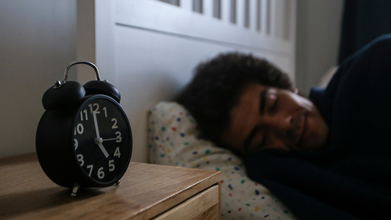
Have you ever dread waking up in the morning and felt like you just need the five extra minutes of sleep? Study now shows that it can actually be helpful for your health. A study published in the Lancet journal eClinical Medicine suggests that seven to eight hours of sleep per day, more than 40 minutes of moderate to vigorous physical activity and a healthy diet is associated with over nine years of additional lifespan and years spent in good health.
“The combined relationship of sleep, physical activity, and diet is larger than the sum of the individual behaviors. For example, for people with the unhealthiest sleep, physical activity and dietary habits to achieve one additional year of lifespan through sleep alone would require five times the amount of additional sleep per day (25 minutes) than if physical activity and diet also improved a small amount,” said the international group of researchers from the UK, Australia, Chile, and Brazil.
In a separate study published in The Lancet, researchers from Norway, Spain, and Australia found that adding just five extra minutes of walking to a daily routine can reduce the risk of death by 10 percent for most adults. The study reported that it will also help the least active adults to reduce their risk of death by around 6 per cent.
How Was The Study Conducted?
The study, which analyzed data from over 135,000 adults, found that cutting sedentary time by just 30 minutes a day was linked to a 7 percent reduction in overall deaths if adopted by most adults who sit for around 10 hours daily. Among the most sedentary people, who sit for about 12 hours a day, deaths could fall by nearly 3 percent.
“These estimates show the broad public health impact of even small, positive changes in physical activity and reduced inactivity,” said corresponding author Prof Ulf Ekelund of the Norwegian School of Sport Sciences, Oslo.
Researchers stressed that the findings are not meant as personalized advice, but as evidence of potential benefits at a population level.
Speaking to The Indian Express, Dr Nicholas Koemel from the Mackenzie Wearables Hub at the Charles Perkins Centre, University of Sydney, leading researcher of another study that seconds that extra five minutes of sleep can in fact help people live longer, said, "While major lifestyle overhauls are often recommended, they may not always be achievable or sustainable. Our results suggest that modest, combined changes may offer meaningful health benefits, be more likely to be maintained over time and provide an important starting point for individuals who may otherwise find it difficult to initiate lifestyle change. Starting by reviewing our daily routines to identify where small, realistic tweaks can be made is an important first step towards improving long term health and longevity."
Research over the years has consistently shown that moderate to vigorous physical activity helps improve key markers of health, including blood pressure, blood sugar, body weight, and body fat. Building on this, a large multi-country analysis of cohort data explains that even small increases in daily physical activity can significantly reduce the risk of death from any cause. The biggest gains are seen among people who are least active, as regular movement leads to a sharp drop in mortality risk for them. If such habits are adopted widely across the population, the data suggest that nearly 10 percent of deaths in people in their 70s and 80s could potentially be prevented.
From Winter Dryness To Summer Sweat: How to Prevent Seasonal Dandruff Flare-Ups
Seasonal factors can aggravate dandruff. (Photo credit: iStock)
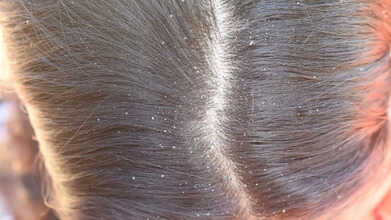
As winter transitions into warmer summer months, many people notice a sudden worsening of dandruff. During colder months, dandruff often appears as dry, fine flakes due to scalp dryness. However, as temperatures rise and humidity increases, dandruff can become oily and sticky because of increased sweating and sebum production. This seasonal shift highlights that dandruff is not limited to a particular time of year; rather, changes in climate can disrupt scalp balance and trigger flare-ups. Dr. Anupriya Goel, MBBS, MD, DPD (UK) – Dermatology, answered this for us.
Why does dandruff recur?
Many people struggle to understand why dandruff keeps recurring. It is often treated as a temporary cosmetic concern, but in reality, dandruff is a chronic scalp condition that requires consistent care and appropriate treatment. The primary cause of dandruff is a yeast called Malassezia globosa, which naturally resides on the scalp. This microorganism feeds on sebum (the natural oils produced by the scalp). As it breaks down these oils, it releases by-products that can irritate the scalp, leading to inflammation, itching, and visible flaking.
Seasonal factors further aggravate this process. In winter, cold air, low humidity, indoor heating, and frequent hot showers can strip the scalp of its natural moisture and weaken the skin barrier, resulting in dryness and flaking. In contrast, summer brings increased sweat and oil production. The combination of humidity, sweat, and sebum creates an ideal environment for Malassezia to multiply, which can worsen dandruff symptoms.
Read here: Simple Secrets To Establishing The Right Winter Hair Care Routine
What are the external factors responsible for dandruff?
Environmental factors such as pollution can also settle on the scalp and contribute to irritation. In addition, daily habits like wearing helmets for long hours, tying up damp hair, or not cleansing the scalp regularly can further disrupt scalp health. The transition period between seasons is often the most challenging, as the scalp has limited time to adapt to changing environmental conditions.
Because dandruff is often mistaken for a temporary issue, many people rely on occasional treatments or home remedies. However, effective management typically requires regular scalp-focused care using clinically proven active ingredients.
Treating dandruff
One such ingredient commonly used in anti-dandruff formulations is Piroctone Olamine, an antifungal agent that helps control the growth of Malassezia on the scalp. By reducing fungal proliferation, it helps address the underlying cause of dandruff and can assist in decreasing flaking, itching, and scalp irritation. It also helps cleanse the scalp by removing excess oil and buildup while being relatively gentle on the hair and scalp.
Read more: 7 Ayurvedic Hair Health Tips You Should Try For Healthy Locks
For optimal results, individuals experiencing recurrent dandruff may benefit from incorporating an anti-dandruff shampoo containing Piroctone Olamine into their regular hair care routine. Consistent use is important for maintaining scalp balance. During periods of increased sweating, such as in hot and humid weather, washing frequency may be increased as needed. Maintaining hygiene practices such as regularly cleaning helmets, pillowcases, and hair accessories can also help minimise recurrence.
In addition to controlling dandruff, well-formulated shampoos containing Piroctone Olamine are often combined with conditioning and moisturising ingredients that help maintain hair softness and scalp comfort while supporting long-term scalp balance.
Is My Child Shy Or Autistic? Psychiatrist Shares Tips To Help Parents Spot Early Signs

Children living with autism often struggle with social interactions. (Photo credit: iStock)
World Autism Awareness Day is observed on April 2 every year, a day to spread awareness about autism, its causes, symptoms, and what parents can do to help their children. But even when it comes to autism, there is a great deal of prejudice surrounding the disorder, which often forces parents into a state of denial. A condition which initially comes across as a personality trait—shyness, for instance—is usually diagnosed late. Dr Hamza Hussain, Head of the Department of Psychiatry and Mental Health at Ruby Hall Clinic, Pune, in an interview with Health and Me, explained how parents can spot the signs of autism early in their children.
How to know if your child is autistic or just shy?
It is completely understandable for parents to feel worried when they notice delays in their child’s speech, social engagement, or behaviour. That said, it is important to recognise the differences between early indicators of Autism Spectrum Disorder (ASD) and other developmental patterns or conditions.
Read more: World Autism Awareness Day 2026: Can Cell Therapy Be The Future Of Autism Treatment?
Children who may be on the autism spectrum often display ongoing difficulties with social communication and interaction. They might avoid making eye contact, not consistently respond when their name is called, show delays in speech, or find it challenging to engage in two-way conversations. Repetitive actions—such as hand movements, arranging toys in a particular order, or insisting on strict routines—can also be early indicators. On the other hand, children with ADHD are usually more socially responsive but may struggle with focus, impulsive behaviour, and high activity levels. A speech delay alone does not necessarily point to ASD, especially if the child shows good non-verbal communication like gestures, expressions, and social interest.
What are ASD patterns?
One important way to tell the difference is by observing patterns over time. Signs of ASD tend to be consistent across different situations and environments, whereas other behaviours may change depending on the child’s mood, surroundings, or level of stimulation.
Support at home plays a vital role in a child’s development. Simple, consistent interactions can go a long way. Spending time in face-to-face play, encouraging eye contact, and talking through daily activities can strengthen communication skills. Reading stories, singing rhymes, and using gestures can further aid language development. It is also helpful to limit screen exposure, as too much screen time can impact attention span and social learning.
Read more: Why Autism In Women Is Often Overlooked And Misdiagnosed
How can parents help?
Having a structured daily routine can help children feel more secure, while encouraging and praising positive behaviours can reinforce learning. Above all, recognising concerns early and seeking timely intervention can significantly improve outcomes. If parents feel uncertain about their child’s development, consulting a professional early on can provide clarity and the right support for the child’s growth.
Why Autism In Women Is Often Overlooked And Misdiagnosed
Credit: iStock
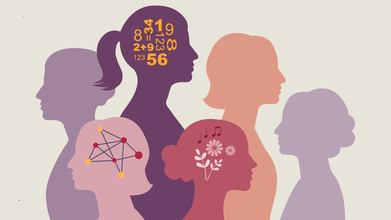
Autism in women is not often entirely recognized because this disorder does not always have to correspond to the “classic” picture characteristic of males.
The diagnosis is based on a male criterion with such behavior as obvious withdrawal from a group, overtly displayed repetitive behaviour, and limited interests. There can be mild social deficit or internalized anger and frustration that can pass unnoticed in clinical practice.
The Art of Masking
One of the most significant reasons behind underdiagnosis is masking (also called camouflaging). Masking is one of the most significant reasons for underdiagnosis. This is helpful in masking but also covers or conceals essential symptoms.
Masking causes mental exhaustion, anxiety, and burnout, but it does not address the underlying autism and leaves it undiagnosed.
Stereotypes And Gender Bias
There is a strong societal stereotype that autism is a “male condition”. This bias is felt by parents, teachers, as well as health care professionals.
Sex bias is evident in that boys get referred for evaluation early. Girls are often tagged “shy,” “sensitive,” and “introverted.”
Their struggles are normalized instead of being explored for any issues. Gender bias is a significant contributor to delayed or wrong diagnosis.
Different Interests, Less Suspicion
A restricted interest is another hallmark of autism, but in women, it tends to be more socially acceptable. Their interests conform to the norms of society; they do not predispose clinical suspicion as opposed to more masculine interests like mechanical systems or numbers.
Overlap With Other Conditions
Autism in women being misdiagnosed as other psychiatric disorders is due to symptom comorbidity. Some of the common misdiagnoses are:
- anxiety disorders,
- major depressive disorder,
- borderline personality disorder,
- eating disorders.
In many cases, these are secondary to autism as a result of years of living with undiagnosed autism.
Social Expectations And Conditioning
From an early age, girls are often conditioned to be socially attentive, empathetic, and compliant. This societal conditioning pushes autistic girls to adapt and hide their difficulties.
These may include forcing themselves into socializing. Fitting in is deemed more important than comfort. They end up creating coping mechanisms that mask their difficulties.
While this may benefit outward functioning, it postpones the recognition of underlying neurodevelopmental differences.
The Consequences of Late Diagnosis
Delayed diagnosis or missed diagnosis has the following effects:
- Chronic mental illness
- Low self-esteem
- Confusion about identity
- Inadequate support services
- Follow Us :


© 2024 Bennett, Coleman & Company Limited