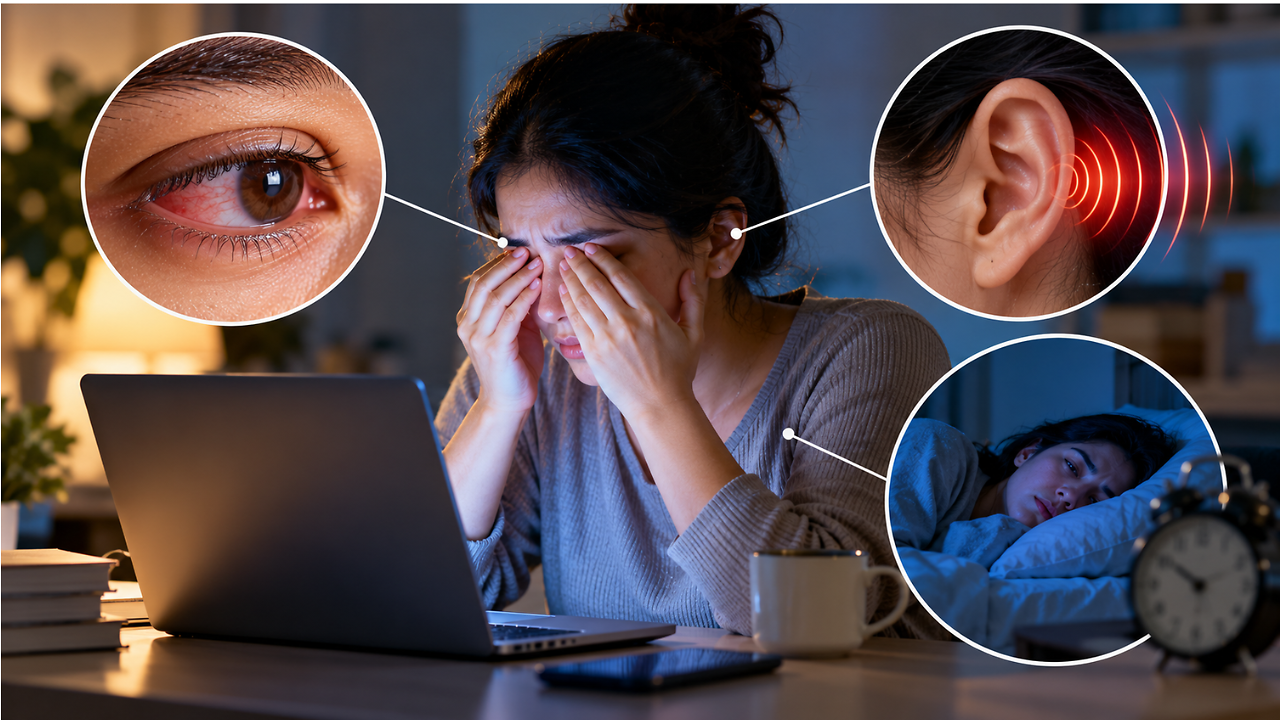
It's hard to find anyone these days whose day doesn't involve a phone, a laptop, or a tablet at some point, often for several hours. We work off them, study off them, unwind by scrolling or watching something on them. All that convenience comes at a cost, though, and it isn't limited to the eyes. Sleep, hearing, posture, general well-being- screens end up touching all of it. Long Screen Hours Can Strain Your Eyes Eye strain is usually the first thing people notice. Stare at a screen close-up for long stretches, and the eyes start to dry out, burn, blur, and headaches creep in along with trouble focusing. Part of the problem is that we simply blink less when we're absorbed in something on a screen, which makes the dryness worse. A few small adjustments help, keeping the screen at a reasonable distance, not having the brightness too high, and something I often recommend to patients: the 20-20-20 rule. Every 20 minutes, look at something roughly 20 feet away for 20 seconds. It sounds minor, but it eases the strain.Also read: Salt Stomping Before Bed: Does This Viral TikTok Sleep Hack Actually Work? Long Hours With Earphones Can Affect Hearing Screens affect more than eyesight. Long hours spent wearing earphones, particularly at high volumes, can gradually affect hearing. The risk depends on both the volume and the duration of exposure. Keeping the volume at a comfortable level and taking regular breaks from earphones is a simple enough habit to build. Persistent ringing in the ears, muffled hearing or difficulty following conversations should not be dismissed as fatigue and should be evaluated by a doctor. Screen Use Can Disrupt Sleep Sleep is one of the most overlooked casualties of excessive screen use. Phones and laptops used late at night keep the brain stimulated when the body should be winding down for rest. Bright light from screens, along with constant notifications, social media and work-related activity, makes it harder to unwind and fall asleep. Poor sleep, in turn, contributes to daytime fatigue, reduced concentration and irritability. None of this means giving up technology altogether. It comes down to building healthier digital habits, avoiding screens close to bedtime, keeping phones away from the bed, taking regular movement breaks during work, and spending some time outdoors. For people working at computers for extended periods, maintaining good posture and changing position regularly matters just as much.Also read: Weekend Workouts: Why Sudden Intense Exercise May Put Stress on Your Heart There Is No Single ‘Safe’ Number Of Screen Hours Clinical care today increasingly looks beyond treating disease to identifying everyday lifestyle factors that contribute to long-term health problems, and screen exposure is a good example of this. There isn't a single number of hours that is automatically harmful for every adult; the impact depends on what the screen is being used for, the intensity and duration of exposure, and whether it is interfering with sleep, physical activity or daily functioning. Being screen-smart, rather than screen-free, is really the aim. Regular breaks, sensible volume levels, better sleep routines and more movement can go a long way in protecting the eyes, hearing and overall health, while still letting technology remain a useful part of modern life. If symptoms such as persistent eye discomfort, hearing changes, recurrent headaches or ongoing sleep difficulties continue despite cutting down on screen time, it's worth seeking professional medical advice rather than relying on lifestyle adjustments alone.