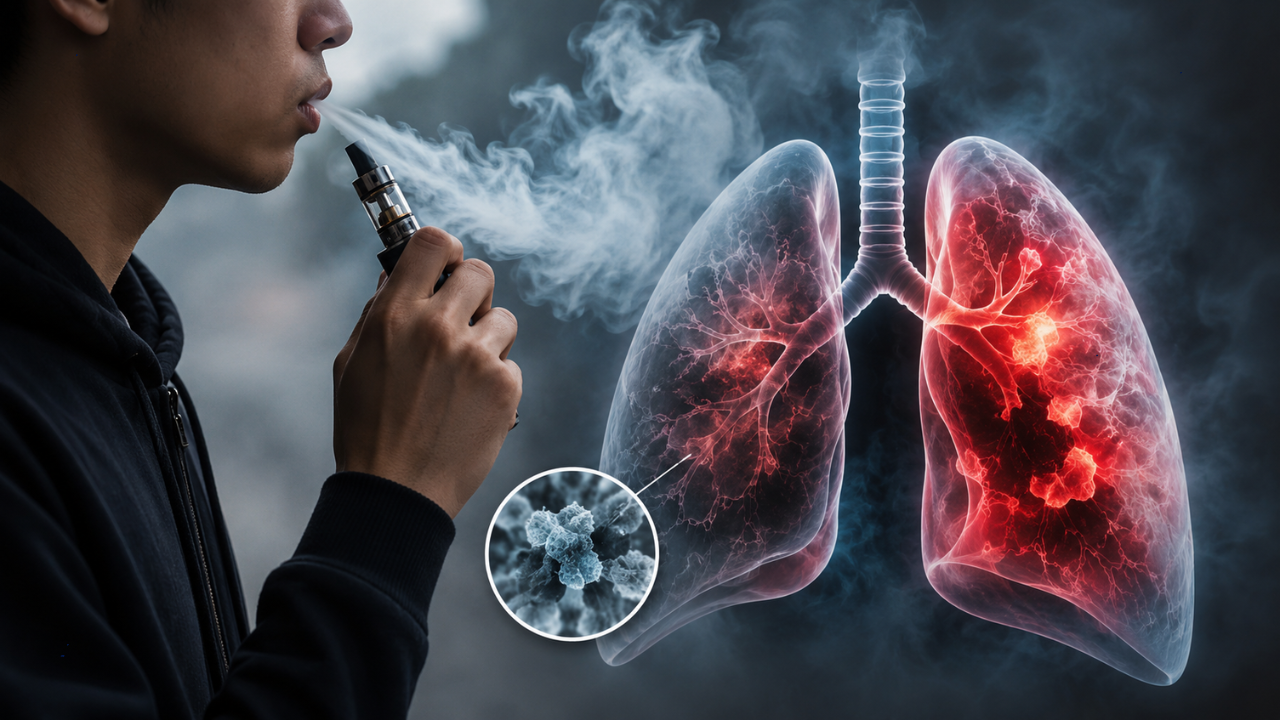
Marketed as a "harmless" alternative to cigarette smoking, vaping is increasingly emerging as a health concern, particularly for lung health, doctors warned ahead of World Lung Cancer Day on August 1.Traditional cigarettes remain strongly linked to lung cancer, chronic obstructive pulmonary disease (COPD), and several other life-threatening illnesses. However, growing laboratory, animal, and population studies suggest vaping may also damage lung tissue, alter DNA, and potentially increase lung cancer risk—especially among people who both smoke and vape.A recent study published in the peer-reviewed journal ERJ Open Research found that vaping may offer far less protection than many users believe when it comes to cardiovascular fitness, breathing efficiency, lung function, and blood vessel health in young adults."E-cigarettes are often advertised as a safer choice and as a way to help people quit smoking. But the evidence behind these claims is weak. We still don't fully know what long-term damage e-cigarettes can do to the lungs, including whether they can cause lung cancer," Dr. Shiba Kalyan Biswal, Head of Pulmonology at Shalby International Hospital, Gurugram, told HealthandMe.Why E-Cigarettes May Raise Lung Cancer RiskThe vapor produced by e-cigarettes contains several harmful chemicals, including substances that can damage cells and DNA—the genetic material inside the body's cells.Animal studies have found that mice exposed to e-cigarette vapor for about a year developed a type of lung cancer. Ingredients commonly used in e-cigarette liquids, such as propylene glycol and benzoic acid, may also irritate cells and trigger inflammation in the lungs."There have also been outbreaks of a serious vaping-related lung disease that has sent people to hospital with severe breathing problems. This shows that the risks of vaping can be unpredictable, especially when products are poorly regulated or contain unknown ingredients," Dr. Biswal explained.She urged doctors to routinely ask patients about e-cigarette use, particularly those with breathing problems or those at higher risk of lung cancer."Since evidence suggests that e-cigarettes add to the risk for people who used to smoke, it may be worth including vaping history when deciding who needs lung cancer screening," she said.Why Dual Users Face Even Greater RiskAccording to Dr. Biswal, lung cancer risk appears to be even higher among people who use both e-cigarettes and conventional cigarettes, often referred to as "dual users."Many smokers who turn to e-cigarettes intending to quit end up continuing to use both products rather than switching completely."This means they stay addicted to nicotine and may be exposed to even more harmful substances."Lung Cancer Rising Among Young Non-SmokersDoctors are also reporting more lung cancer cases among young people who have never smoked, particularly women.Indoor air pollution, biomass fuel exposure, second-hand smoke, occupational hazards, and genetic susceptibility are increasingly contributing to the disease, said Dr. Akshay Budhraja, Senior Consultant and Head of Respiratory and Sleep Medicine at Aakash Healthcare."It's no longer just the lifelong smoker in his sixties—we are seeing younger patients, more women, and a growing number who have never touched a cigarette. Air quality, occupational exposure and genetic predisposition are all playing a bigger role than they used to, and that means our screening approach has to widen well beyond the traditional smoker profile," Dr. Budhraja said.Experts said early detection through low-dose CT screening remains crucial for high-risk individuals. However, symptoms such as a persistent cough or breathlessness are often mistaken for pollution-related irritation or a lingering infection, leading many people to delay getting screened.They also noted that lung cancer affects more than the lungs, with potential impacts on men's sexual health and women's reproductive health.Lung Cancer Remains a Global Health ChallengeAccording to the World Health Organization (WHO), lung cancer remains one of the world's biggest public health challenges due to its high incidence and mortality. In 2024, it was the leading cause of cancer-related deaths globally, with an estimated 2.6 million new cases and 1.8 million deaths.Lung cancer develops when abnormal cells grow uncontrollably in the lungs. Treatment depends on a person's medical history and the stage of the disease.The doctors stressed that avoiding tobacco remains the most effective way to reduce lung cancer risk."Smokers face nearly 20 times the risk of non-smokers, though the rising non-smoker caseload complicates that picture," said Dr. Budhraja. "Second-hand smoke is the third leading cause of lung cancer among non-smokers; radon gas, seeping in from soil, is the leading one, and home testing kits can catch it."