
- Health Conditions A-Z
- Health & Wellness
- Nutrition
- Fitness
- Health News
- Ayurveda
- Videos
- Medicine A-Z
- Parenting
Turkey Bans Elective C-Section Deliveries—Here's Everything You Need to Know About This Surgery
Credit: Canva
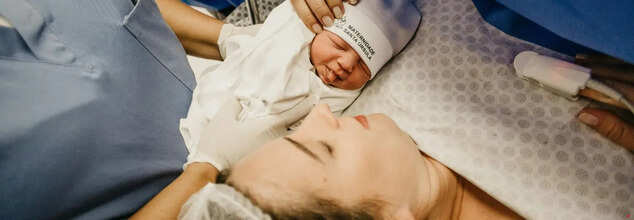
Turkey has banned elective caesarean surgeries for childbirth at private hospitals and healthcare centres. "Planned Caesarean sections cannot be performed in a medical centre," said a gazette entry outlining new regulations governing private healthcare institutions in Turkey. It came as the country's president, Tyyip Recep Erdogan, has been pushing hard to have women give natural births, asserting that C Section surgeries promoted Western culture.
The move has triggered massive criticism from the opposition and right-wing organisations. "As if the country had no other problems, male football players are telling women how to give birth," Gokce Gokcen, deputy chair of the main opposition CHP, on X. Meanwhile, many human rights and women's rights organisations have also raised their voices against this new law, calling it out for restricting women's rights and liberty.
ALSO READ: After HIIT, Is Jeffing The New Go-To Cardio Workout
What Is A C-Section Birth?
C-section or caesarean birth is a surgical procedure wherein a baby is delivered through incisions made in mother's abdomen and uterus. The name caesarean comes from the Latin word "caedare" which means "to cut." Interestingly, there are rumours that link the name to Roman emperor Julius Caesar, stating that he was the first person to be born via this procedure. However, there are no records of this.
However, there are many cases where a caesarean section surgery becomes almost necessary. A doctor may order a C-section if:
- Your baby is breech, or the lower part of the body is in the birth canal instead of the head.
- Your baby is in a transverse position, or lying sideways in the birth canal.
- Your baby’s head is unusually large.
- Your baby’s heartbeat is slowing down, or there is a problem with oxygen delivery to your baby.
- You are giving birth to more than one baby. Sometimes one baby will be in an abnormal position, so all of the babies are then born via C-section.
- Your baby has a birth defect that makes vaginal delivery unsafe.
- You have umbilical cord issues.
- You have health conditions that make vaginal delivery unsafe. These include high blood pressure, HIV, open herpes lesions, or heart problems.
What Are The Complications Of Having a C-Section Surgery?
There are many complications that come with this method of delivering a child. They include:
- Reactions to the medicines used during surgery
- Bleeding
- Abnormal separation of the placenta, especially in women with previous cesarean delivery
- Injury to the bladder or bowel
- Infection in the uterus
- Wound infection
- Trouble urinating or a urinary tract infection
- Delayed return of bowel function
- Blood clots
Bottom Line
Despite the potential risks and complications, C-sections are much safer than they once were. With evolution in medical science, doctors are now taking great care to make incisions that will reduce the risk of nicks to the baby and infections to the mother. Meanwhile, the use of anaesthesia, also reduces the pain of the childbirth.ALSO READ: Dishonesty Is 'More Than A Vice', It Could Make You Sick With
Taking Methotrexate For Arthritis? Doctors Explain The Risks Behind The Latest Warning
Credits: Canva
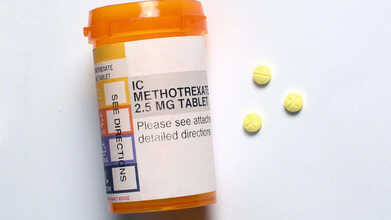
People who take methotrexate for different health conditions have been cautioned by the NHS that certain symptoms and side effects should not be ignored and may require urgent medical help, including a visit to A&E or calling 999. Methotrexate works as an immunosuppressant, meaning it dampens the immune system to help control inflammation in the body.
What Is Methotrexate?
Methotrexate belongs to a group of medicines known as antimetabolites. It helps manage rheumatoid arthritis by dampening the body’s immune response, controls psoriasis by slowing the rapid buildup of skin cells, and is used in cancer treatment to limit the growth and spread of cancer cells, as per Mayo Clinic.
Doctors commonly prescribe it for conditions such as rheumatoid arthritis, Crohn’s disease, and psoriasis. In some situations, it is also used as part of cancer treatment. Methotrexate is usually taken as a tablet, a liquid medicine that is swallowed, or as a pre-filled pen or syringe that is injected under the skin. While many people benefit from the drug, it can also cause serious side effects that may be worrying for some patients.
Side Effects Of Methotrexate And When To Call For Emergency?
Certain severe side effects linked to methotrexate are rare and affect fewer than 1 in 10,000 people. Even so, the NHS advises contacting your doctor or calling 111 if you notice any of the following symptoms:
- Swelling in the hands, feet, or ankles along with shortness of breath, which may point to a kidney issue
- A long-lasting cough, chest discomfort, or trouble breathing, which could suggest lung inflammation
- Yellowing of the skin or the whites of the eyes, which can indicate liver damage
- Bleeding gums, vomiting blood, unexplained bruises, or blood in the urine, which may signal a blood disorder
- A high temperature, sore throat, or body aches, which could be signs of an infection
Symptoms of this can include:
- Swelling of the lips, throat, or tongue
- A tight sensation in the throat or difficulty swallowing
- Confusion
- Collapsing or fainting and being hard to wake
- Skin, lips, or tongue turning blue, pale, or grey
- Very rapid breathing or severe difficulty breathing
Methotrexate: What Should You Watch Out For While Taking This Medication?
See your care team regularly so they can monitor how the treatment is working. It may take a while before you notice any improvement. You may be asked to get routine blood tests during the course of treatment.
If your care team has prescribed folic acid along with methotrexate, they may advise you not to take folic acid on the same day as your methotrexate dose.
This medicine can make your skin more sensitive to sunlight. Try to stay out of direct sun exposure. If that is not possible, wear covered clothing and apply sunscreen. Avoid sun lamps, tanning beds, or tanning booths.
Contact your care team if you have severe diarrhea, ongoing nausea or vomiting, or heavy sweating. Losing too much fluid from your body can make this medicine unsafe. This drug can raise your chances of developing an infection. Call your care team if you develop a fever, chills, sore throat, or flu-like symptoms. Do not self-medicate. As far as possible, stay away from people who are unwell.
Discuss your cancer risk with your care team. Long-term use of this medication may increase the risk of certain cancers.
Speak to your care team if you or your partner could become pregnant. Methotrexate can cause serious birth defects if taken during pregnancy or within six months after the last dose. A negative pregnancy test is required before starting treatment. Reliable contraception should be used while on this medication and for six months after stopping it. Your care team can guide you on suitable options.
If your partner can become pregnant, use condoms during sexual activity while taking this medication and for three months after the final dose. Do not breastfeed while using this medication and for at least one week after the last dose.
This medication may affect fertility. If this is a concern, discuss it with your care team.
Bemotrizinol: FDA Proposes New Sunscreen Ingredient—Here’s Why It Matters

Credits: Canva
America is aiming to align with global trends in sun protection. On December 11, the Food and Drug Administration proposed allowing the use of bemotrizinol in sunscreens — an ingredient that has been widely used in other countries for years.
Bemotrizinol provides stable, long-lasting defence against both types of UV rays that can harm the skin. According to the FDA announcement, it is gentle enough to be safe for young children and could be on shelves in time for next summer.
"The agency has historically moved too slowly in this area, leaving Americans with fewer options than consumers abroad. We’re continuing to modernize the regulation of sunscreen and other over-the-counter drug products,” FDA Commissioner Marty Makary said in a press statement. “Americans deserve timely access to the best safe, effective, and consumer-friendly over-the-counter products available.”
What is Bemotrizinol?
Bemotrizinol, also called BEMT, is a chemical that absorbs both UVB and UVA rays. If those terms sound familiar, it’s likely because you’ve seen them on nearly every sunscreen bottle. The sun emits ultraviolet (UV) radiation, which is exactly what sunscreen is designed to block.
UVB and UVA describe different kinds of rays, according to the University of Texas MD Anderson Cancer Center. For our skin, the difference isn’t huge. UVA causes tanning and burns faster than UVB, while UVB can be partially blocked by barriers like windows or clouds.
About 95% of UV reaching the ground is UVA, with UVB making up the remaining 5%, according to the Anderson Cancer Center. Sunscreens work in two ways: creating a physical barrier with minerals or using chemicals that absorb rays before they reach the skin. BEMT falls into the latter category.
Why Is BEMT Good For Use In Sunscreen?
BEMT ticks many boxes for an effective sunscreen ingredient. It is broad-spectrum, shielding against both UVA and UVB, and achieves higher SPF protection in smaller amounts than some other popular chemicals, according to Certified Laboratories and the FDA via USA Today. It is also photostable, meaning it breaks down more slowly when exposed to sunlight, and being oil-soluble makes it easy to mix into creams.
The ingredient is minimally absorbed into the body through the skin and rarely causes irritation, which is why the FDA considers it safe for children as young as six months old.
When Will BEMT Come To Sunscreen In The US?
Following the proposal, the FDA has opened a 45-day public comment period. Once the agency reviews feedback and confirms safety, it will issue a final order to allow the ingredient. Over-the-counter approvals are generally faster than the one-to-two years typical for prescription drugs. The FDA told Today that BEMT sunscreens could be available by summer or fall of 2026.
What Caused FDA Delays in Sunscreen Approvals?
Recent holdups at the U.S. Food and Drug Administration in clearing new sunscreen ingredients have largely stemmed from long-standing regulatory slowdowns, which left American shoppers with fewer choices than those offered in many other countries.
The agency’s plan to permit the use of bemotrizinol, a filter already common abroad, marks a step toward updating its approach to sunscreen oversight and giving people access to more advanced formulas. Updates from the agency note that bemotrizinol delivers steady, broad-spectrum defense against UVA and UVB rays and is mild enough for children, bringing U.S. standards closer to what is widely available worldwide.
As Super Flu Cases Rise, Doctors Explain Whether Ibuprofen Or Paracetamol Works Better For Symptoms

Credits: Canva
As a strong wave of “superflu” and other seasonal infections moves through the country, large numbers of people have fallen ill this winter. The rise has been serious enough for some NHS officials to advise anyone with symptoms to wear a mask. Newly released data shows how quickly the situation has worsened, with flu admissions jumping by 55 percent in a single week.
This sharp climb has pushed the NHS into what leaders describe as a “worst case scenario” for December. As per The Independent, over the past week, hospitals saw an average of 2,660 daily admissions for flu, the highest figure ever recorded at this point in the year. With so many people under the weather, many are trying to work out which pain reliever offers better comfort. An expert previously spoke to the Mirror on this exact point.
Superflu Cases Rise In UK
Figures released today highlight the severity of the situation, with flu hospitalisations having surged by more than half (55%) in just one week. This massive increase has officially plunged the NHS into a "worst case scenario" situation for the month of December. Last week, an average of 2,660 patients per day were admitted to hospital beds with flu, marking the highest number ever recorded for this time of year.
Superflu Cases: What To Take Paracetamol Or Ibuprofen?
With so many people falling poorly, it can be helpful to know which medicine is best to take. Thankfully an expert previously spoke to the Mirror about ibuprofen and paracetamol. Abbas Kanani, the superintendent pharmacist at Chemist Click, said: "Paracetamol is probably more effective at bringing down temperature, so it's almost like a double-whammy, you get rid of your headache and bring your temperature down. "But if you feel that you have more body aches, that's your main symptom, then ibuprofen is probably slightly better as it's an anti-inflammatory."
However, he cautioned users to be mindful of potential allergies to ibuprofen, which belongs to a specific class of drugs.
He also revealed that many people are unaware that they can actually take both medicines together when feeling particularly unwell. "If you feel that one isn't enough you can take ibuprofen as well as paracetamol, you can take them together. A lot of people don't know that it's not one or the other, you can put them together as they work in different ways."
While these two medications can alleviate aches, pains and fevers, as well as mild cold and flu symptoms, Abbas notes that they won't be particularly effective for those struggling with coughs and nasal congestion.
To address these specific symptoms, you'd need to utilise cold and flu products instead.
Choosing Medicine Based on Your Symptoms
Many people assume one medicine works better for all flu complaints, but the expert’s guidance shows that the right choice depends on what you’re feeling. Fever and headache respond more readily to paracetamol, while body aches and inflammation may ease faster with ibuprofen. For coughs or blocked sinuses, cold-and-flu formulas are needed because standard pain relievers do not target those issues.
- Follow Us :


© 2024 Bennett, Coleman & Company Limited