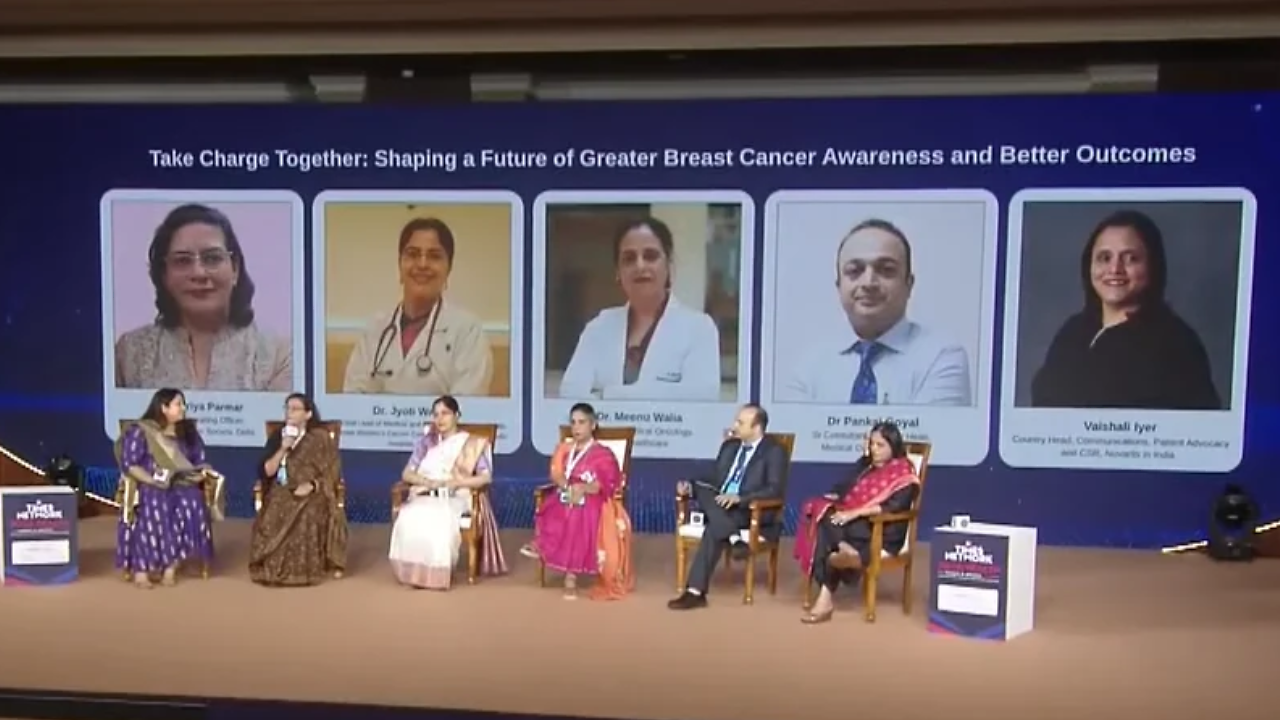
The journey of a breast cancer patient does not end when their treatment comes to a conclusion. There is always a risk of recurrence, which makes regular follow-ups and adherence to treatment important. At the Times Network India Health Summit and Awards 2026 in New Delhi, a panel formed by Dr Priya Parmar, Chief Operating Officer, Indian Cancer Society, Delhi, Dr. Jyoti Wadhwa - Principal Lead of Medical and Precision Oncology, Apollo Athena Women’s Cancer Centres, New Delhi and Apollo Hospital, Gurgaon, Dr. Meenu Walia, Chairman Medical Oncology, Max Healthcare, Dr Pankaj Goyal, Sr Consultant and Unit Head, Medical Oncology, RGCI, and Vaishali Iyer, Country Head, Communications, Patient Advocacy and CSR, Novartis in India, discussed the big picture after breast cancer treatment. During a panel discussion titled “Take Charge Together: Shaping a Future of Greater Breast Cancer Awareness and Better Outcomes,” experts highlighted the physical, emotional, social and financial challenges that women may continue to face after treatment among many more.What Comes After Breast Cancer Treatment?For many women, the period after breast cancer can involve more than medical monitoring. They may face fatigue, menopausal symptoms and changes in body image after undergoing a major physical change, while concerns about intimacy, fertility and relationships can affect emotional and mental well-being.Dr. Priya Parmar highlighted how losing a breast or hair can affect a woman's sense of identity and femininity. Some survivors also face social stigma related to marriage and fertility, while sexual health and relationship concerns may remain difficult to discuss.The burden can be greater for women who lack family support or have limited financial resources. These circumstances may affect not only emotional recovery but also their ability to attend follow-up appointments and continue treatment.The financial strain can become particularly difficult if cancer returns and further investigations or treatment are required. Dr. Meenu Walia said that treatment for advanced disease can add to the economic burden faced by patients and their families.Also read: Vanessa Trump Recovers From 'Very Invasive' Breast Cancer, Reveals Early Sign Of The DiseaseRisk Of RecurrenceThe risk of breast cancer recurrence is not the same for every patient. It depends on the cancer's stage and subtype, tumour grade, lymph node involvement, response to treatment and whether treatment is timely.Dr. Jyoti Wadhwa explained that different breast cancer subtypes can follow different recurrence patterns.Triple-negative breast cancer tends to recur earlier, often within the first two to three years after treatment. Hormone receptor-positive, HER2-negative breast cancer, however, can return even 10 to 20 years later.She also said that patients who achieve a pathological complete response after treatment given before surgery may have a lower risk of recurrence than those with residual disease.However, a lower estimated risk does not mean the risk is eliminated. Continued monitoring is important even for patients who have responded well to treatment.Also read: Beyond the Lump: Overlooked Breast Cancer Symptoms That Can Delay DiagnosisFeeling Better Is Not A Reason To Skip Follow-UpsOne concern raised by the experts was that some patients stop taking prescribed oral hormone therapy or miss appointments after their symptoms improve.“Your first attempt at treatment is always your best attempt,” Dr. Walia said, underlining the importance of appropriate diagnosis and treatment from the outset.Follow-up care helps doctors monitor a patient's recovery, assess treatment-related effects and make decisions based on individual clinical circumstances. The appropriate schedule and any further treatment depend on the patient's diagnosis, risk profile and medical history.Experts also cautioned against allowing the possibility of recurrence to dominate a survivor's life. Understanding individual risk should help patients make informed decisions, rather than leave them in constant fear that cancer will return.Post-Treatment Care Needs More Than Medical Monitoring The long-term effects of breast cancer also have implications beyond the individual patient. Vaishali Iyer, Country Head of Communications, Patient Advocacy and CSR at Novartis in India, highlighted an estimated 140 million productive hours lost due to breast cancer care, drawing attention to its wider economic impact.Dr. Wadhwa emphasised the need to address treatment-related concerns, including menopausal symptoms and bone health, which may require attention even after primary cancer treatment has ended.Dr. Pankaj Goyal, Senior Consultant and Unit Head of Medical Oncology at RGCI, stressed that doctors must build trust with patients and explain recurrence risks without causing unnecessary alarm. Discussions about care should also account for patients' personal circumstances and financial constraints.The panel discussion, titled “Take Charge Together: Shaping a Future of Greater Breast Cancer Awareness and Better Outcomes,” took place at the Times Network India Health Summit and Awards 2026.