
- Health Conditions A-Z
- Health & Wellness
- Nutrition
- Fitness
- Health News
- Ayurveda
- Videos
- Medicine A-Z
- Parenting
Using An Air Purifier At Home? Pulmonologist Warns These 5 Common Mistakes Could Put Your Lungs At Risk

Credits: Canva
With winter setting in, Delhi and the NCR are once again dealing with a sharp rise in air pollution, with AQI levels often slipping into the “very unhealthy” category. Hazy mornings, dense smog, and a steady increase in breathing problems have made clean air feel out of reach for many residents. As a result, people are relying more on air purifiers indoors and masks outdoors.
Still, not everyone knows how to use these measures correctly. We spoke to pulmonologist Dr. Vijay Kumar Agrawal, Director of Pulmonology and Critical Care at Yatharth Super Speciality Hospital, Faridabad, who shared a few important points that can help protect your lungs even inside your home.
Also Read: Flu Cases In US Reach 5 Million Mark, Reveals CDC Data
What Is An Air Purifier?
An air purifier is a device designed to improve indoor air quality by filtering out pollutants such as dust, pollen, pet hair, smoke, and mold spores. It works by pulling air through filters like HEPA or activated carbon, or by using certain technologies, and then releasing cleaner air back into the room.
This process can help reduce triggers for allergies and asthma and make breathing easier. While air purifiers are particularly helpful for people with respiratory conditions, growing pollution levels have made them a common household choice even among otherwise healthy individuals. That said, simply owning an air purifier is not enough. There are a few key things you should keep in mind while using one.
Select Air Purifier With HEPA Filter Only
Dr. Agrawal advises choosing an air purifier that uses a HEPA filter. Many people unknowingly use air purifier that release ozone or free radicals, which can increase the risk of breathing problems, irritation, coughing, and shortness of breath. According to him, “Air purifiers with HEPA filters are ozone-free and safer because they do not emit harmful particles or ozone into the air.”
Also Read: Simple Blood Tests Detecting Multiple Cancer; Do They Really Work?
Always Maintain An Ideal Indoor Humidity Level- 40-50%
To reduce the impact of viruses, indoor pollutants, and dryness on the body, it is best to maintain indoor relative humidity between about 40% and 60%. Dr. Agrawal explains that excessive use of air purifiers can lower humidity levels indoors, leading to dryness. “Low humidity can irritate the airways and may worsen respiratory issues,” he says.
Keep Your Air Purifier 2-6 ft Away From You
Experts recommend keeping an air purifier at a distance of around 2 to 6 feet from where you sit or sleep. Placing it within this range helps clean the air more effectively in your breathing zone, especially in spaces like bedrooms or offices. Dr. Agrawal notes, “Keeping the air purifier at an appropriate distance helps reduce PM2.5 and PM10 levels, along with other particles such as pollen, mold spores, and certain bacteria around us.”
Dont Burn Incense Sticks And Mosquito Coils With An Air Purifier In The Room
In many Indian households, burning incense sticks or mosquito coils indoors is common. However, these release chemical irritants that can be harmful to the lungs. Using them in the same room as an air purifier defeats the purpose of cleaner air and should be avoided.
Dont Tightly Close Windows And Doors
Proper ventilation is still important, even when using an air purifier. Dr. Agrawal recommends keeping at least one window or a small door slightly open to allow fresh air exchange. This helps ensure a supply of oxygen from outside and prevents indoor air from becoming stale.
Dr. Agrawal adds that while using an air purifier is generally safe and even long-term use is not harmful, following these precautions is essential to truly protect your lungs and maintain healthier air indoors.
Endometriosis Taught Me To Always Listen To My Body, Says Model Padma Lakshmi

Credit: Padma Lakshm/ Instagram
The World Health Organization estimates that 10 percent (190 million) of reproductive-age women worldwide suffer from endometriosis.
The chronic and complex menstrual disease that affects many women is characterized by severe pain during menstruation, heavy menstrual bleeding, chronic pelvic pain (pain that does not go away when the menstrual cycle ends), infertility, and abdominal bloating and nausea.
The incurable condition poses a significant challenge to women as it affects their personal and professional lives, relationships, and fertility, among others, due to persistent pain and fatigue.
The diagnosis also gets delayed, as endometriosis is often confused with PCOS, or Polycystic Ovary Syndrome, due to some overlapping symptoms like irregular menstrual periods. The symptoms may continue to persist or recur after treatment is initiated.
In a powerful statement resonating with millions worldwide, Indian American author and television host Padma Lakshmi has shared her experience with the condition.
Opening about her personal battle with endometriosis, the 55-year-old, Co-founder of Endometriosis Foundation of America, said that the condition made her understand how strong she is and called for greater awareness and self-advocacy among women.
"Endometriosis has taught me that I should always listen to my body. Pain is your body's way of telling you something is wrong,” said Lakshmi, in a media post on social media platform Instagram.
"Through my struggles with endometriosis, I've learned that, actually, I have a very high threshold for pain, that I may be stronger than I know, but that I shouldn't always need to be,” PopSugar quoted her as saying.
Lakshmi noted that it is now her life's mission "to advocate for my own health, and also to advocate for all women with endometriosis."
What Is Endometriosis?
Endometriosis happens when tissue similar to the lining of the uterus grows outside the uterus. These tissues commonly develop on the ovaries, fallopian tubes, or the pelvic lining.
Endometriosis affects many women and can impact their daily lives, including their ability to work comfortably. Many women continue their professional responsibilities despite experiencing severe discomfort, fatigue, and pain.
Raising awareness about the condition and encouraging supportive workplaces can help women manage both their health and career more effectively.
Since it is a progressive disorder, timely intervention remains key to managing it. In many cases, women live with symptoms for several years before receiving the correct diagnosis, which can delay treatment and affect their quality of life.
Treating Endometriosis
Treatment is particularly based on the severity of symptoms. Women will be advised lifestyle modifications such as regular exercise, stress management, and an anti-inflammatory diet. Non-steroidal anti-inflammatory drugs may help reduce discomfort.
Hormonal therapies may also be used to control symptoms. Some women will be advised to undergo laparoscopy to remove endometriotic cysts.
Minimally invasive surgery can help remove lesions and restore pelvic anatomy, which may also improve fertility in some cases. In advanced cases, surgery can be recommended to women.
Shared Lipsticks, Makeup Items May Spread Herpes: Here’s How To Stay Safe

Credit: iStock
In a shocking incident, a woman contracted the herpes virus after using shared lipstick samples at a cosmetic store, raising concerns about makeup hygiene.
The incident highlights the risks involved in trying products that come into direct contact with the skin and are shared with a lot of people.
Also Read: World Autism Awareness Day 2026: Can Cell Therapy Be The Future Of Autism Treatment?
What Is Herpes?
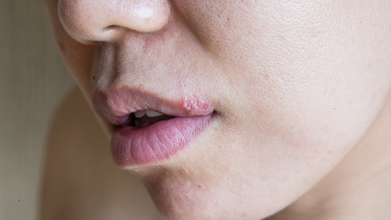
The herpes simplex virus (HSV) is very common, and the infection is lifelong. But the symptoms can come and go over different periods of life. Many people never get any symptoms linked to their infection.
The common virus, carried by up to 50 to 80 percent of adults, can cause painful blisters or ulcers. It primarily spreads by skin-to-skin contact. It is treatable but not curable.
There are two types of herpes simplex virus: HSV-1 and HSV-2.
HSV- 1 is the most common and usually spreads by oral contact. It causes infections in or around the mouth (such as oral herpes or cold sores), as well as genital herpes.
Common oral herpes symptoms include
- blisters (cold sores)
- open sores (ulcers) in or around the mouth or lips.
HSV-2 generally spreads by sexual contact and causes genital herpes.
Its symptoms include painful
- bumps,
- blisters,
- open sores (ulcers) around the genitals or anus.
How Makeup Testers Can Spread Infection
Experts warned that makeup testers can become a breeding ground for germs. The repeated use of the open samples can spur their growth and can then spread by “double-dipping” — reusing an applicator after touching the skin. This can transfer viruses and bacteria between users.
“You can absolutely get a herpes infection from a makeup tester," Dr. Whitney Bowe, a dermatologist in New York City, told TODAY. "The more ‘double dipping’ that occurs, the higher the chance of spreading viruses or bacteria at a makeup counter.”
A 2010 study by researchers from Rowan University in New Jersey found that cosmetic samples harbored strep, E.coli, and staph.
For two years, the team examined makeup testers at makeup counters, specialty stores, and drug stores. They found that Saturday is the busiest day of the week, and 100 percent of the samples carried some sort of germ.
How To Stay Safe?
To reduce the risk of infection, experts recommend:
- Much like the toothbrush, personal cosmetics and cosmetic brushes must not be shared.
- Wash and dry your brushes regularly to avoid bacterial growth.
- Avoid applying testers directly to your lips or skin
- Use disposable applicators
- Test products on your hand rather than your face
- Avoid using testers if you have cuts, chapped lips, or active infections.
Why Inclusive Opportunities Matter For Individuals with Autism: Unlocking Untapped Potential

Credit: Canva
April 2 is celebrated worldwide as “Autism Awareness Day” and April as Autism month to create awareness and promote inclusivity and acceptance in society for individuals with autism.
So what exactly is Autism, and why do we need to create a culture of awareness and acceptance?
As per DSM V (Diagnostic and Statistical Manual of Mental Disorders) criteria, in simple terms, there is poor eye contact, impaired social communication skills, repetitive patterns (certain movements or fixation on certain toys, objects), difficulties with sensory processing - extreme sensitivity to sensory inputs (dislike loud noises, sensitive to touch), etc.
As a child, these individuals may not respond to name-calling, have poor eye contact/lack gestures like pointing, etc., lack imagination in play, and may not be able to relate and respond to the emotions of others. They have set routines and dislike changes to their routines. All this can cause significant disruption to their day-to-day functioning.
This year’s theme of -Autism and Humanity- Every Life has Value” reiterates the need for inclusion of autism, ensuring equitable representation of these individuals. Ensuring that society not only recognizes them but also treats them with equal respect and dignity.
Educational Support and Inclusive Workplace
Sarva Shiksha Abhiyan (SSA) was one of the Government's flagship programs, along with Action for Autism, to disseminate information in schools regarding inclusive education for autism. Education is a key foundation to ensure children with autism get suitable opportunities as adults. Special educators, with additional support in schools, can go a long way in ensuring their potential is maximized.
Many IT giants like Microsoft, Google, and SAP encourage tapping the potential of individuals with autism and their exceptional skills. In our country, organizations and NGOs, including Action for Autism, offer training for future employment opportunities.
There is a spectrum of Autistic Spectrum Disorders (ASD) known as Asperger’s syndrome, and these individuals have normal to above average intelligence and can have some exceptional skills, and the world includes some living examples of these with a higher IQ, some of whom are the most successful and famous personalities. Even on the other end of the spectrum, autistic individuals have exceptional skills, some of which include great attention to detail, creativity, problem-solving, and lateral out-of-the-box thinking.
Options for flexible working hours (part-time), understanding their need for routines, and explaining them beforehand regarding important changes to schedules can help them adapt better to an otherwise challenging workplace.
The Need For Sensitization
Understanding individuals with autism may need little extra support, being a little flexible with time deadlines, giving simple instructions, especially written/visual ones, and allowing them time to overcome their communication barriers can go a long way in ensuring they feel heard and valued like anyone else in the workplace.
Sensitization of all major organization employees to foster a culture of acceptance and awareness, and an accessible work environment, is the need of the hour. Autistic individuals do well in a variety of job profiles, including IT, technology, finance, art and creativity, and administration.
Environmental modifications like background noise cancellation with headphones help those with sensory processing issues. At the end of the day, none of us is perfect, it's recognizing our special skills and strengthening them.
Possibilities are endless if we wish to encourage and make these individuals heard. So, let’s carry the Autism Awareness Day beyond a mere day of awareness and light it up blue. Let’s value and acknowledge them being different, but also empower them to act on their special skills to earn them a dignified place in society and the workplace.
- Follow Us :


© 2024 Bennett, Coleman & Company Limited