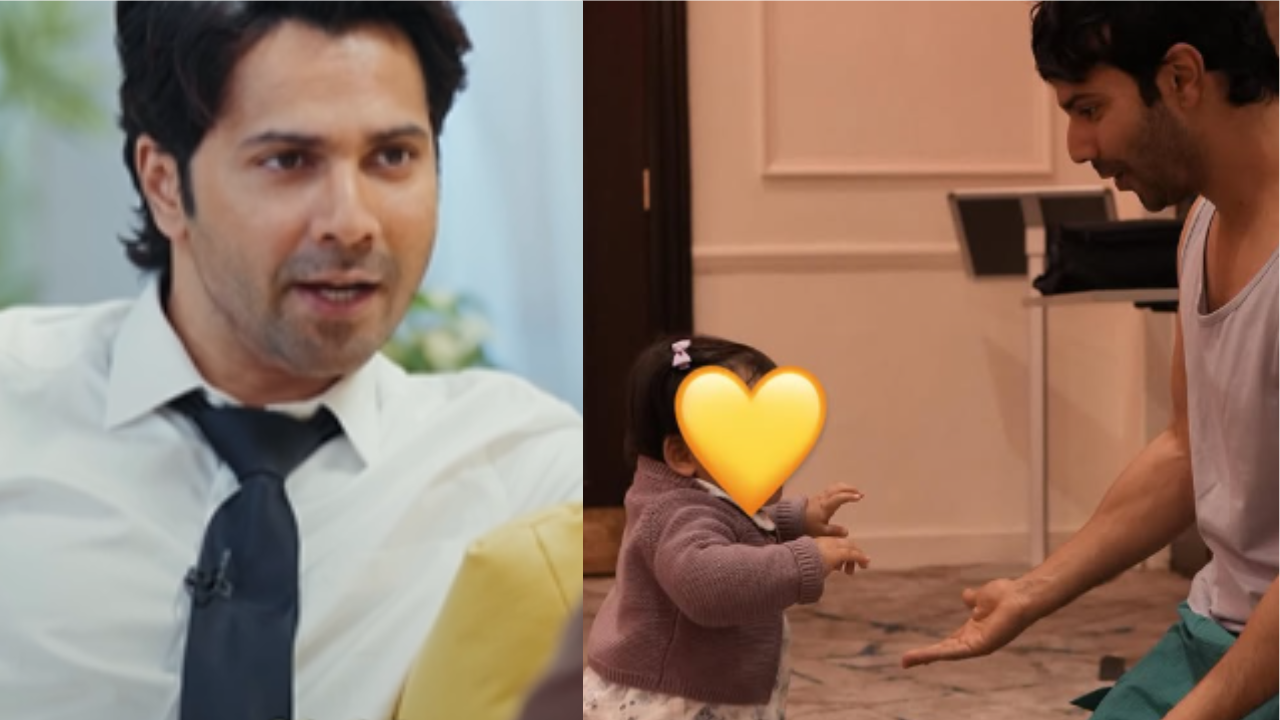
Bollywood actor Varun Dhawan recently opened up about the diagnosis of his 2-year-old daughter with Developmental Dysplasia of the Hip. Varun, who welcomed his daughter Lara in 2024 along with his wife, Natasha Dalal, shared that the condition affected her ability to walk and run normally. In a recent episode of Be A Man, Yaar!, Varun noted that the toddler’s condition was diagnosed when she was around one-and-a-half years old. "My daughter was diagnosed with DDH, in which the hip slips out of the hip socket. Ek pair lamba chota hojaata hai jiski wajah se walk tedi hojaati hai (One leg becomes shorter than the other, which causes an uneven limp while walking). You can't walk or run properly," he said. View this post on Instagram A post shared by Yuvaa (@weareyuvaa)]]> The Badrinath Ki Dulhania actor noted that Lara did not need surgery, but underwent a procedure that put her hip back. “But she had to be in a spica cast. That means she had to be in a cast for 2.5 months. Which is extremely difficult. To put her under anesthesia, and then she woke up in a cast. Now the cast is out,” he said, adding that the baby is now in recovery. The Border 2 actor said he chose to speak about Lara’s diagnosis to raise awareness among parents. He urged them to closely observe their children’s movements and consult a paediatrician if they notice anything unusual.Also read: US FDA Approves Drug To Treat Rare Childhood Syndrome What Is DDH? How Can It Be Diagnosed? The UK NHS explains that Developmental dysplasia of the hip (DDH) is a condition where the "ball and socket" joint of the hip does not properly form in babies and young children. The congenital multifactoral disease has about a 30 per cent increased risk if a family member is affected. The hip joint typically connects the thigh bone (femur) to the pelvis. Its upper end, called the femoral head, is shaped like a ball and fits into a cup-like socket in the hip. However, in children born with DDH, this socket is not deep enough to securely hold the femoral head, resulting in an unstable joint. Also read: Child Deaths Fall In India Since 2000 But Progress Slows, Says UN Report In more severe cases, the ball can slip out of the socket completely, leading to dislocation. DDH may affect 1 or both hips, and is more common in: girls firstborn children families where there have been childhood hip problems babies born in the breech positionWhile some babies born with a dislocated hip will show no outward signs, common signs to look includes: Legs of different lengths Uneven skin folds on the thigh Less mobility or flexibility on one side Limping, toe walking, or a waddling gaitDDH: Is The Condition TreatableEarly detection is helpful and boosts treatment. When detected at birth, DDH can usually be corrected with the use of a harness or brace. In cases where the hip is not dislocated at birth, the condition may not be noticed until the child begins walking. In such cases, treatment may be more complicated, with less predictable results.