
- Health Conditions A-Z
- Health & Wellness
- Nutrition
- Fitness
- Health News
- Ayurveda
- Videos
- Medicine A-Z
- Parenting
What Are The Physical Symptoms Of Stress?
Credits: Canva
Stress is your body’s natural response to challenges or demands. It’s a physical and mental reaction triggered by anything from daily responsibilities—like work, school, or family—to major life changes, such as illness, loss of a loved one, or a traumatic event. In small doses, stress can be beneficial. It helps you stay alert and focused and can even improve performance in some situations. This is because your body releases hormones like adrenaline and cortisol, which increase your heart rate, speed up your breathing, and prepare your muscles to respond quickly.
But when the stress response continues for too long or happens too often, it can become harmful. Chronic stress—when your body stays in a prolonged state of alert—can lead to long-term health problems.
How Stress Affects the Body
Central Nervous and Endocrine Systems
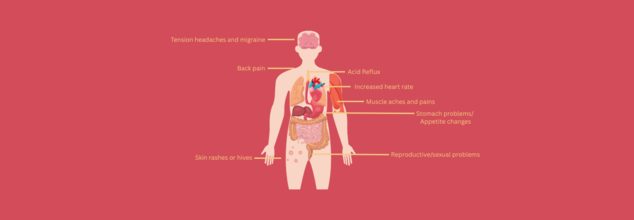
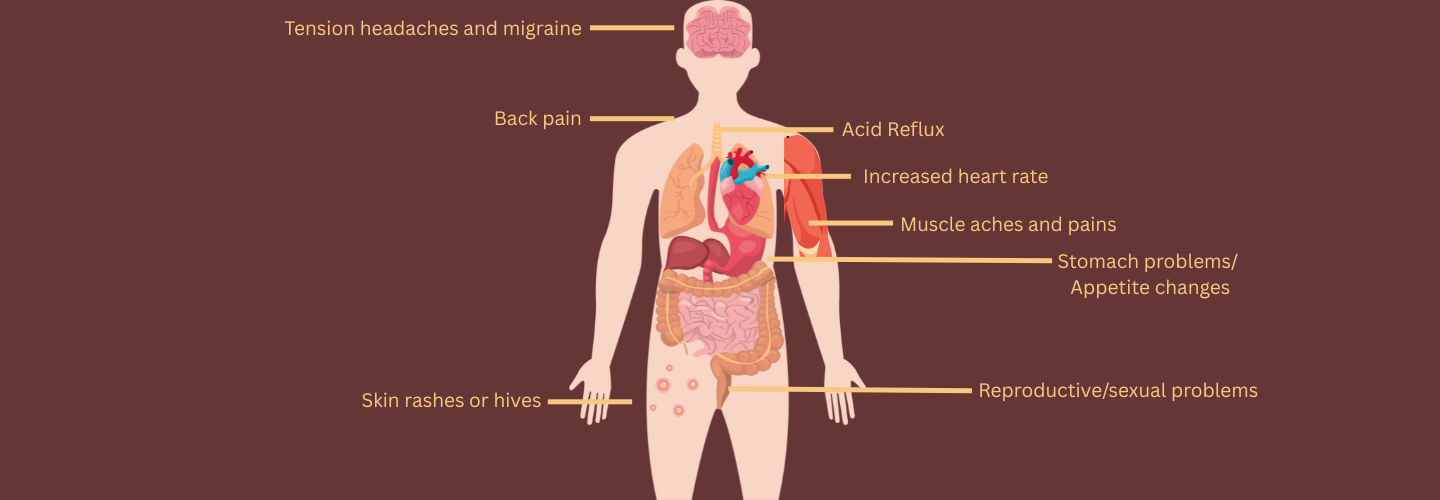
Your brain’s hypothalamus triggers the “fight or flight” response, telling your adrenal glands to release stress hormones. These hormones prepare your body to deal with threats. Ideally, once the threat is gone, hormone levels drop, and your body returns to normal. But if stress persists, this system stays activated. Over time, this can lead to anxiety, depression, irritability, headaches, and sleep disturbances. Chronic stress can also push people toward unhealthy habits like overeating, skipping meals, smoking, or using alcohol or drugs.
Respiratory and Cardiovascular Systems
Stress causes your breathing to speed up in order to quickly move oxygen throughout your body. If you have a breathing condition like asthma, this can worsen symptoms. Your heart also pumps faster, and your blood pressure rises. Over time, this extra workload increases your risk of high blood pressure, stroke, and heart disease.
Digestive System
Under stress, your liver produces extra glucose for energy. But if your body can’t regulate this surge, it can raise your risk of developing type 2 diabetes. Stress may also lead to stomach discomfort, nausea, acid reflux, or bowel issues such as diarrhea or constipation. While stress doesn’t directly cause ulcers, it can aggravate them.
Muscular System
Muscles tense up during stress to protect you from injury. Normally, they relax when the stress passes. But with ongoing stress, they stay tight. This can lead to headaches, back pain, and general body aches. Chronic muscle tension can also make you less likely to stay active, which can contribute to more discomfort and reliance on painkillers.
Sexual and Reproductive Systems
Stress can reduce sex drive in both men and women. In men, long-term stress can lower testosterone, affect sperm production, and cause erectile dysfunction. In women, it may lead to irregular, painful, or heavier periods and intensify menopause symptoms.
Immune System
Initially, stress boosts your immune system. But over time, it weakens your body’s defenses, making you more susceptible to colds, flu, and other infections. It can also slow down your recovery from illness or injury.
Supreme Court Declares Menstrual Hygiene As Part Of Right To Life; Free Sanitary Pads For Girls In All Schools
Credits: Britannica and Canva
Supreme Court on Friday declared the right to menstrual health as part of the right to life under Article 21 of the Constitution. The court issued a slew of directions to ensure that every school provides biodegradable sanitary napkins free of cost to adolescent girls. The guidelines also ensured that schools must be equipped with functional and hygienic gender-segregated toilets. The Court directed the pan-India implementation of the Union's national policy, 'Menstrual Hygiene Policy for School-going Girls' in schools for adolescent girl children from Classes 6-12.
Read: Menopause Clinics Explained: Latest Launch By Maharashtra And Kerala Government
Supreme Court Declares Menstrual Hygiene As Part Of Right To Life: Here Are the Directions
A bench comprising Justice JB Pardiwala and Justice R Mahadevan passed the following directions:
- All States/UT must ensure that every school, whether government-run or privately managed, in both urban and rural areas, is provided with functional gender segregated toilets with usable water connectivity.
- All existing or newly constructed toilets in schools shall be designed, constructed and maintained to ensure privacy and accessibility, including by catering to needs of children with disabilities.
- All school toilets must be equipped with functional washing facilities and soap and water available at all times.
- All states/UTs must ensure that every school, whether government-run or privately managed, in both urban and rural areas, provide oxo-biodegradable sanitary napkins manufactured in compliance with the ASTM D-6954 standards free of cost. Such sanitary napkins must be made readily accessible to girl students, preferably within toilet premises through sanitary napkin vending machines or, where not visible, at a designated place.
- All States/UTs must ensure that every school, whether government-run or privately managed, in both urban and rural areas establish menstrual hygiene management corners. It must be equipped with spare innerwears, uniforms, disposable pads and other necessary materials to address menstrual urgency.
The court also issued directions for the disposal of sanitary waste. Justice Pardiwala said, "This pronouncement is not just for stakeholders of the legal system. It is also meant for classrooms where girls hesitate to ask for help. It is for teachers who want to help but are restrained due to a lack of resources. And it is for parents who may not realise the impact of their silence and for society to establish its progress as a measure in how we protect the most vulnerable. We wish to communicate to every girlchild who may have become a victim of absenteeism because her body was perceived as a burden when the fault is not hers."
Read: Menstrual Cups To Replace Sanitary Napkins In Karnataka Government Schools
Why Is This Judgment So Important?
In India, menstruation is still seen as taboo. In fact, there is a lot of shame around it. Menstrual shame is the deeply internalized stigma, embarrassment, and negative perception surrounding menstruation, which causes individuals to feel unclean, or "less than" for a natural biological process. This judgment thus is an effort to do away with the shame rooted in cultural, social, and religious taboos, which is often the reason why many girls drop out, or due to lack of awareness, develop health adversities.
Most Medical Videos Even By Doctors Online Are Factually Incorrect, Finds Study
Representational Image by iStock
Most health videos on YouTube, even those made by doctors are also not reliable medical information, found a new study, published in JAMA Network Open. The researchers reviewed 309 popular YouTube videos on cancer and diabetes and found that fewer than 1 in 5 were supported by high quality scientific evidence. About two-thirds of the view had low, very low or no evidence at all to back up their health claims.
What was more concerning is that weaker evidence often attracted more viewer than those backed with strong science. The study looked at videos which had at least 10,000 views. The lead author of the study Dr EunKyo Kang of South Korea's National Cancer Center, said, "This reveals a substantial credibility-evidence gap in medical content videos, where physician authority frequently legitimizes claims lacking robust empirical support."
"Our findings underscore the necessity for evidence-based content-creation guidelines, enhanced science communication training for health care professionals, and algorithmic reforms prioritizing scientific rigor alongside engagement metrics," Kang added in a news release.
How Was The Study Conducted?
The researchers reviewed videos from June 20 and 21, 2025, focusing on cancer and diabetes content. 75 per cent of them were made by physicians. The videos had a median count of 164,000 views and a median length of 19 minutes.
Researchers also developed a scoring system, called E-GRADE to rate the strength of science backed evidence in each video's claim.
This is how the grading system worked:
- GRADE A: high quality evidence
- GRADE B: standard quality evidence
- GRADE C: low quality evidence
- GRADE D: very low or no evidence
What Were The Results Of The Medical Videos?
- GRADE A: 19.7%
- GRABE B: 14.6%
- GRADE C: 3.2%
- GRADE D: 62.5%
The study also found that videos with the weakest evidence were 35% more likely to get higher views than videos with strong scientific evidence.
Richard Saver, a professor of law at the University of North Carolina at Chapel Hill noted that this issue is not just limited to YouTube. "Physician-spread misinformation is a long-standing problem, dating back well before the internet era," he wrote in an accompanying editorial.
Saver said some doctors continue to lean on personal experience rather than solid data, despite evidence-based medicine being regarded as the gold standard. He noted that EBM can feel like it downplays individual clinical judgment. Still, Saver stressed that more research is needed, adding that the study underscores the importance of examining the evidence behind health professionals’ claims on social media.
How Health And Me Has Helped With Medical Facts
Health and Me has always stayed a step ahead from medical misinformation and ensured that its readers too consume correct information. Health and Me's Fact Check series have consistently ran checks on bizarre medical claims, whether it is about a magical potion for weight loss, fake health news, or un-scientific remedies.
Fact Check By Health And Me:
- Fact Check: Does Circumcision Really Cause Autism As Claimed By RFK Jr.?
- Fact Check: Semen Production Means You Have Healthy Sperms, Here's What The Doctor Says
- Fact Check: Is The COVID-19 'Lab Leak' Theory Correct?
- Fact Check: Are Fewer Childhood Vaccines Really “A Better Thing” Under the New CDC Guidelines?
- Fact Check: Is Weight Lifting Safe for Teens? An Expert Explains the Risks and Safer Alternatives
- Fact Check: Do Heart Attacks Peak in the Early Morning? Here’s What a Doctor Says
- Fact Check: Does Ja Morant Have Lung Cancer?
- Fact Check: Can Cold Morning Showers Trigger Brain Stroke?
- Fact Check: Is The Pink Salt Trick Recipe Effective For Weight Loss?
Menopause Clinics Explained: Latest Launch By Maharashtra And Kerala Government
Credits: Canva
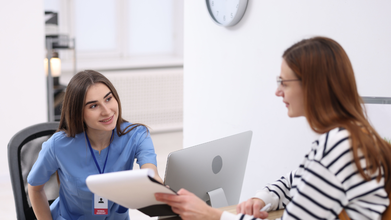
The World Health Organization (WHO) noted that menopause often goes unnoticed as a clinical priority, observing these unmet needs, the state governments in Maharashtra and Kerala will soon launch government-run menopause clinics. These clinics will have specialized support systems designed to offer holistic healthcare services for menopausal women within the public system.
These clinics will also have medical consultations, mental health counselling, targeted screening services and lifestyle guidance.
What Are Menopause Clinics?
Menopause clinics are specialized healthcare units, usually housed in government hospitals, urban health centres or district hospitals, that focus on both the medical and emotional needs of women transitioning through menopause. Rather than brushing menopause aside as a “natural” phase that needs little attention, these clinics offer organized, evidence-based care that goes well beyond routine outpatient visits.
At the heart of a menopause clinic is a comprehensive, integrated approach that includes:
- Clinical assessment of menopausal symptoms
- Screening for hormonal and physical health issues, such as bone health and heart disease risk
- Mental health support and psychosocial counselling
- Personalized advice on lifestyle, nutrition and mid-life wellness
- Ongoing patient education and structured follow-up
By bringing these services together under one roof, menopause clinics help women cope with day-to-day symptoms while also addressing long-term risks like osteoporosis, metabolic changes and a higher likelihood of cardiovascular disease.
What Is Menopause?
This is the natural, permanent end of menstruation defined as 12 consecutive months without a period. This typically occurs between ages 45 to 55.
Foods That May Help During Menopause
- Soy: A top source of phytoestrogens, particularly isoflavones, which bind to estrogen receptors in your body. Studies suggest soy may help alleviate hot flashes, improve cholesterol levels, and even reduce the risk of heart disease during menopause.
- Flaxseed: Packed with lignans, a type of phytoestrogen with mild estrogenic effects, flaxseed may also offer some relief.
Including these foods in your diet could help ease symptoms and reduce your risk of certain menopause-related conditions.
Why a Balanced Diet Matters
A nutrient-packed, balanced diet is the foundation of good health at any age. Prioritize:
- Vegetables and fruits: Rich in vitamins and antioxidants.
- Whole grains: Great for maintaining steady blood sugar levels.
- Lean proteins: Support muscle health and repair.
- Low-fat dairy: Provides calcium for bone strength.
- Avoid ultra-processed junk foods, excessive sugar, and unhealthy fats, which contribute little beyond empty calories.
Maharashtra Menopause Clinic
Earlier this January, the Maharashtra government rolled out the country’s first state-run menopause clinics across government hospitals and urban health facilities. The initiative was launched on Makar Sankranti, January 14, under the guidance of Minister of State for Health Meghna Bordikar.
As per official statements, these clinics are designed to offer end-to-end care in one place. Services include expert medical consultations to evaluate and manage menopausal symptoms, mental health support to address emotional and psychological concerns, and screenings for bone health, cardiovascular risk and hormonal balance. Medicines and follow-up advice are also provided during the same visit, cutting down the need for multiple referrals and repeat hospital trips.
A senior health official pointed out that while menopause is a natural life stage and not a disease, many women need consistent physical and emotional support during this transition. The strong response from women across Maharashtra highlights a long-standing gap in healthcare, where menopause-related concerns often went unaddressed due to the absence of dedicated services. With this move, Maharashtra has also set an example for other states looking to introduce gender-specific care within public health systems.
Read: Can Your Diet Affect Menopause?
Kerala follows with dedicated clinics
Taking a cue from Maharashtra, the Kerala government has announced plans to set up specialized menopause clinics in district hospitals. An initial allocation of Rs 3 crore has been earmarked for the project in the 2026 state budget, presented by Finance Minister K N Balagopal.
The proposed clinics in Kerala will follow a similar model, offering medical consultations for menopausal symptoms, mental health counselling, and screenings for heart, bone and hormonal health. Women will also receive medicines along with lifestyle and dietary advice at a single facility.
The initiative acknowledges the wide-ranging impact of menopause, including hormonal changes, sleep disturbances, bone health issues and increased stress, and aims to create a one-stop support system within district hospitals. By bringing menopause care into mainstream public healthcare, Kerala hopes to improve access, reduce stigma and ensure that women receive timely, structured support during this phase of life.
- Follow Us :


© 2024 Bennett, Coleman & Company Limited