
- Health Conditions A-Z
- Health & Wellness
- Nutrition
- Fitness
- Health News
- Ayurveda
- Videos
- Medicine A-Z
- Parenting
What Is The Difference Between Life Expectancy And Healthy Life Expectancy?
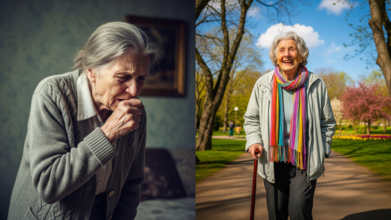
‘How long do you think you will live?’, ‘Me? I’ll live till I’m 100 years old!’ As kids these answers were acceptable, full of life and energy, we believed that living till we are 100 was something that can be done. But as we age, we realize, not only is it a pipedream, but life stressors like food, cost of living and how healthy we actually are, can make 100 years sound like hell. Living a long life, like 80 or 70 years old is seen as a reasonable, achievable dream in comparison.
However, the reality of it is much more different than that. You are not being given a choice for a long life, you are paying for a long life with your health. So, if you were to be given a choice, it would be more like, live a perfectly healthy life till 50 or live a long life at the cost of it.
So, when we focus on our health, what should we aim for, long-term healthy years or longer years lived?
What is The Difference Between Life Expectancy And Healthy Life Expectancy?
According to the Royal Borough of Greenwich UK, Life Expectancy (at birth) is the average number of years a person is expected to live in a specific area, based on current death rates. It's a key statistic used to understand the overall health and well-being of a population.
The Life Expectancy gap measures the difference in this number. It can compare life expectancy between men and women or between different geographical areas, like towns or neighborhoods.
On the other hand, Healthy Life Expectancy (at birth) is a more specific measurement. It's the average number of years a person is expected to live in good health, without illness or disability, based on current health and death rates in a particular area.
Have We Been Living Healthier Or Longer?
According to Gov UK, Since the early 2000s, life expectancy has increased more than healthy life expectancy. This means the number of years people spend in poor health has also slightly increased. For example, men now live about 16.1 years in poor health, and women live about 19 years in poor health.
While women still live longer than men, the gap is getting smaller. The difference is now only 3.6 years. However, most of those extra years for women are spent in poor health. Women live 3.6 years longer than men, but they only have 0.7 years more in good health.
Do Older Adults Have Less Healthy Life Expectancy?
The same trend applies to people over 65. They are living longer, but they are also spending more of their later years in poor health. For instance, a 65-year-old man can expect to live an additional 18.8 years, but 8.2 of those years may be in poor health. For a 65-year-old woman, the numbers are 21.2 and 9.9 years, respectively.
This shows that while we're beating old age, we're not always beating the illnesses that come with it. The data suggests we are spending a smaller percentage of our early lives in poor health, but a larger percentage of our later years.
Can We Increase Our Healthy Life Expectancy?
According to the National Institute of Health, genes account for less than a third of your chance of living to age 85. The biggest factor is your behavior and lifestyle. By making healthy choices, most people have the potential to live to a very old age.
Living a healthy lifestyle has a huge impact on your well-being, especially as you get older. A long-term study of a religious group known for healthy living found that they live nearly 10 years longer on average than most Americans. Their secrets? Regular exercise, a vegetarian diet, avoiding tobacco and alcohol, and maintaining a healthy weight.
Experts agree that if you could only do one thing to live longer and healthier, it would be to exercise. Physical activity is crucial for staying active and avoiding disease and disability. Even small amounts of physical activity can help older adults. A study of adults aged 70 to 89 found that those who followed a moderate exercise program had fewer disabilities and recovered faster. A mix of walking, strength training, and balance exercises is especially effective.
Be skeptical of "anti-aging" products or quick fixes. The best and most proven path to a long and healthy life is through common sense habits and an active, engaged lifestyle.
This Natural Amino Acid In Your Mouth Can Prevent Tooth Decay And Cavities
Credit: Canva
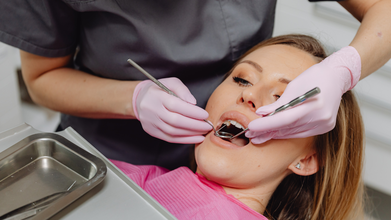
While doctors across the world recommend ensuring that fluoride and other protective minerals make up your toothpaste, your body produces its very own amino acid that protect your entire dental cavity.
Arginine, an amino acid that is already present in saliva, can turn bacteria from damaging to protective in your mouth, a study has found.
When sugars from food are broken down by the many bacteria living in the mouth, acids are produced that gradually damage tooth enamel and lead to cavities. This is known as dental caries. Over time, this acid dissolves tooth enamel and causes cavities.
However, researchers at Aarhus University in Denmark have discovered that regular arginine treatment can significantly reduced the overall acidity levels in the mouth and prevent tooth decay.
Yumi Del Rey, microbiologist at Aarhus, said: ""Our results revealed differences in acidity of the biofilms, with the ones treated with arginine being significantly more protected against acidification caused by sugar metabolism."
How Did The Study Take Place?
The Danish scientists recruited 12 participants with active caries and prepared specialized dentures for the collection of intact biofilms, spanning both sides of the jaw.Volunteers were then asked to instructed to dip the dentures in a sugar solution for 5 minutes, immediately followed by distilled water (as placebo) or arginine for 30 minutes, one on each side. This was to be repeated three times a day, with arginine treatment done on the same side each time.
Sebastian Schlafer, professor at the Department of Dentistry and Oral Health, explained: "The aim was to investigate the impact of arginine treatment on the acidity, type of bacteria, and the carbohydrate matrix of biofilms from patients with active caries."
After 4 days of this process, the biofilms were developed and the dentures were removed for detailed analysis. The researchers compared dental plaques grown on customized dentures on both sides of each participant's mouth using a special pH-sensitive dye called C-SNARF-4.
How Does Arginine Work?
Biofilms treated with arginine showed a significantly higher pH (lower acidity), altered biofilm structure and reduced harmful bacteria, highlighting the amino acid's potential in preventing dental caries.Additionally, the team also began to look into how arginine might be reducing acidity, by taking stock of which bacteria and sugars were present in each sample.
Biofilms treated with arginine showed lower levels of a sugar called fucose, while another sugar, galactose, was concentrated towards the outer surface of the biofilm, meaning both sugars were away from the tooth enamel.
After analyzing the DNA of bacteria present, the researchers found that arginine treatment significantly reduced a specific population of Streptococcus bacteria known to produce acid, while slightly increasing other bacterial strains that can metabolize arginine.
The scientists noted that while more research is needed into the arginine's effectiveness, the amino acid could be a promising new addition to oral hygiene products such as toothpaste or mouthwash.
COVID Symptoms In 2026: NHS Warns Of A 'Bounce Back'

Credits: Canva
Covid is returning, as the National Health Service, NHS UK warned that there has been a "bounce back" in respiratory viruses this winter, along with COVID too on the rise. While UK was already struggling with flu and norovirus on the rise, cases of COVID have also risen. The latest data from the UK Health and Security Agency (UKHSA) show that the number of patients in hospital beds with COVID per day has risen from 0.87 per 100,000, as compared with 0.77 per 100,000 the previous week.
NHS national medical director Professor Meghana Pandit said: “It’s clear that the worst is far from over for the NHS this winter, with hospitals again experiencing a rise in patients admitted with flu and other respiratory virus cases last week.”
What New COVID Variants Are We Dealing With In 2026?
Since the pandemic, there have been many variants of COVID. The virus has continued to evolve. Two new variants that caused the spike in cases in autumn were XFG, known as Stratus, and NB.1.1, known as Nimbus.
Stratus: It is a subvariant of Omicron variant and made of previous variants LF.7 and LP.8.1.2. It was first detected in a sample on January 27, 2025. Whereas, Nimbus was first detected on January 22, 2025. It also originated from the same omicron variant, which was the reason for spike in 2023.
The World Health Organization (WHO) describes stratus as a "variant under monitoring" after several countries in South East Asia reported a rise in new cases and hospitalizations with this variant being detected.
COVID Symptoms 2026: Fatigue Emerges As The Most Common Symptom
Among studies that focused on how symptoms appear together, fatigue stood out as the most consistently reported issue. It often occurred alone or alongside problems such as muscle and joint pain, brain fog, or breathlessness. Other symptom pairings that appeared frequently included loss of smell and taste, anxiety with depression, and various forms of musculoskeletal pain.
When researchers classified patients based on affected organ systems, respiratory problems were the most widespread, seen in about 47% of long COVID patients. Neurological symptoms followed at 31%, while gastrointestinal issues were reported by 28%. The authors stressed that these percentages reflect how often these clusters appeared within long COVID cases studied, not how common they are in the general population.
A smaller number of studies sorted patients by how severe their symptoms were, dividing them into mild, moderate, or severe categories using symptom scores, symptom counts, or quality-of-life measures. Three studies used clinical indicators for classification, including abnormal triglyceride levels and signs of restricted lung function on imaging.
As per the Centers for Disease Control and Prevention (CDC), here are the common COVID symptoms:
- Fever or chills
- Cough
- Shortness of breath or difficulty breathing
- Sore throat
- Congestion or runny nose
- New loss of taste or smell
- Fatigue
- Muscle or body aches
- Headache
- Nausea or vomiting
- Diarrhea
How To Know If You Have COVID?
CDC says, look out for these signs:
- Trouble breathing
- Persistent pain or pressure in the chest
- New confusion
- Inability to wake or stay awake
- Lips and nail beds may appear pale, grey or blue
That 5 Minutes Of Extra Sleep Can Reduce Your Risk Of Death

Credits: Canva
Have you ever dread waking up in the morning and felt like you just need the five extra minutes of sleep? Study now shows that it can actually be helpful for your health. A study published in the Lancet journal eClinical Medicine suggests that seven to eight hours of sleep per day, more than 40 minutes of moderate to vigorous physical activity and a healthy diet is associated with over nine years of additional lifespan and years spent in good health.
“The combined relationship of sleep, physical activity, and diet is larger than the sum of the individual behaviors. For example, for people with the unhealthiest sleep, physical activity and dietary habits to achieve one additional year of lifespan through sleep alone would require five times the amount of additional sleep per day (25 minutes) than if physical activity and diet also improved a small amount,” said the international group of researchers from the UK, Australia, Chile, and Brazil.
In a separate study published in The Lancet, researchers from Norway, Spain, and Australia found that adding just five extra minutes of walking to a daily routine can reduce the risk of death by 10 percent for most adults. The study reported that it will also help the least active adults to reduce their risk of death by around 6 per cent.
How Was The Study Conducted?
The study, which analyzed data from over 135,000 adults, found that cutting sedentary time by just 30 minutes a day was linked to a 7 percent reduction in overall deaths if adopted by most adults who sit for around 10 hours daily. Among the most sedentary people, who sit for about 12 hours a day, deaths could fall by nearly 3 percent.
“These estimates show the broad public health impact of even small, positive changes in physical activity and reduced inactivity,” said corresponding author Prof Ulf Ekelund of the Norwegian School of Sport Sciences, Oslo.
Researchers stressed that the findings are not meant as personalized advice, but as evidence of potential benefits at a population level.
Speaking to The Indian Express, Dr Nicholas Koemel from the Mackenzie Wearables Hub at the Charles Perkins Centre, University of Sydney, leading researcher of another study that seconds that extra five minutes of sleep can in fact help people live longer, said, "While major lifestyle overhauls are often recommended, they may not always be achievable or sustainable. Our results suggest that modest, combined changes may offer meaningful health benefits, be more likely to be maintained over time and provide an important starting point for individuals who may otherwise find it difficult to initiate lifestyle change. Starting by reviewing our daily routines to identify where small, realistic tweaks can be made is an important first step towards improving long term health and longevity."
Research over the years has consistently shown that moderate to vigorous physical activity helps improve key markers of health, including blood pressure, blood sugar, body weight, and body fat. Building on this, a large multi-country analysis of cohort data explains that even small increases in daily physical activity can significantly reduce the risk of death from any cause. The biggest gains are seen among people who are least active, as regular movement leads to a sharp drop in mortality risk for them. If such habits are adopted widely across the population, the data suggest that nearly 10 percent of deaths in people in their 70s and 80s could potentially be prevented.
- Follow Us :


© 2024 Bennett, Coleman & Company Limited