
- Health Conditions A-Z
- Health & Wellness
- Nutrition
- Fitness
- Health News
- Ayurveda
- Videos
- Medicine A-Z
- Parenting
What Makes The Dengue Season 2025 Different? Unique Symptoms Of Dengue In 2025 And How Long It Lasts
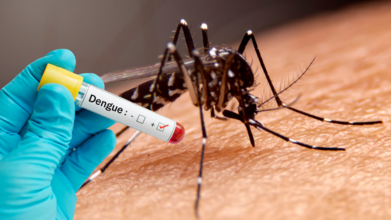
Credits: Canva
Dengue is no longer the seasonal tropical infection many once assumed it to be, it has become a global health threat with alarming reach. According to the World Health Organization (WHO), dengue cases rose eight-fold between 2000 and 2019.
In 2023 alone, more than 5 million cases were reported across 80 countries. By mid-2024, that number had more than doubled in the Americas, with 10.6 million cases and counting. Experts warn the real figure is much higher due to underreporting and misdiagnosis.
No longer just a tropical disease
Traditionally, dengue was confined to tropical and subtropical zones. But today, nearly half the world’s population, 4 billion people, live in areas at risk. Outbreaks are now appearing in unexpected places, including Europe and parts of the United States. Warmer, wetter climates linked to climate change, combined with rapid urbanization and global travel, have allowed Aedes mosquitoes to expand their territory. In São Paulo, Brazil, dengue cases even extended into the winter months of 2023, defying the usual seasonal pattern.
Shifting patterns and stronger strains
All four dengue virus types (DENV-1 to DENV-4) still circulate, but their distribution and dominance are shifting. In São Paulo, a 2023 study revealed that more than 93% of infections were caused by DENV-1, with cases rising significantly during unusual weather conditions.
The persistence of high rainfall and moderate temperatures has created near year-round breeding grounds for mosquitoes. These changes mean dengue is no longer predictable, it now surges outside typical monsoon or summer cycles.
Dengue isn’t just a childhood disease anymore
One striking shift is who is getting severely ill. Dengue was once seen largely as a childhood infection, but doctors are reporting a surge in adult patients requiring intensive care. Even previously healthy adults are landing in ICUs with complications like fluid leakage, internal bleeding, and organ damage
This shift may be due to viral evolution and repeated exposures, while a first dengue infection often causes mild to moderate symptoms, a second infection with a different subtype can trigger severe, even life-threatening illness.
New and unique symptoms emerging
While dengue has long been nicknamed “break-bone fever” for its intense joint and muscle pain, new clinical patterns are being reported:
Prolonged illness: Earlier, many patients recovered within 5–7 days. Now, fatigue, low platelet counts, and weakness can drag on for 2–3 weeks in some cases.
Severe abdominal pain and vomiting: Doctors highlight these as early warning signs of severe dengue.
Dengue shock syndrome: A dangerous complication where plasma leakage leads to a sharp drop in blood pressure. Without urgent medical care, it can turn fatal within hours.
Unusual neurological and liver involvement: Some studies point to rising cases of encephalitis and liver complications, adding complexity to diagnosis and treatment.
These evolving symptoms are making dengue harder to distinguish from other viral illnesses like influenza or COVID-19, often delaying proper treatment.
Why dengue lasts longer now
The duration of dengue symptoms is also changing. While mild dengue typically clears in about a week, experts note that complications, prolonged weakness, and “post-dengue fatigue” are increasingly common. Climate-driven longer mosquito breeding seasons and multiple infections over a lifetime mean more people are being hit harder and taking longer to recover.
Drivers behind the surge
Three major factors fuel this crisis:
- Climate change – Warmer temperatures and heavier rainfall extend mosquito breeding seasons and expand their habitats.
- Urbanization – Poor drainage, construction sites, and stagnant water provide breeding hotspots.
- Global mobility – Increased travel spreads the virus to new regions rapidly.
Prevention remains the strongest weapon
Despite rising cases and changing patterns, dengue remains preventable. Avoiding mosquito bites, through repellents, protective clothing, and eliminating stagnant water, is still the best defense. Vaccines exist but are currently limited to certain age groups with prior dengue exposure. Experts stress early recognition of symptoms and prompt medical care as the difference between recovery and life-threatening complications.
'Good Girl Syndrome' May Be Affecting Your Hormones, Doctor Warns

From childhood, many girls are taught to be agreeable, responsible and perfect in everything they do. They are praised for being obedient, hardworking and emotionally controlled. Over time, this expectation can shape behavior in ways that may quietly harm mental and physical health.
This pattern is often referred to as “Good Girl Syndrome”. While it is not a formal medical diagnosis, doctors say the effects of constantly trying to live up to expectations can be very real. The pressure to appear composed and capable all the time can lead to emotional suppression, chronic stress and eventually hormonal disturbances.
To understand how this pressure affects the body, NDTV Health spoke with Dr. Y. D. Meherprasad, Senior Consultant in Endocrinology and Preventive Healthcare at MGM Malar Hospital, Chennai, who says he has observed this pattern among many young women in his clinical practice.
The Hidden Stress Behind Perfection
Good Girl Syndrome describes a behavioral pattern where individuals, often women, feel compelled to meet expectations without showing weakness or stress. This can translate into people pleasing behaviour, fear of conflict and difficulty setting boundaries.
Dr. Meherprasad explains that constantly trying to maintain this image can create a persistent stress response in the body.
“Hormonal imbalances are being noticed in young Indian women associated with the Good Girl Syndrome, where women are always trying to meet expectations and are continuously successful, all without showing any signs of stress,” he told NDTV Health.
According to him, the problem arises when emotions are suppressed for long periods. “When women suppress emotions for long periods, the body remains in a state of constant stress response,” he said.
Emerging research in the field of psychoneuroendocrinology suggests that emotional stress can directly influence hormonal regulation in the body.
The Cortisol Connection
At the centre of this process is cortisol, the body’s main stress hormone. Normally, cortisol rises briefly during stressful situations and then returns to normal levels once the threat passes.
However, when stress becomes constant, cortisol levels can remain elevated for long periods.
Studies have shown that chronic high cortisol can disrupt reproductive hormones. One effect described in research is sometimes called “progesterone steal,” where the body prioritizes producing stress hormones instead of reproductive hormones.
Low progesterone levels can contribute to irregular menstrual cycles, acne and other hormonal symptoms that many young women experience.
Stress, Insulin Resistance And PCOS
Dr. Meherprasad says chronic stress may also contribute to metabolic changes. In some cases, it can mimic or worsen conditions such as Polycystic Ovary Syndrome (PCOS).
When cortisol levels remain high, the body releases more glucose into the bloodstream to provide energy for a perceived threat. If that energy is not used through physical activity, insulin levels rise to regulate blood sugar.
Over time, this can lead to insulin resistance, which is a key factor associated with PCOS. Women may experience abdominal weight gain, irregular ovulation and difficulty managing their weight.
Warning Signs The Body May Be Struggling
The effects of prolonged stress do not appear overnight. They often show up gradually through subtle changes in the body.
Dr. Meherprasad says menstrual irregularities are one of the early warning signs. Some women may experience delayed cycles or even a temporary halt in ovulation.
Sleep disturbances are also common. Many women report difficulty falling asleep because their minds remain constantly active, leading to fatigue the next day.
Other symptoms may include mood swings, persistent anxiety, brain fog and difficulty losing weight despite maintaining a careful diet.
Restoring Balance
Dr. Meherprasad says addressing these hormonal issues requires both medical evaluation and lifestyle changes.
Regular hormone screenings can help detect issues related to thyroid function, insulin levels and reproductive hormones such as LH and FSH. Early treatment is important if conditions such as PCOS or thyroid dysfunction are present.
Equally important is addressing the emotional component of chronic stress.
“Hormonal imbalance is not only physical but also closely linked to emotional health,” said the doctor.
He recommends prioritizing adequate sleep, regular physical activity and practices such as yoga that help calm the body’s stress response. Creating space for emotional expression through journaling or therapy can also help reduce long term stress.
In a culture that often rewards perfection, doctors say it may be time to rethink the idea of the “perfect girl”. Sometimes, protecting one’s health begins with allowing space for imperfection.
UK Sees 11% Drop In Cancer Death Rates Over The Past Decade

Cancer deaths in the United Kingdom have dropped to their lowest recorded levels, according to new data from the charity Cancer Research UK. The figures show that cancer death rates have fallen by 11 per cent in the past decade, reflecting progress in early detection, screening, treatment and prevention.
Researchers estimate that around 247 people in every 100,000 in the UK now die from cancer each year. This is a significant decline from the peak recorded in 1989, when about 355 people per 100,000 died annually from the disease. Overall, that represents a 29 per cent reduction over the past few decades.
Experts say this steady improvement is the result of sustained scientific progress, improved healthcare systems and public health measures that target risk factors such as smoking.
Major Declines In Several Common Cancers
The new data highlights falling death rates across several major cancers. Ovarian cancer deaths have dropped by 19 per cent over the past ten years, up to 2024. Lung cancer deaths have fallen by 22 per cent during the same period, reflecting the long-term impact of reduced smoking rates and better treatment options.
Deaths from stomach cancer have seen one of the most dramatic improvements, dropping by 34 per cent in the past decade. Bowel cancer deaths have decreased by six per cent, while breast cancer deaths have fallen by 14 per cent.
Other cancers have also seen notable declines. Cervical and prostate cancer deaths have both dropped by 11 per cent. Deaths from leukemia are down by nine per cent, while esophageal cancer deaths have fallen by 12 per cent.
Experts say improved diagnosis, new therapies and better awareness are playing a key role in these trends.
Screening And Vaccination Making A Difference
One of the biggest public health successes has been the decline in cervical cancer deaths. Since the 1970s, deaths from cervical cancer have fallen by around 75 per cent in the UK. Health experts attribute much of this progress to the national cervical screening programme run by the NHS.
Screening helps detect abnormal cells early, allowing treatment before cancer develops or spreads.
Another major contributor is the human papillomavirus vaccine, commonly known as the HPV vaccine. The vaccine protects against the virus responsible for most cervical cancer cases. It is routinely offered to schoolchildren in the UK, and since its introduction in 2008, at least 6.5 million young people have received it.
Public health experts believe the vaccine will continue to reduce cervical cancer rates in the coming decades.
Some Cancer Death Rates Still Rising
Despite the overall progress, the data also shows worrying increases in deaths from certain cancers. Gallbladder cancer deaths have risen by 29 per cent, while deaths from eye cancer have increased by 26 per cent.
Liver cancer deaths are up by 14 per cent, and kidney cancer deaths have risen by five per cent. Meanwhile, death rates for thyroid cancer, pancreatic cancer and melanoma have remained largely unchanged.
Another important trend is that the total number of people dying from cancer continues to rise. This is largely due to population growth and an ageing population, as cancer risk increases with age.
Calls For More Research And Clinical Trials
Experts say the long-term decline in cancer deaths reflects decades of medical research and innovation. However, they stress that continued investment is necessary to sustain progress.
Cancer Research UK researcher Dr Sam Godfrey said the figures show the impact of scientific breakthroughs over many years. He has called on the government to support more clinical trials and ensure that NHS staff have enough time and resources to take part in life saving research.
Public health policies such as smoking bans, along with screening programmes and vaccines, are also credited with helping drive down cancer deaths across the country.
Scrolling Your Phone While In Toilet Can Spike Your Risk Of Hemorrhoids By 46%: Study

Credit: Canva
Are you in the habit of catching up on social media or news updates while sitting on the pot? A new study shows you may be "unintentionally" spending extra time and increasing your risk of developing painful hemorrhoids by 46 percent.
The study, published in the open-access journal PLOS One, explained that getting distracted by news or social media can increase pressure on sensitive anal tissues, which leads to hemorrhoids.
Hemorrhoids, also called piles, are swollen and inflamed veins around your anus or in your lower rectum.
"Using a smartphone while on the toilet was linked to a 46 percent increased chance of having hemorrhoids. We're still uncovering the many ways smartphones and our modern way of life impact our health,” Trisha Pasricha, from the Beth Israel Deaconess Medical Center in the US.
“It's possible that how and where we use them -- such as while in the bathroom -- can have unintended consequences," she added.
For the study, the researchers examined data from colonoscopies of 125 adults in America, and conducted an online survey to understand their lifestyle habits and behavior while using the toilet.
Two-thirds of the participants reported using their smartphones while on
the toilet. Compared with those who did not, endoscopists found that they had a 46 percent higher risk of hemorrhoids.
Longer Toilet Time And Mobile Scrolling
More than a third of bathroom smartphone users reported spending more than five minutes there during a single visit -- reading news (54.3 percent), or browsing social media (44.4 percent).
In comparison, just 7.1 percent of non-users reported staying that long.
"Smartphone use may unintentionally extend the time people spend sitting on the toilet. Sitting for longer periods could increase pressure on tissues in the anal region, which may contribute to the development of hemorrhoids,” the researchers said.
Pasricha suggested individuals leave smartphones outside the bathroom to understand the actual time it takes for a bowel movement.
"If it's taking longer, ask yourself why. Was it because having a bowel movement was really so difficult, or was it because my focus was elsewhere?" she said, calling for more studies.
Hemorrhoids: The Symptoms, Risk Factors
Studies estimate that hemorrhoidal disease affects 40% of people all over the world, and it is one of the most common diseases in the anorectal region.
The two types of hemorrhoids are:
- external hemorrhoids -- under the skin around the anus
- internal hemorrhoids -- in the lining of the anus and lower rectum
- bright red rectal bleeding during bowel movements,
- anal itching or irritation, pain or discomfort (especially while sitting),
- swelling or hard, tender lumps around the anus
- straining during bowel movements
- sitting on the toilet for too long
- chronic constipation or diarrhea
- eating low fiber foods
- older age >50
- pregnancy
- lifting heavy objects
- consume 25-35g of fiber daily,
- drink 6-8 glasses of water,
- avoid straining,
- limit toilet time to under five minutes
- do not delay bowel movements,
- maintain hygiene.
- Follow Us :


© 2024 Bennett, Coleman & Company Limited