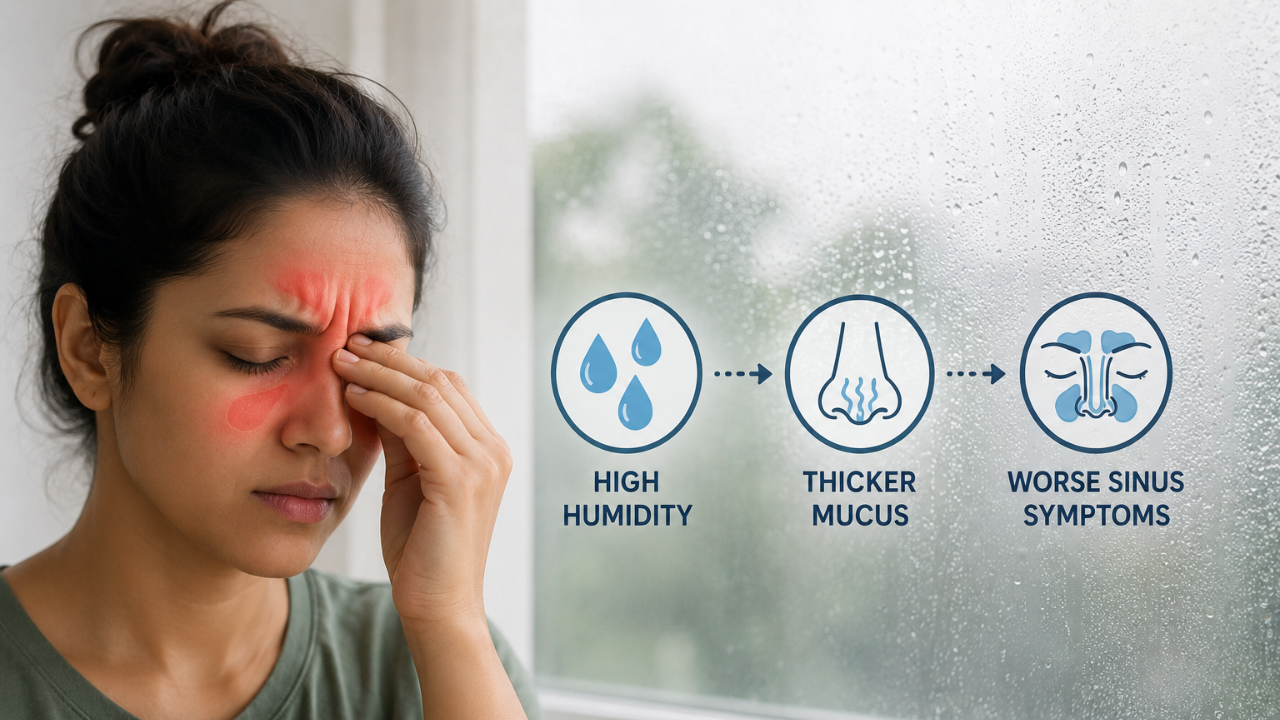
When monsoon clouds gather or tropical humidity surges, ENT clinics see a familiar influx of patients complaining of facial pressure, nasal congestion, and throbbing headaches. Yet, diagnostic cultures frequently reveal no active bacterial infection. Why does humid air trigger severe sinus distress on its own?How Humidity Changes The Nasal Environment?The answer lies in the delicate microenvironment of the upper airway. Scientific evidence shows that elevated atmospheric moisture directly alters nasal physiology. In humid conditions, the normal evaporation rate of mucosal secretions drops, creating stagnant, hyper-hydrated mucus. This excess moisture alters the naturally slightly acidic pH of the nasal mucosa toward a more alkaline state. This pH shift and excess moisture disrupt the delicate balance of the nasal microbiome. Commensal organisms—harmless microbes that permanently reside in our nasal passages—begin to overgrow. While they may not cause an overt, classic infection, their sudden metabolic surge releases irritants that trigger localized, non-infectious tissue inflammation.Also read: Delhi Sees Nearly 6x Rise In H1N1 Cases: How Is It Different From Other Respiratory Infections?Why Sinus Symptoms Can Get Worse?Simultaneously, high humidity severely compromises the mucosal barrier: Impaired Mucociliary Clearance: The tiny hair-like structures (cilia) responsible for sweeping out debris slow down in heavy, moisture-laden air, allowing stagnant fluid to pool.Vascular Engorgement: Warm, humid air causes blood vessels in the turbinates to swell, physically narrowing sinus ostia (drainage pathways).Fungal Spore Explosion: Humid environments dramatically increase ambient mold and fungal spore counts. Inhaling these spores triggers non-allergic and allergic eosinophilic inflammatory responses in the sinus lining.Also read: The Gut-Brain Connection: Study Says IBD Patients May Experience Depression & Anxiety Years Before DiagnosisA Critical Warning for High-Risk Individuals For diabetic or immunocompromised patients, humidity-induced sinus changes demand heightened vigilance. High blood sugar levels already impair neutrophil function and mucosal immunity. When humidity shifts the nasal microenvironment, benign commensals and saprophytic fungal spores (such as Aspergillus or Mucorales) can quickly transition from harmless colonizers into aggressive, invasive pathogens. What starts as environmental congestion can rapidly evolve into severe fungal rhinosinusitis.Managing ambient indoor humidity with air conditioning or dehumidifiers (aiming for 40–50%) remains essential for keeping your mucosal barrier resilient and breathing easy.Dr. Shilpi Budhiraja, Sr. Consultant, ENT and Head and Neck Specialist, Marengo Asia Hospitals, Gurugram