
- Health Conditions A-Z
- Health & Wellness
- Nutrition
- Fitness
- Health News
- Ayurveda
- Videos
- Medicine A-Z
- Parenting
Why Women Love To Take Very Hot Shower, According To Doctor

Credits: iStock
For years, people have joked about how women seem to enjoy showers that could probably cook noodles. If you are someone who loves cranking up the water temperature until the bathroom looks like a steam room, you may have wondered whether there is an actual reason behind it. According to UK surgeon and content creator Dr Karan Rajan, the answer lies in biology. Women are not simply choosing scalding showers for fun. Their bodies are wired differently, and that affects how they experience temperature.
Higher Core Body Temperature
Dr Rajan explains that, on average, women have a slightly higher core body temperature than men. It might sound like this would keep them warmer, but in reality, it does the opposite. When the core is warm but the surrounding environment is cool, that contrast makes cold air feel even colder. So a mildly chilly room may feel more uncomfortable for women, leading them to turn to hotter showers to compensate.
This idea has gone viral online. In a popular TikTok clip, creator couple Micah and Sarah joked about preparing for a shared shower. Micah pretended to train for the extreme heat by dipping his hand in boiling water. The internet quickly chimed in with comments like “My husband says I am training for hell” and “He calls it lobster time”. The jokes were relatable because many couples experience this temperature divide, but not many knew the science behind it until now.
Hormones Add to the Chill
Hormones play a major role too. Estrogen affects blood flow to the extremities, which includes hands, feet and even earlobes. Research shows that women’s extremities can be up to three degrees colder than men’s. Dr Rajan points out that this becomes more noticeable during ovulation when estrogen levels peak. Women on hormonal birth control may also experience increased sensitivity because estrogen stays higher for longer periods.
So even when the core stays warm, the toes and fingers may feel unusually cold. A very warm shower becomes a quick and comforting fix for this temperature imbalance.
Lower Metabolic Rates
Another biological factor is metabolic rate. Women generally have a lower resting metabolic rate than men, meaning they produce less body heat throughout the day. This naturally makes them feel colder and more drawn to hotter water while bathing. Women also tend to have more body fat and less muscle mass, which influences how the body responds to temperature changes.
What Doctors Say
Australian GP Dr Jasmina Dedic Hagan supports these findings, as reported in Body and Soul. She explains that women typically have warmer cores, cooler skin, and a higher layer of insulating fat around the body. On top of that, they have reduced circulation in the extremities because the body prioritises keeping reproductive organs warm. With less muscle mass, the body’s heat-producing brown fat does not function in quite the same way as it does in men.
So Is It Just Preference?
Not entirely. While some women truly enjoy the sensation of a very hot shower, much of it is tied to biology. From hormones to metabolism to circulation, several factors work together to make warmer showers feel soothing and sometimes even necessary. So the next time someone teases you about loving lava-level water, you can tell them it is simply science at work.
Is There A Link Between Your Kidney Health And Other Chronic Diseases? Study Says Yes
Credits: Canva
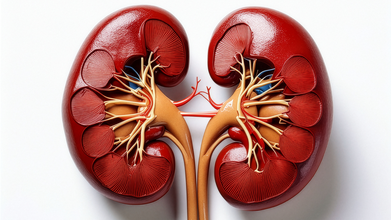
Turns out, kidney disease is not just a ‘kidney’ problem anymore, it can, in fact, affect other organs, and could even be linked to other chronic conditions, revealed a recent study.
In the US, more than 1 in 7 adults are affected by chronic kidney disease or (CKD). This means that 35.5 million Americans are affected by it, and what makes it worse is that 9 out of 10 people do not even know they have CKD, says the Centers for Disease Control and Prevention (CDC). Amid all these numbers thrown on to, something more concerning lies. A recent Lancet study shows a link between the rise in CKD and other chronic diseases. We are talking about chronic conditions like diabetes, high blood pressure, and obesity.
Also Read: Years After PrEP Rollout, The HIV Prevention Drug Still Remains A Privilege In India
So, What Does The Study Say?
The researcher saw that 14 percent of adults who are over the age 20 or older, which makes 788 million Americans who had CKD in 2022. The biggest problem is not the disease itself, but the unawareness. Doctors, experts, and researchers from time and again have pointed out how kidney disease is often asymptomatic, this is why it is ignored until it becomes advanced. However, at that point the patients could already need dialysis or even an organ transplant. This gap in early diagnosis and treatment is what has made CKD the ninth leading reason of death, worldwide.
When you kidney functions naturally, it works as the powerhouse of filtration. A pair of healthy kidneys are able to filter and process more than 150 liters of fluid from the blood. These organs are also responsible for filtering out the waste and toxins through your urine. Not just that, but your kidneys also help in red blood cells production that keeps you healthy. When all of that does not happen, it can eventually impact every other organ in your body.
Like they say, everything is connected, and it surely is. For instance, somewhere around 20% of the blood that your heart pumps goes to your kidneys. If someone has diabetes and high blood pressure, it could damage the blood vessels and lead to protein in the urine and a slower filtration rate. It can then lead to other chronic infections, autoimmune disorders, and even genetic variants.
Also Read: Virus Without Vaccine Hits California; No Need To Worry, Say Public Health Officials
Kidney-Body Relation
If you leave your kidney disease untreated, it could lead to kidney failure. This is when you would be more in need of dialysis or a transplant. Doctors have pointed out that most people do not die of chronic kidney disease, rather it impacts their quality of life, worsening their cardiovascular conditions. It can lead to complications like a heart attack, a stroke, or a heart failure.
How Does This Happen?
People who have kidney diseases are at an increased risk for high blood pressure. Due to hurdles in the process of filtration, plaque build ups and hardens the arteries. This in return increases stress on the heart. In fact, the American Heart Association also defined the link between kidney and heart as 'cardiovascular-kidney metabolic syndrome'. This defines a health disorder that is a condition of the overlap of obesity, chronic kidney disease and cardiovascular diseases.
The bleed out of CKD is not just limited to your heart. The National Institute of Health, US points out that along with heart complications and high blood pressure, CKD could also lead to anemia, mineral and bone disorder, metabolic acidosis, malnutrition, and electrolyte imbalances in the blood.
So, What Is The Best Way To Keep Yourself Safe?
The first way is to note any symptoms and get yourself diagnosed. Look for signs like loss of appetite, unexplained nausea or vomiting. Do you feel tired often? Are you having trouble concentrating? Is there any change in how often you go pee?
Other symptoms like a change in your urine color or texture, or feeling itchy or dry, muscle cramps, unexplained weight loss or skin conditions could also signal towards kidney diseases.
However, not always does CKD show symptoms, experts suggest that to be one step ahead, it is important to undergo regular health checkups, including blood culture. General guidelines usually point towards getting a blood test done every 3 to 6 months. For someone with high blood pressure, diabetes or any other disease, the current guidelines say that those people should get regular blood and urine tests to screen for kidney disease. But what really happens is that though these tests exist, they are still used far too little. Doctors point out that many patients skip them because collecting a urine sample feels inconvenient, and overall awareness about kidney disease remains low. As a result, research shows that only about 35 percent of people with diabetes, and just 4 percent of those with high blood pressure, actually end up getting the recommended urine screening.
A ray of hope is that there are now several effective tools to slow the progression of kidney disease. Along with traditional options like ACE inhibitors, newer classes of medications including certain heart failure drugs and GLP-1 drugs. These medicines have shown to help protect kidney function. Although these newer treatments are not widely used yet, their adoption is steadily increasing.
What is important to remember is to also always consult your GP to ensure all preventative measures are followed carefully.
Years After PrEP Rollout, The HIV Prevention Drug Still Remains A Privilege In India
Credits: Canva
In 2022, the National AIDS Control Organisation (NACO) of India published the National Technical Guidelines for PrEP pr the pre-exposure prophylaxis (PrEP), a medicine that reduces the risk of HIV infection. It has been four years since then and the access still remains limited. It was called a novel strategy to deal with HIV, however, there not has been public rollout and government too has not distributed it. This means awareness remain low and the cost is too high for everyone to afford it. PrEP is available for Rs 2,200 to Rs. 3,000 a month in private markets and at subsidized rates in just a few handful of non-profits that too in select cities.
HIV was first identified in 1986 in India, since then the country has made gradual progress in controlling the disease. As per the Sankalak, Status of National AIDS and STD Response Report 2024, released by NACO, HIV prevalence among adults, which is considered between 15 to 49 years was 0.20 per cent. This represented a 44 per cent decline since 2010.
Also Read: Is There A Link Between Your Kidney Health And Other Chronic Diseases? Study Says Yes
However, the prevalence and incidence remain high in vulnerable populations. While the incidence in general population was 0.05 per 1,000 uninfected persons in 2023, men who have sex with men (MSM) see an incidence of 1.55, Hijra/Transgender persons (HTG) have 2.76, and female sex workers (FSW) are at 3.33. This means that nearly a million of FSWs, 350,000 MSM and 96,000 HTGs have the disease. A report from India Spend notes that it is not an actual headcount, but an estimation, which represents that the real number could be more than that.
How Does PrEP Work?
HIV spreads in the human body by targeting and infecting T cells or the critical white blood cells of our immune system. PrEP blocks HIV from replicating inside T cells after exposure. It stops the infection from taking hold. PrEP has also come in form of oral pill which could reduce the chances of contracting HIV through sexual contact or injection drug use.
Studies have documented a sharp fall in HIV infections in communities where Pre-Exposure Prophylaxis (PrEP) is widely used. In Australia, a study involving more than 62,000 people found that government-subsidized oral PrEP helped reduce new HIV cases by 78% among men who took the medication for at least 60% of days between 2018 and 2023. PrEP works best when taken daily, lowering the risk of HIV transmission through sex by over 99% and by more than 74% through infected needles. It can be stopped when a person is no longer engaged in high-risk activities such as having multiple sexual partners or injecting drugs.
Last year, the United States Food and Drug Administration (FDA) approved twice-yearly injectable PrEP, lenacapavir. The World Health Organization recommended for a fast rollout. Maker Gilead Sciences signed agreements with generic manufacturers, including Dr Reddy’s Laboratories, to make the jab available in 120 low- and middle-income countries at lower cost.
Amid this, Zimbabwe become the first African country to roll out the breakthrough injection, while Japan approved the pill version made by Gilead Sciences - Truvada.
'Good Girl Syndrome' May Be Affecting Your Hormones, Doctor Warns

From childhood, many girls are taught to be agreeable, responsible and perfect in everything they do. They are praised for being obedient, hardworking and emotionally controlled. Over time, this expectation can shape behavior in ways that may quietly harm mental and physical health.
This pattern is often referred to as “Good Girl Syndrome”. While it is not a formal medical diagnosis, doctors say the effects of constantly trying to live up to expectations can be very real. The pressure to appear composed and capable all the time can lead to emotional suppression, chronic stress and eventually hormonal disturbances.
To understand how this pressure affects the body, NDTV Health spoke with Dr. Y. D. Meherprasad, Senior Consultant in Endocrinology and Preventive Healthcare at MGM Malar Hospital, Chennai, who says he has observed this pattern among many young women in his clinical practice.
The Hidden Stress Behind Perfection
Good Girl Syndrome describes a behavioral pattern where individuals, often women, feel compelled to meet expectations without showing weakness or stress. This can translate into people pleasing behaviour, fear of conflict and difficulty setting boundaries.
Dr. Meherprasad explains that constantly trying to maintain this image can create a persistent stress response in the body.
“Hormonal imbalances are being noticed in young Indian women associated with the Good Girl Syndrome, where women are always trying to meet expectations and are continuously successful, all without showing any signs of stress,” he told NDTV Health.
According to him, the problem arises when emotions are suppressed for long periods. “When women suppress emotions for long periods, the body remains in a state of constant stress response,” he said.
Emerging research in the field of psychoneuroendocrinology suggests that emotional stress can directly influence hormonal regulation in the body.
The Cortisol Connection
At the centre of this process is cortisol, the body’s main stress hormone. Normally, cortisol rises briefly during stressful situations and then returns to normal levels once the threat passes.
However, when stress becomes constant, cortisol levels can remain elevated for long periods.
Studies have shown that chronic high cortisol can disrupt reproductive hormones. One effect described in research is sometimes called “progesterone steal,” where the body prioritizes producing stress hormones instead of reproductive hormones.
Low progesterone levels can contribute to irregular menstrual cycles, acne and other hormonal symptoms that many young women experience.
Stress, Insulin Resistance And PCOS
Dr. Meherprasad says chronic stress may also contribute to metabolic changes. In some cases, it can mimic or worsen conditions such as Polycystic Ovary Syndrome (PCOS).
When cortisol levels remain high, the body releases more glucose into the bloodstream to provide energy for a perceived threat. If that energy is not used through physical activity, insulin levels rise to regulate blood sugar.
Over time, this can lead to insulin resistance, which is a key factor associated with PCOS. Women may experience abdominal weight gain, irregular ovulation and difficulty managing their weight.
Warning Signs The Body May Be Struggling
The effects of prolonged stress do not appear overnight. They often show up gradually through subtle changes in the body.
Dr. Meherprasad says menstrual irregularities are one of the early warning signs. Some women may experience delayed cycles or even a temporary halt in ovulation.
Sleep disturbances are also common. Many women report difficulty falling asleep because their minds remain constantly active, leading to fatigue the next day.
Other symptoms may include mood swings, persistent anxiety, brain fog and difficulty losing weight despite maintaining a careful diet.
Restoring Balance
Dr. Meherprasad says addressing these hormonal issues requires both medical evaluation and lifestyle changes.
Regular hormone screenings can help detect issues related to thyroid function, insulin levels and reproductive hormones such as LH and FSH. Early treatment is important if conditions such as PCOS or thyroid dysfunction are present.
Equally important is addressing the emotional component of chronic stress.
“Hormonal imbalance is not only physical but also closely linked to emotional health,” said the doctor.
He recommends prioritizing adequate sleep, regular physical activity and practices such as yoga that help calm the body’s stress response. Creating space for emotional expression through journaling or therapy can also help reduce long term stress.
In a culture that often rewards perfection, doctors say it may be time to rethink the idea of the “perfect girl”. Sometimes, protecting one’s health begins with allowing space for imperfection.
- Follow Us :


© 2024 Bennett, Coleman & Company Limited