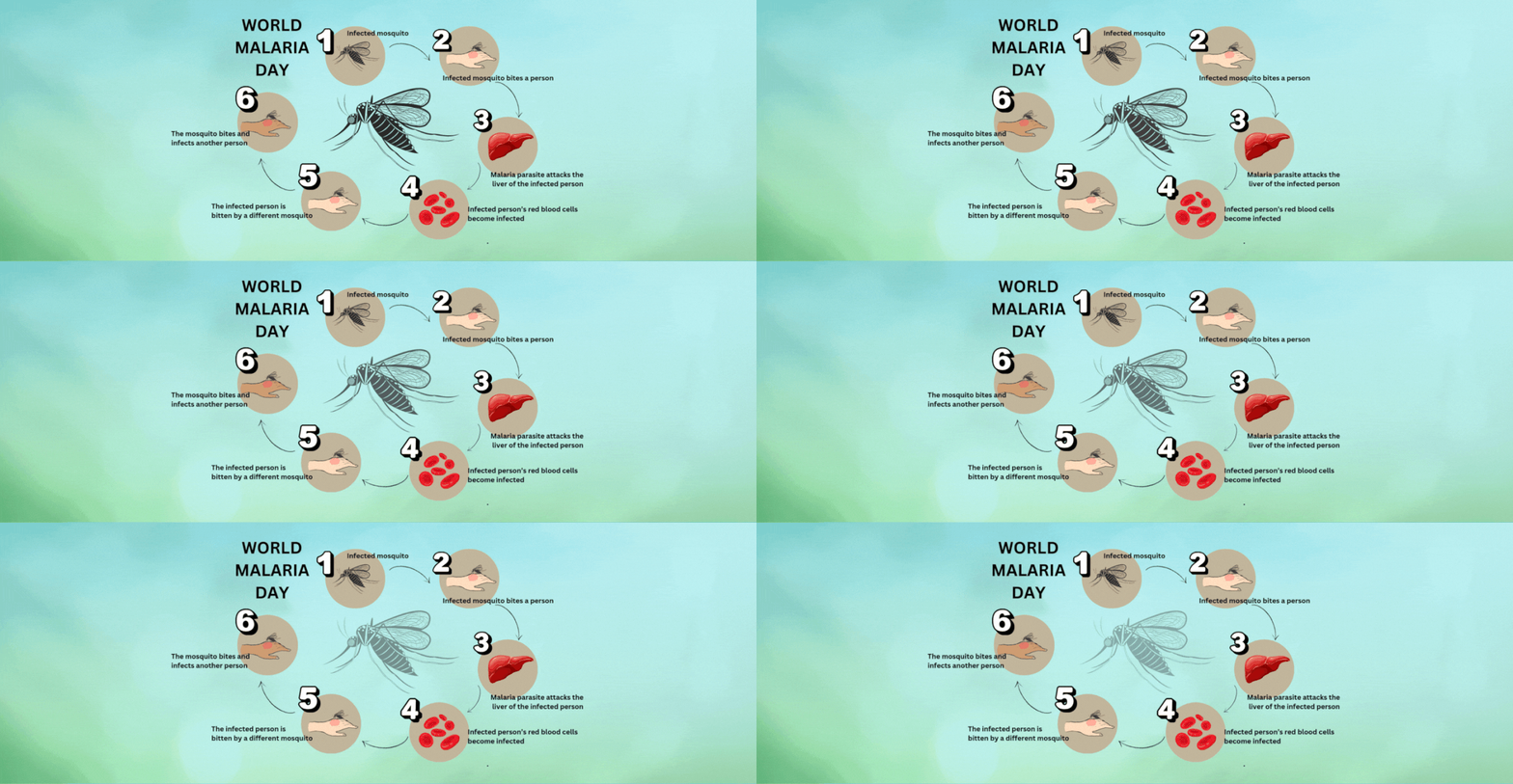
On the day of World Malaria Day, as we raise awareness on the dangers posed by this mosquito-borne disease, let's delve a bit deeper into how malaria is different from the other mosquito-borne diseases.Dengue vs MalariaBoth malaria and dengue are transmitted by female mosquitoes and cause severe illness in humans. There are certain similarities between the two diseases and the mosquito species, which is why the patients and diagnoses are often confused.As per the co-Principal Investigator, Dr Charles Guissou, for the Target Malaria, a vector control research alliance's Target Malaria Burkina Faso at the Institut de Recherche en Sciences de la Santé, "Dengue and malaria are two very different diseases caused by different pathogens and different mosquito species." “Misdiagnosis between malaria and dengue is common, and this can then contribute to inappropriate medical care.”Every year, malaria causes 200 million cases worldwide, leading to 600,000 deaths. Many of these cases are from Africa, where children and pregnant women pay the highest price. The World Health Organization (WHO) has also reported that in 2022, Africa was home to 95% of malaria cases and 95% of malaria deaths. The global incidence of dengue has grown significantly in recent decades. Cases reported to WHO increased from 505,430 in 2000 to 6.5 million in 2023. Dr Ajay Gupta, Head & Director - Internal Medicine, Max Super Speciality Hospital, Vaishali also points out the key differences between malaria and other mosquito-borne diseases. He says, "Malaria is caused by Plasmodium parasites, transmitted through the bite of infected Anopheles mosquitoes. In contrast, dengue, chikungunya, and Zika viruses are transmitted by Aedes mosquitoes. This distinction in the type of mosquito also reflects differences in peak biting times—Anopheles mosquitoes bite during nighttime, while Aedes mosquitoes are daytime biters.""Another key difference lies in complications and disease progression. Malaria, especially caused by Plasmodium falciparum, can progress rapidly to severe illness with cerebral involvement, anemia, kidney failure, and even death if not promptly treated. Dengue, on the other hand, is known for a sudden drop in platelet count and risk of hemorrhage. Chikungunya commonly leads to prolonged joint pain, sometimes lasting weeks or even months after the infection clears," notes the doctor.There is also a difference between how the mosquitoes that spread dengue and malaria. The Aedes MosquitoIt is responsible for spreading dengue and has white stripes down the center of the thorax. It also has a resting position where its body is kept low and parallel to the ground, with the proboscis angled downward. It is slender, and the wings have distinctive white markings.The Anopheles MosquitoIt is responsible for causing malaria and has long palps. It is dark in color and the resting position follows it abdomen at a 45-degree angle to the surface.Zika VirusZika is a viral infection also transmitted by Aedes mosquitoes, which is the first difference from malaria, in the species of mosquito that causes it. As per the WHO, those with Zika virus do not tend to experience symptoms, and if they do, it includes rash, fever, conjunctivitis, and muscle and joint pain. The symptoms are also what makes it different. They appear from 3 to 14 days after being bitten.ChikungunyaThis is also caused by Aedes mosquitoes, and the symptoms usually appear within 4 to 8 days after infection. The symptoms include fever, joint pain, headaches, and nausea.Yellow FeverThis is caused by Aedes and haemagogus mosquitoes. People who are infected with this virus do not get sick and experience only mild symptoms. As per the Centers for Disease Control and Prevention (CDC), 12% of people who have symptoms develop serious illness, which includes organ failure and jaundice.The key difference between all other mosquito-borne diseases and malaria is the species of the mosquito that causes it. While all the others are caused by Aedes, malaria is caused by the Anopheles.What Else Makes Malaria Different Other Than The Type Of Mosquito That Causes It?Drinking Beer Could Increase Chances Of InfectionAccording to the scientists at the University of Emory, in their 2010 study, they found that beer produces an odour in your body that is irresistible to the malaria-carrying mosquitoes.It Could Take Four Years To Develop SymptomsThere are rare strains of this disease which could in fact take months or even years to get diagnosed. In one of the rare cases, malaria was diagnosed four years later the individuals were infected, reported UK's The Telegraph.Malaria And Its Connection With Snow WhiteIn 1943, Disney was tasked with creating a film to promote public health awareness. The result? The Winged Scourge — a rather unusual PSA where the Seven Dwarfs learn how to fight off malaria-spreading mosquitoes.Malaria Has Killed Four Popes, And At Least Eight Presidents Have Suffered From ItGeorge Washington battled malaria, and the disease is also believed to have claimed the lives of Pope Leo and Pope Sixtus—just a few of its prominent victims.Malaria And IndiaThe doctor also points out that diagnosis and treatment also vary. "Malaria is typically confirmed with a blood smear or rapid diagnostic test and is treated with specific antimalarial drugs. There is no antiviral treatment for dengue, chikungunya, or Zika—management is primarily supportive," he says. In India, we often see a spike in these illnesses during and after the monsoon season, However, malaria control efforts—such as early diagnosis, insecticide-treated bed nets, and vector control—have significantly reduced the burden in recent years. "Preventive strategies like eliminating stagnant water, using mosquito repellents, and ensuring proper sanitation are universally effective. But recognizing the distinct nature of malaria is key to prompt diagnosis and management," notes Dr Gupta.