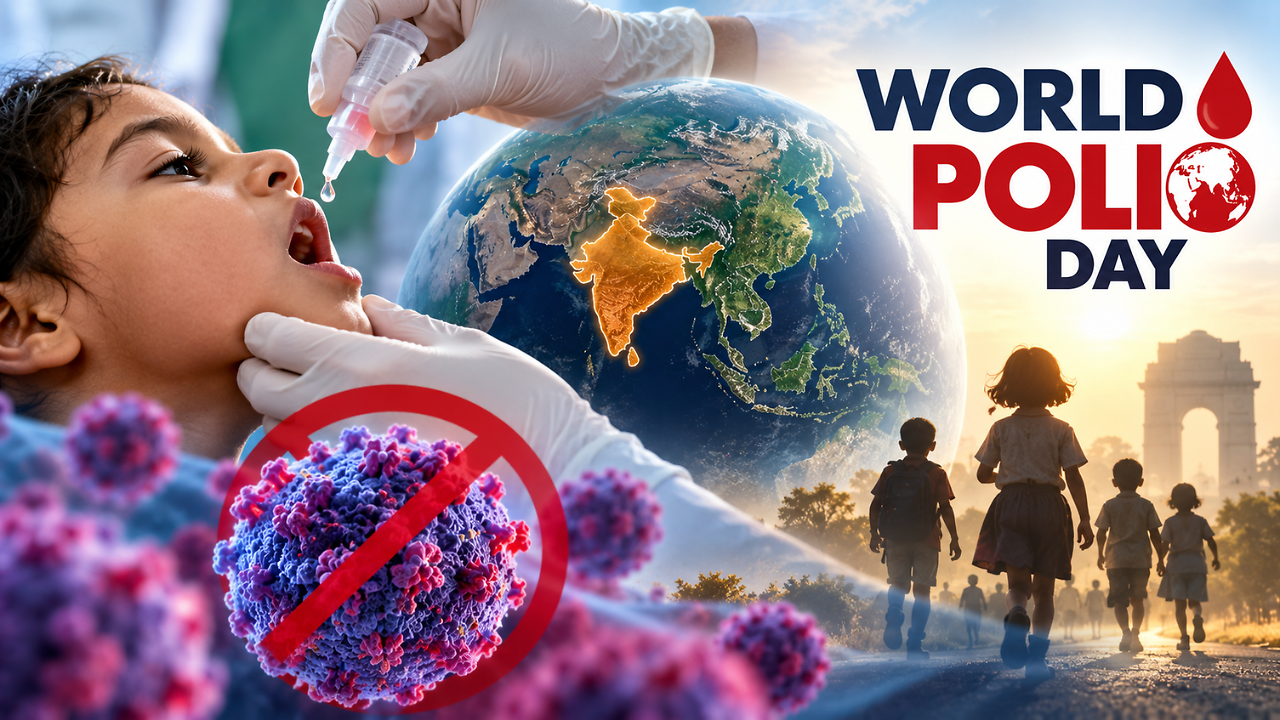
Elimination of wild poliovirus remains a landmark public health achievement for India, but the fight against the disease is not over. With poliovirus still circulating in neighbouring countries like Afghanistan and Pakistan, efforts like continued vaccination, strong surveillance and early detection remain essential to protect children from a debilitating disease that can cause irreversible life-long paralysis.The last case of wild poliovirus in India was reported on January 13, 2011. The World Health Organization (WHO) declared its South-East Asia Region, which includes India, polio-free on March 27, 2014. More than a decade later, maintaining that status still requires focused efforts to ensure every child is protected.The latest figures from the Global Polio Eradication Initiative show that Afghanistan had reported 42 cases of wild poliovirus in 2026 as of October 21, while Pakistan had reported six. The two countries remain the only places where wild poliovirus is endemic. These cases highlight why polio continues to be a global public health concern even in countries that have eradicated it.Gulam A. Vahanvaty, Chairman of the India National PolioPlus Committee at Rotary International and a former trustee of The Rotary Foundation told HealthandMe that elimination within a country does not mean the risk has disappeared.“Just because a country is free from polio doesn't mean it is immune to the disease,” he said.Also read: What Is Vaccine-Derived Polio And How Is It Triggering New Polio Cases In India?India Must Be Vigilant About Polio Vaccination EffortsPolio is a highly contagious infectious disease caused by poliovirus. It spreads through the faecal-oral route, when the virus passes from an infected person's stool into another person's mouth, often through contaminated hands, food or water. It can also spread through oral secretions. Although many infections cause no obvious symptoms, the virus can affect the nervous system and cause permanent paralysis.Dr Aparna G, Consultant in Paediatrics and Neonatology at Rainbow Children's Hospital, Sholinganallur, Chennai, explains that sustained immunisation is central to preventing the disease from returning.She said, “While India was declared polio-free on March 27, 2014, by the World Health Organization, the risk of the virus being reintroduced from neighbouring countries where it continues to circulate remains.”Vaccination builds immunity against poliovirus in children. India uses two types of polio vaccines - the inactivated polio vaccine (IPV), administered by injection, and the oral polio vaccine (OPV), given as drops.Routine immunisation helps ensure that every child receives their recommended vaccine doses. Dr Aparna explain, “Pulse polio immunization is a strategy of mass immunization by which one can eradicate poliomyelitis. Extra doses of OPV are given to all children below 5 years of age in an area at a time on a given day. Such pulses are repeated every year. The aim is to achieve 100% coverage.”These additional doses do not replace routine vaccination. Both approaches are important, especially for reaching children who may have missed doses or live in places where access to healthcare is poor.Also read: Polio Cases On The Rise Again, WHO Warns The World To A Growing ThreatSurveillance Is As Important As Immunisation Vaccination is only one part of maintaining India's polio-free status. Public health authorities must also be able to detect any possible circulation of the virus quickly.One important tool is surveillance for acute flaccid paralysis (AFP), which involves investigating cases of sudden-onset weakness or paralysis in children. Environmental surveillance, which includes testing sewage samples for poliovirus, can also help detect the virus even when no cases have been reported.Dr Aparna says, “Equally important is strong surveillance to identify suspected cases, monitor acute flaccid paralysis and detect any possible circulation of the virus at an early stage. Timely detection allows public health authorities to respond quickly and prevent further transmission. Active community-based surveillance should also be considered.”Early detection allows authorities to investigate threats, identify immunity gaps and organise vaccination drives where necessary. Despite progress, the circulation of wild poliovirus in Afghanistan and Pakistan even today means the global eradication effort remains unfinished. International cooperation, vaccination coverage and effective surveillance will continue to be essential until transmission is curbed everywhere.For India, the priority is to protect the progress achieved by ensuring that children do not miss routine immunisation, that vaccination campaigns reach vulnerable communities and that surveillance systems remain capable of identifying threats.