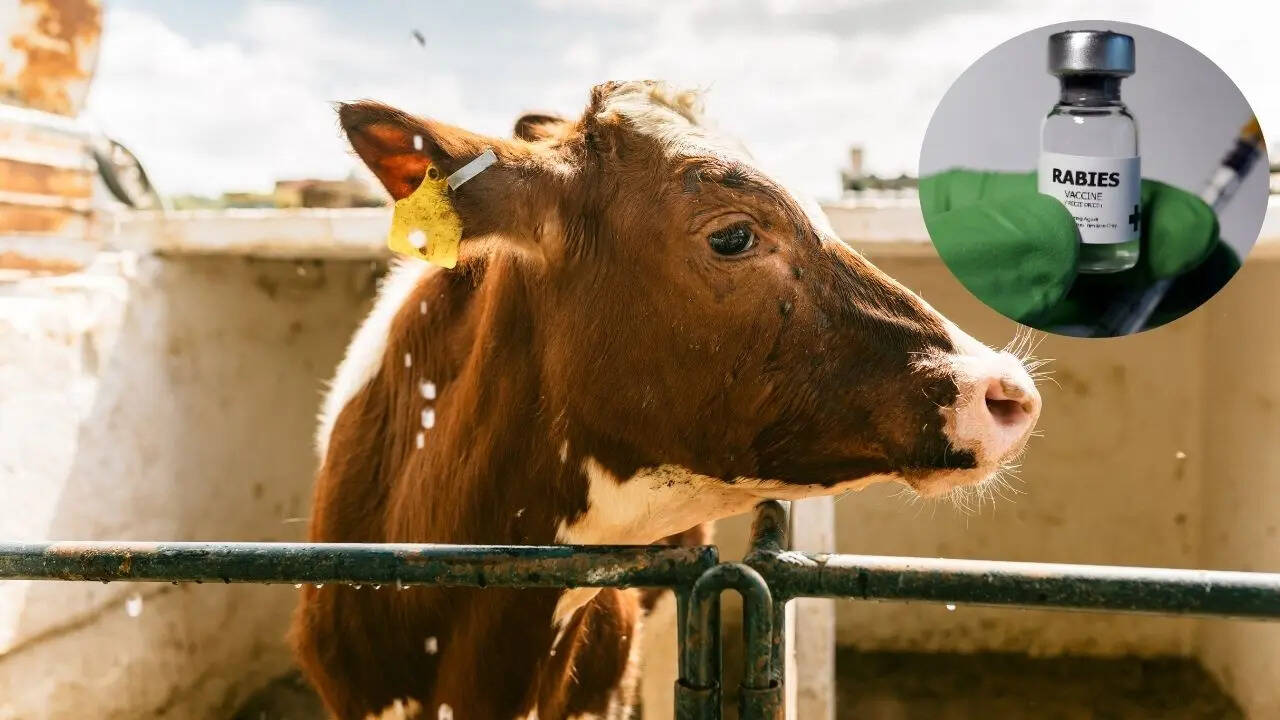
When most people think of rabies, dogs are the first animals that come to mind. However, for those unfamiliar, rabies can be transmitted by several other animals as well. Recently, a rare and alarming case was reported in Greater Noida, Uttar Pradesh, where a woman died after contracting rabies through cow’s milk. On the occasion of World Rabies Day, it’s important to understand which animals can carry and transmit this deadly virus.Greater Noida Woman Dies After Contracting Rabies from Cow: What You Need to KnowA woman in Greater Noida allegedly died from rabies days after contracting the disease through an infected cow. The rare case has raised questions about how rabies can be transmitted through milk and what precautions can prevent such risks.What is Rabies?Rabies is a vaccine-preventable, zoonotic viral disease transmitted from mammals to humans. It primarily affects the central nervous system and can infect dogs, cats, livestock, and wildlife.Can You Get Rabies from Milk?An ICAR report notes that milk from rabid animals, such as cows and buffaloes, may contain the rabies virus, posing a risk if consumed without boiling. The report classifies “person drinking unboiled milk” as Category I in terms of exposure risk.In the Greater Noida case, the cow reportedly contracted rabies after a stray dog bite. Despite the animal showing symptoms and being vaccinated by the family, the woman did not seek medical attention.Other exposures in this category include being licked by an infectious animal on an intact mucous membrane (mouth, nose, anus, genitalia, conjunctiva) or being bitten without blood.Why Bite Classification MattersThe ICAR report highlights that patient classification based on the nature of exposure is crucial. It guides decisions for post-exposure rabies vaccination and administration of immunoglobulin. Patients are classified into three categories: Category I, II, and III, with vaccination recommended for Category II and III exposures.“The rabies virus infects the brain. Once it reaches the brain and symptoms appear, the infection is virtually untreatable and almost always fatal within days,” the report states.Previous Cases And Official GuidanceAccording to the CDC, there have been reports of potential mass exposures to rabies from drinking unpasteurized milk.However, the National Centre for Disease Control clarified: “There is no laboratory or epidemiological evidence showing that rabies is transmitted via consumption of milk or milk products. Therefore, post-exposure prophylaxis (PEP) is not required for consuming milk or milk products from rabies-infected animals.”Can You Get Rabies From Other Animals?Rabies is caused by a virus found in the saliva of infected mammals. It is most commonly spread through bites, but transmission can also occur if saliva enters broken skin or mucous membranes such as the eyes, nose, or mouth. While any mammal can potentially carry rabies, the risk varies by region and species.High-Risk AnimalsDogs: The leading cause of human rabies worldwide, especially in developing countries, according to the NCDC.Bats: A major source of human rabies deaths in the Americas, Europe, and Australia, as their bites often go unnoticed.Raccoons, Foxes, and Skunks: Primary rabies carriers in the United States, as noted by the American Veterinary Medical Association.Other Wild Mammals: Coyotes, wolves, bobcats, and ferrets can also transmit the virus.Domestic Animals: Cats, cattle, horses, goats, sheep, and pigs may spread rabies if unvaccinated.Low-Risk AnimalsSmall Rodents: Mice, rats, squirrels, chipmunks, and other small rodents rarely transmit rabies to humans.The virus spreads mainly through bites. However, exposure can also occur if infectious saliva contacts open wounds or mucous membranes.How to Identify a Rabid AnimalRabid animals often show unusual behavior and physical signs because the virus attacks the brain and nervous system. While symptoms can vary depending on the species, the following are common red flags:1. Strange BehaviorWild animals losing their natural fear of humans, approaching people or populated areas.Nocturnal animals (like bats, raccoons, or foxes) being active during the day.Sudden aggression in normally calm pets.2. Signs of Aggression or AnxietyUnprovoked biting, snapping, or attacking other animals or humans.Restlessness, irritability, or agitation.3. Physical SymptomsExcessive drooling or foaming at the mouth.Difficulty swallowing.Weakness, paralysis, or staggering movements.Seizures or trembling.4. Signs of "Dumb Rabies" (paralytic form)Unusual quietness, lethargy, or sudden paralysis.Animals may appear unusually tame but unable to move properly.Disclaimer:Not all sick animals have rabies, and not all rabid animals show every symptom. If you see an animal behaving strangely or showing these signs, do not approach it. Report it immediately to local animal control or veterinary authorities.