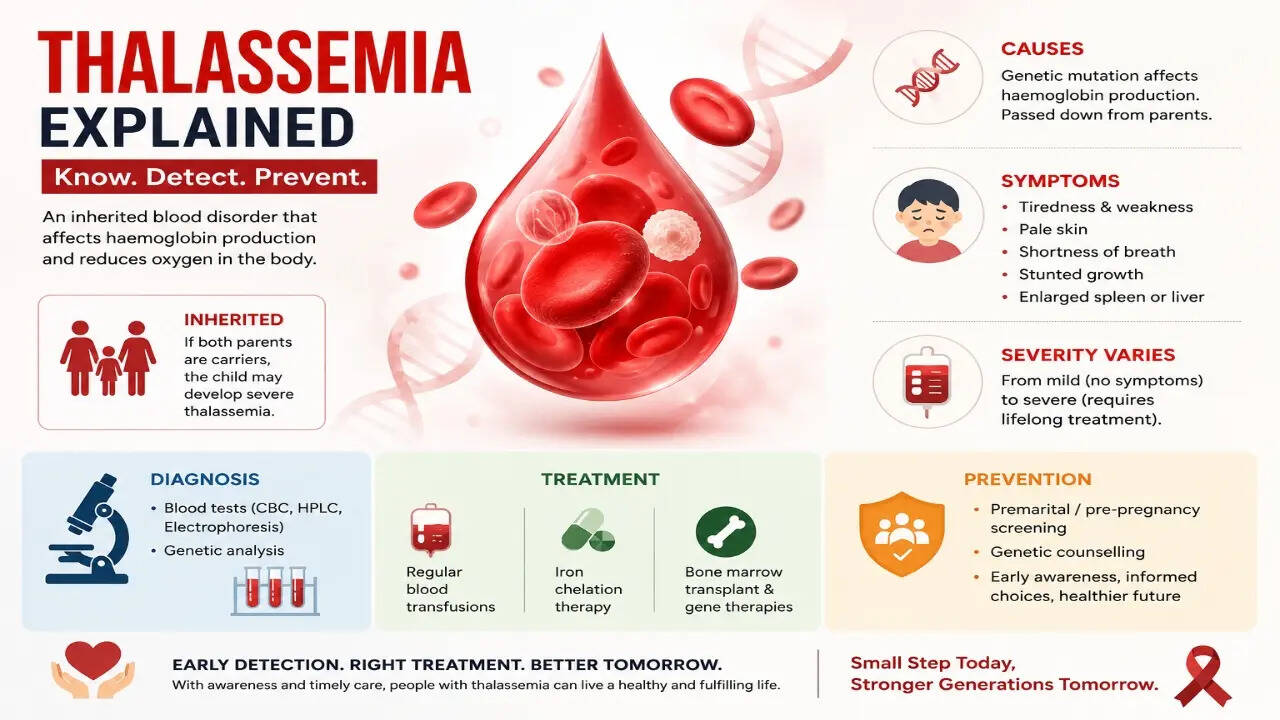
Thalassemia is a hereditary illness that hampers the production of haemoglobin, the component of red blood cells that carries oxygen throughout the body. If the production of haemoglobin is faulty or reduced, a shortage of healthy red blood cells occurs, resulting in anaemia and reduced oxygen supply to the organs."Thalassemia is, in fact, a collection of conditions ranging from a simple carrier state with no symptoms to a very severe disease requiring lifelong treatment. Mostly, thalassemias are classified into alpha and beta types, depending on which chain of the haemoglobin molecule is defective," said Dr Sneha Shinde, Consultant – Paediatric Haemato-Oncology, P.D. Hinduja Hospital and MRC Centre, Khar. As per National Health Mission figures, nearly 42 million people in India are beta thalassemia carriers, and about 10,000 to 15,000 infants with thalassemia major are born every year.What are the causes of thalassemia?This disease is inherited from parents through genes. If both parents are carriers, their child may develop a severe type of the disease.What are the symptoms of thalassemia?Symptoms largely depend on the severity of the illness and can include tiredness, weakness, pale complexion, difficulty breathing, stunted growth, enlarged spleen or liver, and changes in facial bones. Most severe cases become apparent during infancy or the toddler years.Dr Shashikant Apte, Director – Haematology, Sahyadri Super Speciality Hospital, Nagar Road, said, "Symptoms can vary from person to person. Some individuals may simply feel low on energy, while others may notice pale skin, shortness of breath, or delayed growth in children. Because these signs are common, they are often ignored or mistaken for general weakness. The majority of children with thalassemia major require blood transfusions every month for the rest of their lives to maintain haemoglobin levels above 9 gm%."Diagnosis and TreatmentDr Shinde explained that diagnosis comprises blood tests such as Complete Blood Count (CBC), HPLC haemoglobin electrophoresis, and genetic analyses. Mild cases may hardly need treatment, but more serious or transfusion-dependent thalassemia cases usually require regular blood transfusions along with iron chelation therapy to avoid iron overload. Besides bone marrow transplantation and newly discovered gene therapies, treatment advancements are gradually leading to better patient survival and improved quality of life.Dr Apte said, "The positive aspect is that thalassemia can be detected with a simple blood test. Early diagnosis helps in managing the condition more effectively. Therefore, it is advisable to undergo screening for thalassemia before marriage or before planning a pregnancy, so the level of risk can be assessed. If both parents are thalassemia minor carriers, DNA testing should be conducted to identify the genetic defect and enable prenatal diagnosis during the 12th week of pregnancy. If the child is diagnosed with thalassemia major, pregnancy termination may be considered between the 14th and 16th week, based on medical advice and individual circumstances."Prevention and AwarenessOf equal significance is the fact that thalassemia can be prevented through premarital or pre-pregnancy carrier detection and genetic counselling. Early awareness, proper diagnosis, and making informed reproductive choices are the key factors in reducing the burden of this lifelong blood disorder.Dr Shashikant Apte, Director – Haematology, Sahyadri Super Speciality Hospital, Nagar Road, spoke about the incidence of constant fatigue and answered FAQs about thalassemia major, while sharing tips on living with it. Why Constant Fatigue Should Not Be IgnoredBeing tired every day is typically attributed to a busy lifestyle; however, it can also have underlying medical reasons. Thalassemia is one of the conditions a person is born with that can cause fatigue due to a lack of oxygen. Thalassemia is a disorder in which the proper formation of haemoglobin — the protein in blood responsible for carrying oxygen — does not occur correctly. When haemoglobin is not formed properly, the body does not receive enough oxygen, leading to frequent tiredness and weakness.Understanding Thalassemia Major and Carrier StatusThalassemia major is an inherited disorder, meaning it is passed down from both parents to their child. Some individuals may simply be carriers without displaying any symptoms. During each pregnancy, there is a 25 per cent chance of passing the abnormal gene to the foetus, which may result in severe complications related to thalassemia major or other conditions associated with a lack of oxygen. Therefore, it is critical to know your family’s medical history and thalassemia minor (carrier) status.Living with ThalassemiaDr Apte went on to say that although thalassemia is a chronic condition, there are highly effective ways to manage it with proper medical guidance. Regular medical check-ups and prompt treatment can help individuals maintain good overall health and lead a normal life. Understanding thalassemia is the first step towards prevention and better management. Awareness allows individuals and families to make informed decisions and avoid complications before the condition becomes severe.