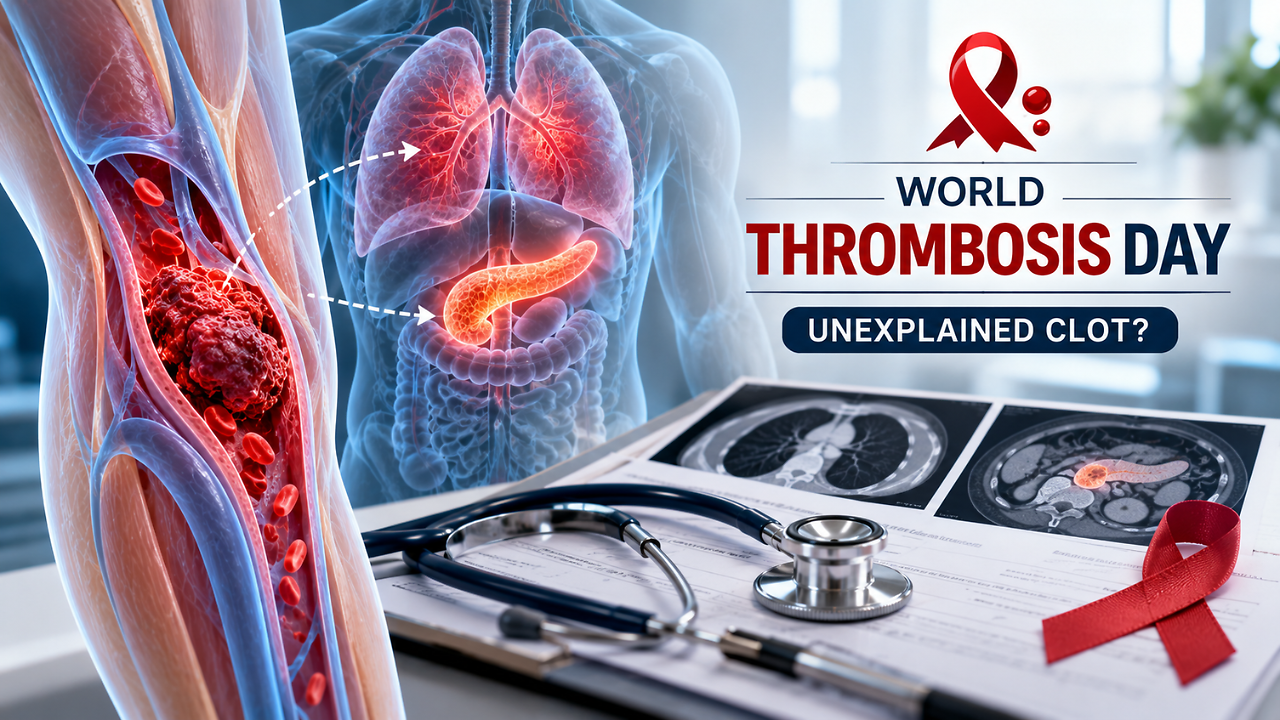
An unexplained blood clot could sometimes be the first warning sign of underlying cancer. In such cases, doctors investigate beyond the immediate causes of thrombosis. While blood clots are mostly caused after surgery, prolonged immobility and other risk factors, a clot that develops without a known trigger may need a closer look, especially in older adults or patients with other certain concerning symptoms. On World Thrombosis Day, observed on October 13, experts talk about the importance of recognising unusual clotting patterns and investigating underlying conditions without subjecting every patient to unnecessary tests. “Sometimes an unexplained blood clot is the first clinical sign of an underlying cancer,” Dr Rahul Bhargava, Principal Director and Chief of Hematology, Hemato Oncology and Bone Marrow Transplant at Fortis Memorial Research Institute (FMRI), Gurugram told HealthandMe. Can Cancer Trigger Blood Clots? Cancer can interfere with the body's normal clotting mechanisms. Dr Bhargava explained, “Some tumors are able to activate the body’s clotting system by releasing substances such as tissue factor, which stimulates the production of thrombin and fibrin, the proteins involved in clot formation.” He added that inflammation related to cancer and changes to blood vessels contribute to hypercoagulability, a condition in which the blood has an increased tendency to clot. In some patients, a tumour may also compress blood vessels, slowing blood flow. Cancer treatments, including surgery and certain chemotherapy drugs, can further increase the risk. Dr Narendra Agrawal, Senior Consultant and Unit Head of Haemato-Oncology at Rajiv Gandhi Cancer Institute and Research Centre, explained to us that the body's natural anticoagulants help maintain blood in a liquid state. When these protective mechanisms are deficient, whether due to congenital mutations or other reasons, the risk of clotting can increase. “When cancer is present in the body, it acts as a major driver of abnormal clotting within the vessels, making an unprovoked clot a critical clinical indicator that a malignancy may be forming,” he said. However, an unexplained clot does not necessarily mean a person has cancer. Doctors must evaluate the patient's symptoms, medical history and other risk factors before deciding whether investigations are warranted.Also read: Menopause Abruptly Shifts Bones, Liver And Blood Fats, Study Finds Key Warning Signs The absence of a clear trigger is a red flag that should not be ignored. Doctors typically look for common causes like recent surgery, trauma, prolonged immobility or long-distance travel before investigating other possibilities. Dr Bhargava said concern increases when thrombosis occurs without an identifiable cause, particularly in older adults, or when a clot recurs despite adequate treatment. Other warning signs include unexplained weight loss, chronic fatigue, poor appetite, bleeding and changes in bowel movements. “There is no particular symptom which will allow to distinguish cancer-associated thrombosis from others,” he cautioned, emphasising the need for a comprehensive clinical assessment rather than assuming that every unexplained clot indicates malignancy. Dr Agrawal also highlighted specific findings that may prompt further investigation. “We suspect an underlying cancer when we encounter specific red flags,” he said, referring to unprovoked clots in older patients and physical findings like lumps, non-healing ulcers, recurring abdominal pain or blood in the stool. Abnormal blood counts can provide additional clues. Changes in haemoglobin, white blood cell counts or platelet levels may lead doctors to investigate possible blood-related cancers or other underlying conditions.Also read: 'Humanity Can Still Act': Lancet Warns Of 17 Global Health Threats By 2100 Cancers Linked With Unexplained Blood ClotsCertain cancers come with a greater risk of venous thromboembolism, which includes deep vein thrombosis (DVT) and pulmonary embolism (PE). “Certain cancers that predispose one to venous thromboembolism include pancreatic, lung, stomach, colorectal and ovarian cancers. Others include some forms of blood cancers,” Dr Bhargava said. He explained that the risk varies according to the type and stage of cancer and the treatment involved. In some patients, an unprovoked clot may develop before the cancer itself is diagnosed.The location of the clot can also influence how symptoms appear. DVT commonly affects the deep veins of the legs, causing swelling, pain and tenderness. When a clot travels to the lungs and causes a pulmonary embolism, symptoms may include chest pain and breathlessness. Dr Agrawal said that clots in abdominal veins may cause abdominal pain, liver dysfunction, an enlarged spleen or intestinal bleeding. Clots affecting blood vessels in the brain or central nervous system may produce neurological symptoms, including paralysis. However, the location of a clot alone cannot prove if cancer is present.Also read: High BP in Pregnancy Linked to 42,000 Maternal Deaths, 500,000+ Stillbirths, Newborn Deaths: WHOWhat Investigations Are Recommended? Doctors generally begin with a detailed medical history, physical examination and blood tests. These may include a complete blood count and assessments of kidney and liver function. Further testing depends on the clinical findings. Imaging or endoscopy may be recommended when symptoms, examination findings or blood abnormalities raise suspicion of an underlying malignancy. Dr Bhargava cautioned against automatically subjecting every patient with unexplained thrombosis to extensive testing. “It is not always necessary to perform extensive imaging of the whole body or tumour marker testing in every patient with a clot that is unexplained and does not have any other worrying signs,” he said. The aim is to identify cancers that warrant further investigation while avoiding unnecessary radiation exposure and incidental findings. Dr Agrawal said doctors may use CT scans to look for hidden tumours, with MRI or PET scans considered for specific cancer evaluations. The extent of testing depends on factors such as the patient's age, clinical presentation, blood counts and physical examination findings. When a patient has both cancer and thrombosis, doctors must manage the clot while navigating cancer treatment and the patient's risk of bleeding. “Anticoagulants are usually administered to prevent the expansion of the existing clot and the occurrence of other clots,” Dr Bhargava said. The choice of medication, including a direct oral anticoagulant or low molecular weight heparin, depends on the patient's condition. Factors include kidney function, the possibility of gastrointestinal or urinary bleeding, drug interactions and the type of cancer treatment being administered. Dr Bhargava explained that doctors must also consider platelet counts, planned or recent surgery, chemotherapy-related complications and active bleeding. The duration of anticoagulation is individualised and may extend beyond three to six months while the cancer and its treatment continue to pose a risk.