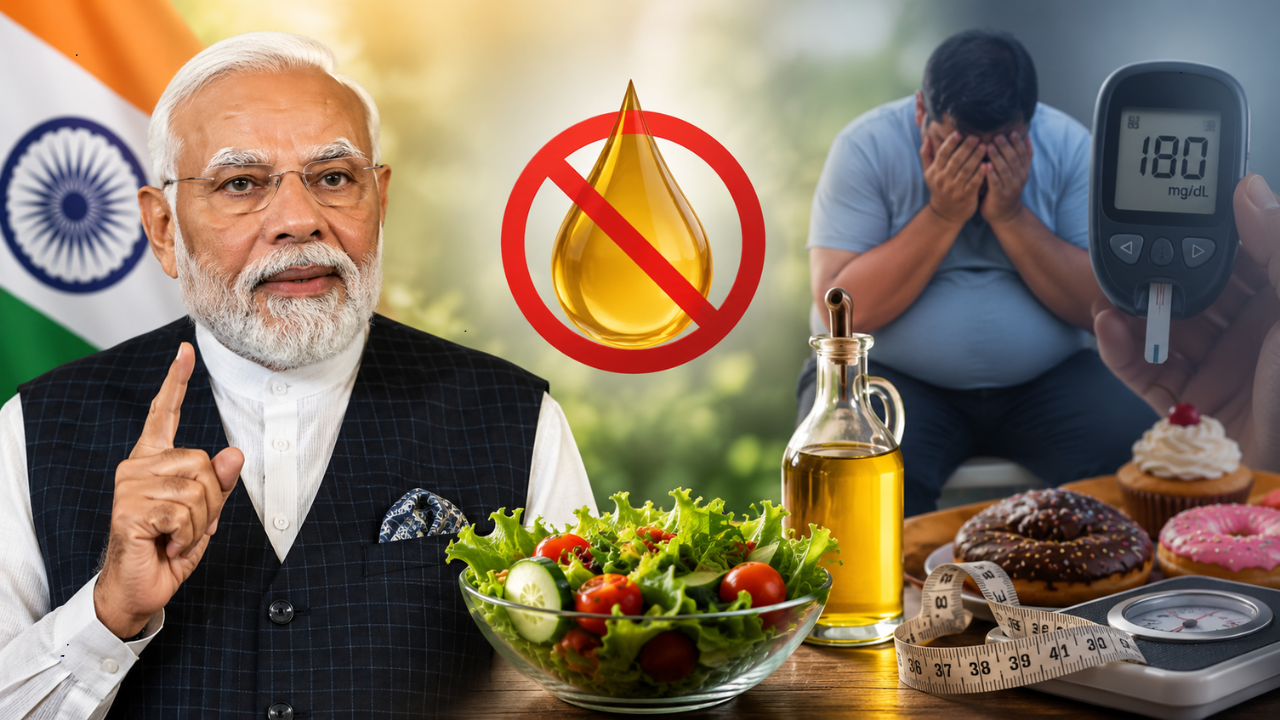
Prime Minister Narendra Modi has recently urged Indian households to reduce their cooking oil consumption by at least 10 per cent. While the appeal is part of a broader strategy to decrease India’s heavy reliance on imports, which currently accounts for 65 per cent of its edible oil needs, and comes amid the escalating Iran-US war, health experts said that this should become the norm in the country, burdened with chronic diseases. High consumption of edible oils, particularly those high in saturated and trans fats like palm oil, is strongly linked to a higher risk of non-communicable diseases (NCDs) such as cardiovascular diseases, obesity, type 2 diabetes, and certain cancers. These NCDs are also the leading cause of mortality in India, accounting for approximately 63–66 per cent of all deaths. “Prime Minister Narendra Modi’s appeal to reduce oil consumption is not just a temporary health message, but a lifestyle habit every Indian family should adopt permanently. Excessive oil intake has become one of the major contributors to rising obesity, diabetes, hypertension, and heart disease cases in India, especially among younger populations,” Dr. Arvind Dambalkar, Senior Consultant & Head – Interventional Cardiology, Sarvodaya Hospital, Faridabad, told HealthandMe. Dr. Madhu Nahar Roy, Director, Internal Medicine - Paras Health Udaipur, added that the message on reducing oil consumption is timely, especially as lifestyle diseases continue to rise across India.PM Modi’s Call To Reduce Oil IntakePM Modi first urged Indians to reduce cooking oil consumption by 10 per cent during his 79th Independence Day address, highlighting the need to tackle the rapidly rising burden of obesity and lifestyle diseases in India."In the coming years, obesity can become a major challenge for our country," the Prime Minister said. "If every family decides to reduce the use of cooking oil by 10 per cent, it will benefit the health of the nation." Also read: India Launches SEHAT Mission To Connect Farming With Nutrition And HealthAgain, in April, on World Health Day, he reiterated that adopting healthier eating habits, such as reducing oil usage, is “not just a personal decision but a social responsibility”. He called for immediate action to prevent such a scenario and proposed a simple change: "I want to take a promise from you today that we all should reduce our cooking oil by 10 per cent. This will be a big step towards reducing obesity." India's NCD BurdenIndia now ranks second globally in the number of overweight and obese children, according to the World Obesity Atlas.If current trends continue, nearly 56 million children in the country could be affected by 2040. As per the International Diabetes Federation’s Diabetes Atlas, India has 89.8 million adults diagnosed with diabetes, with projections suggesting that number will grow to a massive 156.7 million in 2050.Further, in India, more than 1 in 4 people have hypertension, and cumulatively, more than 90 per cent of adults with hypertension are either undiagnosed, untreated, or treated but live with uncontrolled hypertension. At the same time, cardiovascular disease (CVD) is the leading cause of mortality in India, accounting for nearly 28 per cent of all deaths and 45 per cent of NCD deaths. Read More: Hantavirus: How India’s Virus Surveillance System Is Preparing To Track Rat-Borne Virus EarlyThe Ideal Amount of Oil And Mode of Cooking Dr. Arvind noted that fried and processed foods increase unhealthy fat accumulation, disturb cholesterol levels, and put long-term stress on the heart. “A family of four should limit edible oil consumption to around 3 to 4 liters per month, as recommended by health experts. Choosing balanced, home-cooked meals with controlled oil can significantly improve overall Cardiac Health,” he said. The expert noted that refined oils are not inherently harmful, but excessive consumption and repeated reheating can increase unhealthy fat intake and inflammation. “For Indian cooking, mustard oil is beneficial for traditional high-heat cooking due to its good fatty acid profile, olive oil works well for salads and light sautéing, while sunflower oil should be used in moderation and rotated with other oils,” Dr. Madhu told HealthandMe.The expert also stated that adopting healthier cooking methods, such as air frying, steaming, roasting, and grilling, can help reduce excess calorie and fat consumption significantly.