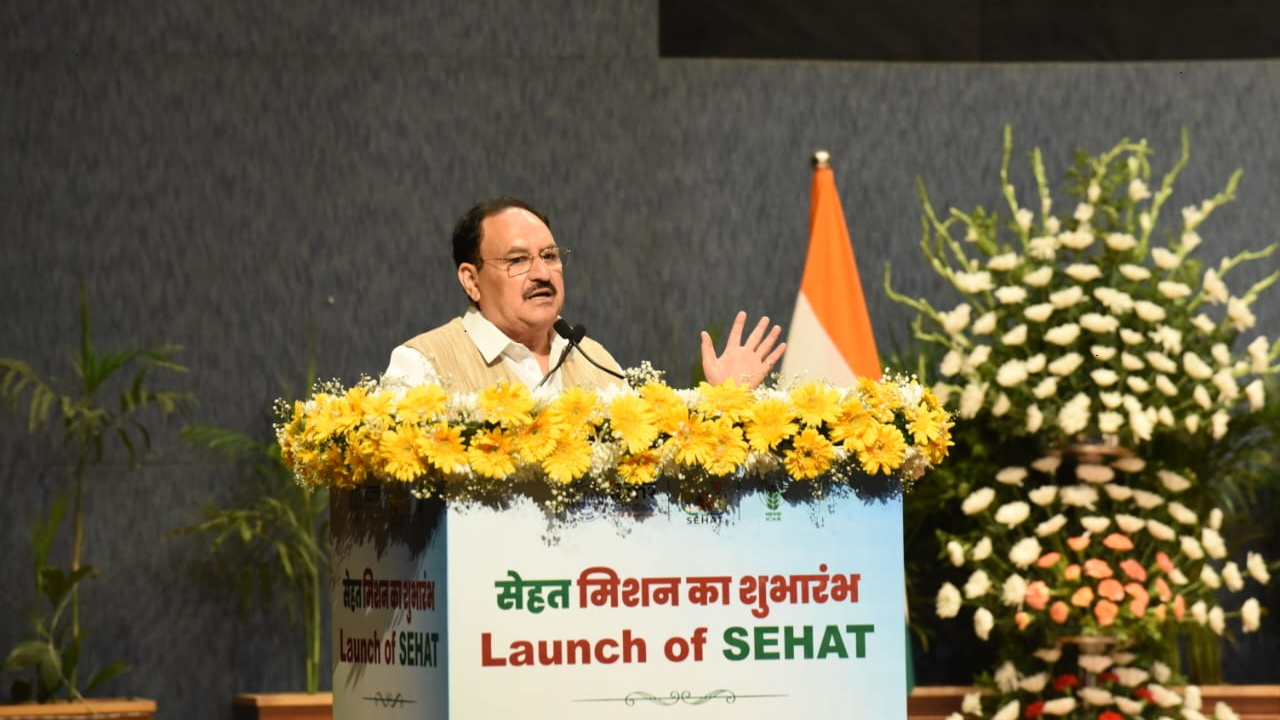
In a major national initiative connecting agriculture, nutrition, and public health, India today launched the ‘SEHAT Mission’ — Science Excellence for Health through Agricultural Transformation. Launched in the national capital Delhi, is a joint national mission of the Indian Council of Agricultural Research (ICAR) and the Indian Council of Medical Research (ICMR) that aims to link agriculture with better nutrition, disease prevention, farmer welfare, and science-based policymaking. The mission aims to build a framework for ‘Healthy Food, Healthy Farms and a Healthy India’. “The ‘SEHAT Mission’ represents a major transformation in India’s policy-making approach, where the government is no longer focusing only on treatment but also on prevention, early detection and continuous care,” said Union Health Minister JP Nadda at the launch. He said the initiative demonstrates that India is now moving ahead with a proactive rather than reactive healthcare approach. Nadda noted that India must now develop indigenous solutions rooted in its own scientific research, institutional experience, and evidence-based practices. “Low-cost, high-quality and scientifically validated solutions will be the most useful for the country, and ICMR is fully committed to working in this direction,” Nadda said.How the SEHAT Mission Will Transform Food, Farming and HealthcareUnder the mission, the ICAR and ICMR will collaborate and create a scientific chain connecting farms, food plates, and public health. The mission will play a significant role in addressing both malnutrition and the rapidly rising burden of non-communicable diseases such as diabetes, hypertension, and cancer. It will focus on:bio-fortified crops, nutrient-rich food products, integrated farming systems, health and safety measures for farmers, dietary solutions for lifestyle diseases, the ‘One Health’ approach. Also read: Hantavirus: How India’s Virus Surveillance System Is Preparing To Track Rat-Borne Virus Early The initiative will work towards improving the health and safety of farmers and agricultural laborers to reduce risk from exposure to pesticides, imbalanced use of chemicals, and hazardous conditions faced during agricultural work. It also seeks to establish stronger institutional coordination between agriculture and medical research systems so that food production, public nutrition, and disease prevention can be addressed through integrated planning and scientific collaboration. Officials associated with the program said the initiative is expected to create a scientific framework under which agriculture policy, nutrition strategies, and healthcare systems can work together in a coordinated manner. The launch of the mission comes at a time when India is increasingly facing dual challenges of nutritional deficiencies on one hand and rising lifestyle-related diseases on the other. Read More: Can Thalassemia Affect Brain Health? Experts Explain The initiative is expected to lead to improvements in nutritional quality, reduction in hidden hunger and micronutrient deficiencies, prevention of non-communicable diseases, better health and safety for farmers, development of sustainable food systems stronger science-based policy support.The mission also encourages long-term research on the relationship between food systems, nutrition patterns, and disease trends in India while promoting sustainable agricultural practices that contribute to better public health outcomes.