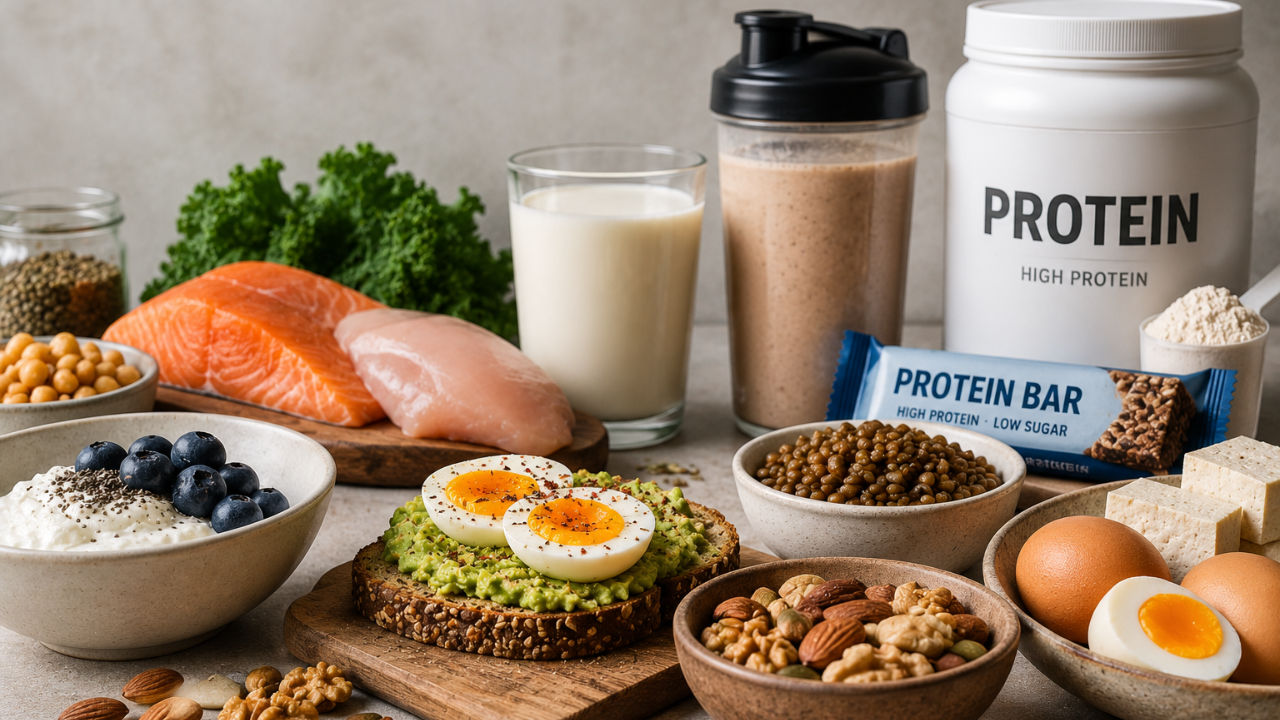
Protein isn't just having a moment; it has increasingly become the focus of our diets. To address India's alarming metabolic health crisis, nutritionists and health experts continue to emphasise the importance of this macronutrient. Not just health experts, packaged foods and beverage manufacturers, too, are riding this momentum by attempting to bridge the protein gap in Indian diets. Proudly boasting 'high-protein' labels, products like breads, coffee, cookies, chips, ice cream, and yoghurt are not an uncommon sight on supermarket shelves. But does adding protein to food and drink automatically make it healthy? Amid ongoing National Nutrition Week, we decode the actual nutritional value of trendy protein-fortified foods with the help of leading experts. The "20g" Protein Trap The protein label trap on almost every packaged food may make us believe that it's a healthy option. But according to experts, it's a marketing strategy to lure eyeballs and make more consumers buy the product. Dr. Pawan Rawal, Senior Director, Gastrosciences, Medanta Hospital, Gurugram, told HealthandMe, "Only more protein does not automatically make food healthy. Protein is part of it. We require protein, but we require other micronutrients and macronutrients as well, like carbs and fats. A protein product may contain 20 grams per 100 grams, but then it can be higher in sugar and sodium and fat, and calories. So, we have to judge the food as whole." Judging a food product solely on the basis of one nutrient can also have adverse effects. An expert explains what happens when we blindly follow the "20 grams" trap and overload protein without judging other ingredients. Ms Sonal Chandalia, Consultant - Clinical Nutrition, Jaslok Hospital, told us, "It is harmful if one blindly follows and consumes a product only on the basis of it being 20 gm protein as they tend to overlook how digestible it is, the type of sugars and fat in it and the sodium and potassium content of the product. This may in turn cause damage to the kidneys as it cannot handle excretion of such a high load of protein and other unhealthy ingredients."Also read: Diabetes Diet: Build A Balanced Plate, Not Just Cut Carbs, Doctors Explain More Protein ≠ Automatically Healthier Experts disregard the myth that the more protein in a food product, the better it is. They say that ignoring the quantity of other ingredients will not fulfil our dietary goals. Ms Sumaiya A., Clinical Nutritionist, Fortis Hospital, Kalyan, explained to us, "In the protein race, we may ignore fiber, vitamins, minerals and healthy fats which can affect digestion, heart health and overall nutrition." They say it is also not about the quantity of the nutrient that lends it the level of the health quotient. It is also about the quality of the protein that decides how healthy food is. Ms Chandalia said, "For example, most cheese and whole milk and red meat. It is not necessary that if the protein content is high as in these foods, it is healthier, as they contain a high amount of saturated fat which is avoidable for heart health." What Else To Pay Attention To On The Nutrition Label? This is where the fine print should be read carefully. Experts say consumers should look beyond the bold “20g protein” claim and examine the complete nutrition label. Sugar, sodium, saturated fat, fibre, calories, and the ingredient list can tell you far more about whether a product is healthy. Dr. Rawal explained, "When we evaluate a protein-rich food, we have to look at the overall content list, look for amount of sugar it has, amount of sodium or salt, amount of saturated fats, total fiber content rather than only looking the amount of gram proteins per 100 gram of the product. We also have to look at how much the product is actually food versus additives and processing."Also read: JD Vance Says Robert Kennedy Jr.’s Sauerkraut, Protein Advice Helped Him Lose Weight Has Protein Become A Health Halo? As the demand for protein grows, manufacturers are finding new ways to add the claim to foods that are usually associated with indulgence. From cookies and chips to ice cream, coffee and desserts, “high-protein” is no longer confined to protein powders and sports nutrition. Experts caution against allowing the claim to override the nature of the food itself. Ms Chandalia warned, "Market is flooded with 'high-protein healthy foods.' These foods tend to be concentrated sources of protein like so-called protein bars, creatine-based protein supplements, soya-based foods, blends of plants and animal protein supplements. All these are touted as healthy with a virtue of being high protein foods." She added, "None of these qualify as healthy unless the safety of the quantity and quality of protein is evaluated and total intake prescribed correctly. Infact, some may have hidden ingredients which are harmful or calorie-dense or consumed in extremely high quantity creating a load on the kidney." Protein-Fortified vs Ultra-Processed Experts also point out that protein-fortified products can be packed with protein isolates or concentrates alongside ingredients like sweeteners, flavourings, emulsifiers, and other additives. This doesn't mean every protein-fortified product is inherently unhealthy, but it does mean consumers need to consider the product as a whole. Ms Sumaiya said, "Some are essentially ultra-processed foods with protein added. Some protein bars, cookies, cereals, shakes and flavored products can contain high sugar, unhealthy fats, and lots of additives." Experts say that the presence of added protein should not become a distraction from how the food is made, what other ingredients it contains, and how frequently it is being consumed. Ms Chandalia explained, " Certain high-protein foods may likely be ultra-processed foods and comprise concentrated sources of protein. The recent advent of high- protein milk products seemingly are processed to make them so. The processing of ultra-filtration etc. to improve the yield of protein may create this type of a product. The need to apply the refining process increases when high protein is desired."Also read: The Longevity Plate: What Should We Eat Today To Stay Strong Tomorrow? Not All Protein Is Equal Even when two foods contain the same amount of protein, they aren't necessarily nutritionally interchangeable. Protein quality usually refers to factors like the amino acid profile and how efficiently the body can digest and utilise that protein. Ms Chandalia explained, "Protein quality indicates the amino acid composition present in the food. It also refers to the bioavailability of the food, which is how well the protein is metabolised, absorbed, and digested by the body. For example, usually the quality of animal protein is considered superior to plant protein, as the former is more available to the body cells for its primary functions." But experts stress that protein quality is only one factor. The food's fibre, vitamins, minerals, fats and overall nutritional profile also make a difference when deciding what belongs on your plate. Dr. Rawal said, "If you talk about milk, egg, dal, soya, they have good proteins. But the profile of their proteins, the amino acids, the digestibility and the kind of accompanying nutrients differ. So, if you talk about eggs, which is a very high-quality protein, so this is taken alone and dal, etc., and any plant proteins, they have to be complemented with other sources." Can Indians Get Enough Protein From Food? For most healthy people, the question may not be whether they need another protein-fortified product, but whether their regular diet is providing enough protein in the first place. Indian diets already contain a wide range of protein-rich foods, including dal, rajma, chana, soy, milk, curd, paneer, eggs, fish, chicken, meat, nuts and seeds. Dr Vimal J. Pahuja, Internal Medicine & Metabolic Physician, LH Hiranandani Hospital told us, "For most people, protein should primarily come from minimally processed foods such as dal, chana, rajma, milk, curd, paneer, eggs, fish, poultry, soy, tofu, nuts and seeds. Traditional Indian combinations such as dal-rice, roti-dal and idli-sambar also provide complementary amino acids." Experts can help establish whether a reasonably balanced Indian diet can meet the protein requirements of an average healthy adult without relying on fortified packaged foods or supplements. Dr Rawal added, "Most healthy adults can meet their protein requirements through a well-balanced diet. If a person is non-vegetarian then eggs, fish or chicken especially, white meat is quite beneficial as they are high-quality proteins."Also read: Can Regular Consumption of Junk and Processed Food Affect Fertility? The Most Overhyped Protein Products There are a few overhyped high-protein foods that are actually unhealthy and unfit to be consumed every day. The experts also say that not every individual needs to start consuming protein supplements as they may already be getting enough from their diets. Ms Chandalia explained, "The products that are hyped are protein bars and protein supplements. The population is sarcopenic (poor muscle mass) overall, and the need to get fitter by only building muscle is a narrative that has taken over the health arena. It is hyped as the protein bars can actually be made at home-level as laddoos instead and incorporated into the plan." Explaining why these products are overhyped and should be avoided, Dr Rawal said, "The kind of protein cookies and protein bars are quite overhyped. These are usually prepared from ultra-processed foods. They contain sweeteners, fats and sodium and to make them tasty." Another expert opined, calling out the same products. Ms Sumaiya said, "Protein cookies, bars can be overhyped as they are basically ultra-processed snacks marketed as healthy." How To Read A Protein Product Label? Dr. Pahuja recommended a consumer checklist Before buying high-protein foods. He said: Check protein per actual serving, not just per 100 g.Look at added sugar — especially in shakes, cereals and bars.Check sodium, particularly in savoury snacks and processed foods.Look at saturated fat and total calories.Check fibre, especially in snack products.Read the ingredient list and prefer simpler, recognisable ingredients.Ask: “Could I get similar protein from a less processed food?”Dr. Pahuja said, "My simplest advice isturn the packet around. Protein does not cancel out an unhealthy food matrix. The goal is not to chase the highest protein number, but to consume adequate, good-quality protein within an overall balanced, minimally processed and metabolically healthy diet."