
- Health Conditions A-Z
- Health & Wellness
- Nutrition
- Fitness
- Health News
- Ayurveda
- Videos
- Medicine A-Z
- Parenting
Want To Slow Ageing? Cutting Back On This One Food Could Help You Live Longer

Credits: Canva
It is widely accepted that what we eat shapes how we age, but new research suggests sugar may be one of the strongest drivers of faster ageing at the cellular level.
Using an advanced method known as the “epigenetic clock,” researchers uncovered a clear link between added sugar intake and the speed at which cells begin to show signs of ageing. The findings point to sugar as a key factor in biological ageing, even among people who otherwise eat well.
What Is The Epigenetic Clock?
The “epigenetic clock” is not a futuristic idea. It is a scientific tool that examines chemical changes in DNA to estimate biological age, which reflects the condition of cells rather than the number of years a person has lived.
For this study, scientists followed 342 women in midlife. They analysed dietary patterns and measured biological age using DNA samples collected from saliva, allowing them to compare what participants ate with how quickly their cells appeared to age.
Can Sugar Speed Up Cellular Aging?
The results showed a consistent pattern. Every gram of added sugar consumed was linked to a measurable increase in biological ageing. This effect appeared even in participants who followed generally healthy diets, suggesting sugar has an independent impact on cellular health. In contrast, diets lower in added sugar and richer in nutrients were associated with slower ageing at the cellular level.
Sugar And Longevity
Researchers observed that participants who consumed fewer added sugars tended to have a younger biological age. The strongest protective effects were seen in those whose diets focused on whole foods, fibre, and essential vitamins and minerals. These findings suggest that small dietary changes could influence long-term health and longevity.
Cutting Back On This One Food Could Help You Live Longer
- Cut the sugar, turn back time: Reducing added sugar intake by just 10 grams a day, roughly the amount found in a typical granola bar, was linked to a potential reversal of biological ageing by up to 2.4 months.
- Nutrient-rich diets for the win: Diets high in vitamins A, C, and E, along with magnesium and fibre, were strongly associated with a younger biological age.
- Mediterranean magic: Mediterranean-style diets, known for their anti-inflammatory and antioxidant properties, showed the strongest link to slower cellular ageing.
Excess Sugar Harms Cellular Health
High sugar intake contributes to chronic inflammation, oxidative stress, and damage to DNA, all of which place strain on the body’s cells. While the occasional sweet treat is unlikely to cause harm, regularly consuming large amounts of sugar can gradually interfere with the body’s natural repair systems.
Over time, this damage may accelerate ageing and increase the risk of chronic disease.
Simple Sugar Swaps To Try
Cutting back on added sugar does not mean giving up flavour. Simple changes can make a difference:
- Instead of candy: Choose dark chocolate with at least 70 per cent cacao, which offers antioxidants alongside sweetness.
- For a sweet breakfast: Opt for oatmeal topped with fresh berries or a protein-rich smoothie rather than highly sweetened cereals.
- Happy drinking: Replace sugary soft drinks or energy drinks with sparkling water or lower-sugar soda alternatives.
This research reinforces the idea that everyday food choices have a direct impact on cellular health. By prioritising whole foods and reducing added sugars, people may not only support better overall health but also slow the biological ageing process itself.
Small, consistent changes to diet could help protect cells over time and support a longer, healthier life.
We Fact Checked The Ayurveda Claim Of Papaya Lowering Your Cholesterol, Details Inside
Credits: Canva
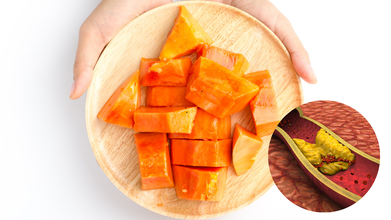
A simple fruit has suddenly become a health headline. After Ayurveda expert Acharya Balkrishna suggested that eating papaya daily may help control cholesterol, many people began seeing it as an easy natural fix for rising lipid levels.
It sounds comforting. No medicines, no complicated diets, just a bowl of fruit. But does science actually support the claim? Let’s break it down.
Read: Fact Check: Does TikTok's 'Chlorophyll & Collagen' Supplement Really Work?
We Asked The Expert
Health and Me spoke exclusively to registered dietitian Ginni Kalra, Head Dietetics at Aakash Healthcare, who clarifies the viral claim early on:
“Papaya is a fiber-rich fruit, and the soluble fiber and antioxidants present in it may help reduce bad cholesterol (LDL). However, it would not be correct to say that eating papaya alone can completely control cholesterol levels.”
She stresses that cholesterol management always depends on the overall diet and lifestyle. Apples, guava, pears, oats, green leafy vegetables, carrots, bottle gourd, beans, nuts, and seeds also play an important role along with exercise and weight control.
“Individuals with very high cholesterol levels or a higher risk of heart disease should not rely only on fruits. In such cases, medications may also be required under a doctor’s supervision,” she adds.
So the claim already moves from cure to support. Now let’s understand why papaya still gets attention.
Read: Fact Check: Doctors Bust Common Myths Around Epilepsy and Explain Why Early Treatment Matters
Why Papaya Is Getting Attention
Papaya has long been associated with digestion in Indian households. It is commonly recommended for constipation, acidity, and gut health. Now the focus has shifted toward heart health.
Cholesterol problems are rising rapidly, especially in urban lifestyles filled with sedentary work, processed foods, and stress. Naturally, people are drawn toward simple dietary solutions.
Papaya contains fiber, vitamin C, and antioxidants. These nutrients are known to support cardiovascular health. But the key question is: does that mean it can control cholesterol on its own?
The Fiber Connection
Fiber plays an important role in cholesterol management.
Soluble fiber binds with cholesterol particles in the digestive tract and helps remove them from the body before they enter circulation. Papaya contains dietary fiber, which supports digestion and may reduce LDL, commonly called “bad cholesterol”.
Read: Fact Check: Does Ja Morant Have Lung Cancer?
In simple terms, fiber acts like a natural cleaning system. It reduces absorption of unhealthy fats and improves gut function. This is one reason many nutrition experts encourage including fruits regularly in meals.
However, the effect is gradual and supportive, not curative.
Antioxidants And Heart Protection
Papaya is rich in vitamin C and antioxidants. These compounds help reduce inflammation and oxidative stress, both of which contribute to plaque formation in arteries.
Healthier blood vessels make it harder for cholesterol to deposit along artery walls. This lowers long-term risk of heart disease.
But antioxidants work as protectors, not erasers. They help prevent damage rather than reverse high cholesterol dramatically.
Key Takeaway
Papaya is beneficial, but it is not a magic cure. Cholesterol issues develop due to long-term lifestyle patterns including diet quality, physical inactivity, smoking, poor sleep, and stress.
Adding a small bowl of papaya daily can support heart health. But it works best as part of a broader routine: more fiber-rich foods, less fried food, regular exercise, and medical treatment when needed.
People with latex allergy, certain medical conditions, or pregnancy concerns should consult a doctor before consuming large amounts, especially unripe papaya.
Note: Please consult your nutritionist or a registered dietitian before making any changes to your doubts. Health and Me does not endorse this as a substitute to medically prescribed medicines for cholesterol or any other condition.
Over 70% Baby Foods In US Contain High Salt, Sugar And Additives
Credits: Canva
More than 70 percent of infant and toddler food products, including drinks and snacks, sold in the United States are ultra-processed and also contain additives that are associated with several health problems, according to a new study.
The study comes as the Donald Trump-led US government recently released updated dietary guidelines for Americans. For the first time, the recommendations urge citizens to avoid highly processed foods and also suggest limiting added sugars and refined carbohydrates.
The February 2026 study published in the peer-reviewed journal Nutrients analyzed 651 food products sold by the top 10 largest US grocery stores for children aged 6 months to 36 months.
The results showed that a whopping 71 percent of products were ultra-processed foods (UPFs) -- containing higher mean levels of total sugar, added sugar, sodium, and energy density than non-UPF products.
The food products also contained significantly harmful additives. Flavor enhancers (36 percent) were the most common additive, followed by thickeners (29 percent), emulsifiers (19 percent), and colors (19 percent).
The study showed that all snack-size packaged products (94 percent) were ultra-processed, followed by full-size packages (86 percent) and pouches (73 percent).
"We’re seeing a growing body of evidence that certain additives may harm health. With emulsifiers, thickeners, and stabilizers potentially altering gut function, and synthetic colors affecting behavioral outcomes in children, the high use of cosmetic additives found in US baby foods is particularly concerning,” said Dr. Elizabeth Dunford, Adjunct Assistant Professor, Department of Nutrition at the University of North Carolina at Chapel Hill, US.
Notably, the sugar content was greatest for snack and finger foods, with the amount of sugar and added sugars twice that of their non-UPF counterparts. Similarly, the sodium content was also consistently higher among UPFs than non-UPFs.
Almost all snack-size packaged products (94 percent) were ultra-processed, followed by full-size packages (86 percent) and pouches (73 percent).
The researchers called for improving labeling and regulatory standards for identifying UPF ingredients and additives to ensure the availability of appropriate and healthy products targeting the youngest consumers.
Why UPFs Are Harmful
In recent years, there has been a huge increase in the availability and variety of commercial complementary foods on the market in the US, as well as in India.
Research has shown a corresponding increase in several noncommunicable diseases.
Studies have established health risks of regular consumption of UPFs for adults and young children, including type 2 diabetes, obesity, hypertension, and heart disease. In adults, UPF consumption is also linked with irritable bowel syndrome, depression, and premature death.
UPF And Rising NCD Burden In India
India is facing a significant rise in non-communicable diseases (NCDs) such as type 2 diabetes, obesity, hypertension, cancers, chronic respiratory diseases, and heart disease, among others.
The Economic Survey, recently tabled in the Parliament by Union Finance Minister Nirmala Sitharaman, flagged the concerning trend, which it attributed to unhealthy diets, lifestyle changes, including sedentary lifestyles, increased consumption of ultra-processed foods (UPFs), and environmental factors.
“India is one of the fastest-growing markets for UPF sales. It grew by more than 150 per cent from 2009 to 2023. Retail sales of UPFs in India surged from $0.9 billion in 2006 to nearly $38 billion in 2019, a 40-fold rise. It is during the same period that obesity has nearly doubled in both men and women,” it said.
“The rising use of UPFs imposes a substantial economic cost through higher healthcare spending, lost productivity, and long-term fiscal strain,” it added.
Fact Check: Does TikTok's 'Chlorophyll & Collagen' Supplement Really Work?
Credits: Canva
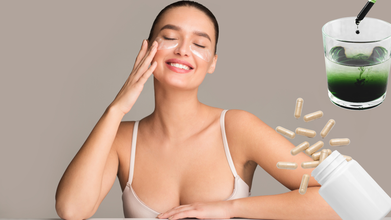
Thanks to social media, health tips are now everywhere. They seem easy to follow, include almost nothing but home ingredients, but are they really beneficial and safe to use? Health and Me ran a fact check on TikTok's trending chlorophyl and collagen supplements. Two of the biggest players in the wellness industry.
TikTok videos show celebrities and influencers sipping the green shots of chlorophyll with blended collagen into coffee. This is what is packaged as a shortcut to health and beauty.
Fact Check: The Formula To Stay Young - Does It Really Work?
Chlorophyll is the pigment found in plants that makes them green. In biology lab, it's recalled as fueling photosynthesis—to capture light energy to create glucose and oxygen. In plants, it's vital. In humans, things aren't quite as simple.
Wellness brands and influencers, from Gwyneth Paltrow's Goop to Kourtney Kardashian Barker's Poosh, have made drinking chlorophyll water a daily habit. Marketing promises range from detoxification to more radiant skin and even "oxygenating the blood." The concept sounds alluring—except that it can't be done biologically.
As physician and researcher Ben Goldacre points out, photosynthesis requires sunlight, water, and carbon dioxide. Our gut and bloodstream aren’t flooded with sunlight, so chlorophyll simply can’t perform its plant-like function inside humans. Drinking it won’t generate oxygen in your body.
Fact Check: What Is The TikTok Trend?
The type most commonly employed in supplements is chlorophyllin, a semi-synthetic, water-soluble derivative of chlorophyll. Several small, older studies indicate that it might decrease odors in wounds or stool, possibly by breaking down some compounds or stopping bacteria from growing. There's weak evidence that it might act as an antioxidant, roaming free radicals causing cell destruction, but studies are few and far from convincing.
More promising are investigations into its application in wound healing. Chlorophyll dressings have been studied for their potential to speed up healing and deodorize infected wounds. But consuming it for beauty or detoxing purposes is something else—clinical evidence for those uses is scant.
Fact Check: Is This Trend Safe?
Potential Risks and Side Effects of Chlorophyll
Most individuals are able to tolerate chlorophyll, but it is not risk-free. Side effects reported include diarrhea, cramps in the stomach, and colored urine, stool, or even tongue. Mild itching or burning with topical use can be produced in occasional instances. The U.S. National Library of Medicine states that chlorophyll is non-poisonous in normal doses, but in high doses it can produce gastrointestinal upset.
What this actually translates to is that while chlorophyll won't hurt you in moderation, it's also unlikely to bring the extreme makeovers promised on TikTok.
Collagen
Collagen differs from chlorophyll in that it's something that humans naturally create. It's the body's most common protein and what builds scaffolding for skin, bones, cartilage, blood vessels, and connective tissue. It's responsible for skin elasticity and flexibility of joints.
Collagen production inherently decreases with age, resulting in wrinkles, stiff joints, and less resilient connective tissue. This loss has propelled a billion-dollar collagen market, with powders, pills, and creams touted as a means to "replenish" what the body is losing.
What Science Says About Collagen Supplements
Collagen supplementation research is further advanced than chlorophyll's, although it's not yet conclusive. Some research indicates oral collagen peptides can moderately enhance skin hydration, elasticity, and fine lines. There's also support that they might be good for joint health, mitigate exercise-induced joint pain, and increase bone density in the elderly.
But science doesn't go so far as to make miracle promises. Collagen won't cause weight loss, detox the body, or stop cardiovascular disease, no matter what ads might promise.
Topical Collagen
Collagen creams and serums inundate the beauty market, but it's hard to find one that works. Collagen molecules are too big to pass through the skin barrier, so most topical products can't really increase collagen where it counts. At best, they offer surface moisture and temporary plumping.
Supporting Natural Collagen Production
The body synthesizes collagen from amino acids, so consuming sufficient protein-containing foods—chicken, fish, eggs, beans, and bone broth—is still the best method to supply it. Vitamin C, zinc, and copper are also necessary cofactors for collagen production. Having a well-nourished diet and staying away from excessive sunlight exposure and smoking might preserve your natural reserves better than any costly powder.
Why TikTok Supplements Feel So Convincing?
One of the reasons supplements such as chlorophyll and collagen do so well online is that they provide instant, tangible rituals. Adding green drops to water or spilling white powder into a latte gives one a feeling of agency and pampering. When influencers couple such rituals with radiant skin or lean bodies, it's simple to think that the supplement is the magic bullet—when genetics, diet, and lifestyle actually have so much more to do with it.
Social media exaggerates anecdotal accounts, frequently beating what the evidence will allow. And although both collagen and chlorophyll might have specialized advantages, they are not cure-alls or substitutes for healthy living.
What Consumers Should Know?
Experts always recommend taking supplement fads with a grain of salt. The evidence for chlorophyll remains limited, with only mild effects in very particular medical contexts such as wound healing. Collagen is more robust, especially for joints and skin, but the effects are modest compared to what is claimed in the marketplace.
Supplements must be used to complement, and not substitute, a diet of balanced nutrition, exercise, and sleep. For beauty and health in the long run, consuming a diet that has high quantities of fruits, vegetables, protein, and micronutrients is a much better way than consuming any one powder or extract.
Is Chlorophyll Drink Worth the Hype?
Chlorophyll won't make you a detoxed, glowing version of yourself any more than photosynthesis will function in your blood. Collagen supplements might be helpful, particularly for skin and joints, but they're no miracle cure themselves.
For the time being, consider these TikTok staples as add-ons, not requirements. If drinking a chlorophyll latte makes you happy or sprinkling collagen powder makes you eat more protein, that's okay. Just be aware that the glow-up is much more likely to be the result of regular healthy habits and not an online-viral supplement.
Disclaimer: This article is intended for informational purposes only and is not a replacement for medical professional advice. Always consult a qualified healthcare professional before starting supplements, treatment, or altering your health regimen.
- Follow Us :


© 2024 Bennett, Coleman & Company Limited