
- Health Conditions A-Z
- Health & Wellness
- Nutrition
- Fitness
- Health News
- Ayurveda
- Videos
- Medicine A-Z
- Parenting
2026 Baby Boom: 85% of Babies Will Be Born In Asia and Africa

Credits: Canva
World map based on the United Nations population projection shows that 85 per cent of babies in 2026 will be born in Asia and Africa. The probabilistic population projection for 2026 is based on the World Population Prospects 2024.
2026 Baby Boom: 64.9 Billion Births In Asia
The map reveals that Asia is expected to see 64.9 billion births in 2026. This will account for roughly 49 per cent of all births worldwide. While fertility rates in countries like China, Japan and South Korea have declined, Asia's population still is keeping up and is at the center of global demographics.
Also Read: Woman Lost Weight On Mounjaro But Her Breasts Didn't Stop Growing, This Is Why...
2026 Baby Boom: 47.6 Billion Births In Africa
Second on the list is Africa, with expected numbers of 47.6 billion births in 2026. This represents 35.9 per cent of the global total. This is also true due to continent's high fertility rates and young population structure..
2026 Baby Boom: How Does the Rest Of The World Look Like?
- Latin America and Caribbean are expected to see 9.3 billion births or a total of 7 per cent of the total.
- Europe accounts for only 4.6 per cent of the birth rate as compared to the global population.
- North America shares a 3 per cent, which also reflects low fertility rates, despite a population growth driven by migration.
- Oceania contributes 0.5 per cent of births.
- Antarctica has no permanent population.
2026 Baby Boom: South Korea's Birth Rate Increased
South Korea’s birth rate increased for the second consecutive year in 2025, offering cautious hope for a country that has grappled with a demographic crisis for nearly a decade.
Preliminary figures from the Ministry of Data and Statistics show the total fertility rate, the average number of children a woman is expected to have in her lifetime, reached 0.80 in 2025, up from 0.75 in 2024. Births had already begun recovering in 2024 following the pandemic, aided by government support measures, after eight straight years of decline that pushed the rate to a record low of 0.72 in 2023 amid soaring housing costs and greater female workforce participation.
Also Read: 15 States Sue Trump Administration Over Revised Vaccine Schedule
The crude birth rate rose to 5.0 births per 1,000 people in 2025 from 4.7 the year before. For comparison, China recorded 5.6 last year, Taiwan 4.6 and Japan 5.7 in 2024, where the overall trend is still downward.
The rebound has been quicker than the government’s optimistic forecast, which had projected 0.75 in 2025 and 0.80 in 2026, with fertility expected to cross 1.0 by 2031.
Marriage rates, often a leading indicator of future births with a lag of one to two years, climbed 8.1% in 2025 after jumping a record 14.8% in 2024. Officials attributed this partly to a larger population in their 30s and gradually shifting social attitudes.
The biggest rise in births occurred in the capital. Seoul’s fertility rate increased 8.9% to 0.63 from 0.58 in 2024, though it remains the lowest in the country.
Experts say the numbers still require careful interpretation because demographic composition changes can affect statistics. Even so, they view the improvement as a positive signal that may encourage more people to consider parenthood.
A 2024 government survey found 52.5% of South Koreans held positive views about marriage, up from 50.1% in 2022, and respondents ideally wanted 1.89 children on average.
Births increased 6.8% to 254,457 last year, the biggest rise since 2007. However, deaths also grew 1.3% to 363,389, meaning the population declined naturally for the sixth year in a row.
Why Many In Their 20s Are Struggling To Conceive, Explains Doctor

Canva
Infertility is no longer limited to couples in their 30s and 40s. Doctors are now seeing a steady rise in patients in their 20s seeking help to conceive. According to Dr. Bushra Khan, Fertility Specialist at Nova IVF Fertility, Kharadi, Pune, this shift is both real and concerning.
“Until a few years ago, fertility problems were mostly age related. Today, we are seeing women between 23 and 29 struggling to conceive,” she said. “Many assume they are too young to have fertility issues, so they delay medical advice.”
Experts say modern lifestyle factors, stress, and untreated health conditions are affecting reproductive health earlier than expected. The encouraging part, however, is that early diagnosis and treatment can significantly improve outcomes.
Common Fertility Issues Seen In Young Adults
In women, doctors frequently diagnose polycystic ovary syndrome, ovulation disorders, thyroid imbalance, endometriosis and pelvic infections. Some also show poor egg quality despite being in their 20s.
Men are not unaffected. Low sperm count, poor sperm movement and hormonal imbalance are becoming increasingly common. Obesity, smoking, alcohol consumption and prolonged laptop use that increases heat exposure can affect sperm health.
“These problems require timely evaluation rather than waiting for years,” Dr. Khan explained. “Early intervention keeps treatment simpler and more effective.”
Read: Diseases You Can Pass On To Your Child During Pregnancy And After
Lifestyle Is A Major Contributor
Unhealthy diets, lack of physical activity, high stress and disturbed sleep patterns play a major role. Increasing obesity and insulin resistance among young adults also interfere with ovulation and sperm production.
Pollution and untreated infections further complicate reproductive health. In some cases, genetic factors may also contribute.
“Fertility health reflects overall health,” Dr. Khan said. “What we eat, how we sleep and how stressed we are directly impact reproductive hormones.”
Warning Signs Young Couples Overlook
Many young adults dismiss early symptoms because they believe infertility affects only older individuals. Doctors advise not ignoring the following:
- Irregular or painful periods
- Acne and excess hair growth
- Sudden weight gain or loss
- Persistent fatigue
- Low libido or erectile issues
- Difficulty conceiving after one year of trying
“Fertility issues are now being detected even in people aged 20 to 27,” Dr. Khan noted. “Ignoring symptoms can worsen hormonal imbalance over time.”
Risks Of Delayed Treatment
Delaying treatment may reduce egg or sperm quality and increase emotional stress. Couples may later require more complex procedures.
“Seeking help early improves both success rates and peace of mind,” she added.
How Assisted Reproductive Technologies Help
Assisted Reproductive Technologies such as ovulation induction, intrauterine insemination and in vitro fertilization are highly effective in younger patients because egg and sperm quality is generally better.
These treatments help conditions like PCOS, blocked tubes, severe male factor infertility and unexplained infertility.
Egg freezing is another option that allows women to preserve fertility for medical or personal reasons.
“Egg quality declines after the mid 30s. Preserving eggs earlier gives women reproductive flexibility,” Dr. Khan said. “The most important step is awareness and timely consultation.”
Doctors stress that fertility awareness should begin early. Monitoring symptoms and consulting a specialist promptly can prevent complications and significantly improve chances of conception.
Sleep Terrors In Children: Warning Signs And What Parents Should Do
Credit: Canva
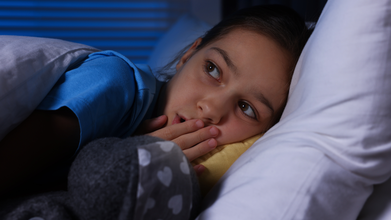
Seeing your child suddenly screaming at night, with wide eyes and thrashing limbs, can be deeply unsettling. However, remaining calm and focusing on safety is crucial for parents during the sleep terror episodes, said health experts.
Sleep terrors, also known as night terrors, are episodes of sudden fear, screaming, or intense distress that occur during sleep.
The condition is more common in children, especially between the ages of 3 and 8 years, as their sleep patterns are still maturing.
Unlike nightmares, which usually happen during dreaming (REM sleep) and are often remembered, sleep terrors occur during deep non-REM sleep.
Dr Preeti Singh, Senior Consultant, Clinical Psychology, Max Super Speciality Hospital, Dwarka told HealthandMe, that while it may be frightening to witness, especially for parents, sleep terrors themselves are usually not harmful.
Although most kids outgrow this naturally, if the episodes are violent or very frequent, consult a specialist, added Dr Sudhir Kumar, a neurologist at Apollo Hospitals, Hyderabad.
What Are Sleep Terrors
During sleep terror, the child may sit up abruptly, shout, appear frightened, sweat, breathe rapidly, and be difficult to console. In most cases, they do not recall the episode the next morning.
Sleep terrors typically occur in the first third of the night, during deep sleep (slow-wave sleep). They are considered a type of parasomnia, meaning an unusual behavior during sleep.
Dr Kumar, in a post on social media platform X, explained that unlike a bad dream, a sleep terror happens in deep sleep (Stage N3).
It is characterized by abrupt sitting up/screaming, with physical signs that include a fast heart rate, sweating, and dilated pupils.
"It is 11 PM. Your child suddenly sits up, screams at the top of their lungs, and looks terrified. They are not responding to you, and they seem to be looking right through you. This is likely a sleep terror (night terror), a common NREM sleep parasomnia in children aged 3-12,” said Dr Kumar, popularly known as the Hyderabad doctor, on X.
The expert noted that the children are unlikely to recognize the parents and be "consoled" during the episodes.
What Factors Trigger Sleep Terrors
- Sleep deprivation or irregular sleep schedules
- Fever or illness
- Emotional stress or anxiety
- Major life changes or trauma
- Family history of parasomnias
- Certain medications
For children, sleep terrors are often developmental and tend to reduce as the nervous system matures, Dr Singh told HealthanMe.
How Can Parents Respond?
Parents often feel alarmed during a sleep terror episode, but the key is to remain calm, the experts said. They said during an episode:
- Do not try to fully wake the child, as this may increase confusion and agitation.
- Gently ensure the child is safe and cannot injure themselves.
- Speak softly and reassuringly, even if they do not respond.
- Wait for the episode to pass, which usually happens within a few minutes.
Other preventive measures include:
- Maintaining a consistent bedtime routine
- Ensuring the child gets adequate sleep
- Reducing screen time before bed
- Managing stress during the day
- Creating a calm and secure sleep environment
How To Manage
Most children do not require medical treatment, as sleep terrors usually resolve on their own with age. Treatment is considered when episodes are frequent, severe, cause injury, or significantly disrupt family life.
However, addressing sleep deprivation, treating any underlying medical conditions (e.g., sleep apnea), counseling or stress management strategies can help.
- Follow Us :


© 2024 Bennett, Coleman & Company Limited